Business
Nigeria braces as oil shock and COVID-19 wreak havoc
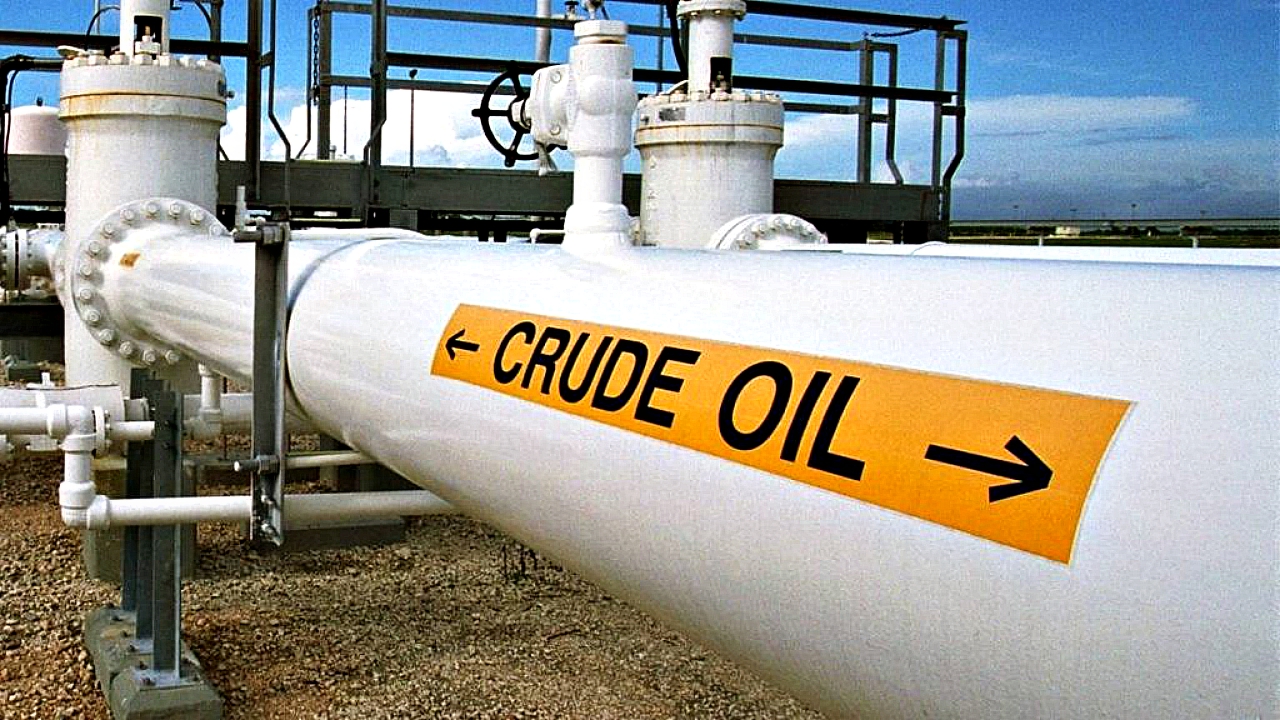
COVID-19 effect and oil price shock could drastically affect Nigeria’s oil export revenues.
By Linus Unah
On 13 April, millions of Nigerians waited anxiously for a televized address by President Muhammadu Buhari. The day marked the end of an initial 2-week lockdown imposed on Lagos, Ogun and the capital Abuja, 3 states on the frontline of Nigeria’s battle with COVID-19.
Opinions on which course of action the president should take were varied. Some citizens wanted the stringent restrictions lifted immediately to support economic activity, while others supported them but longed to hear news of relief packages or cash transfers for businesses desperately in need of help.
In his televised address, Buhari extended the lockdown in Lagos, Ogun and Abuja for another two weeks to enable health authorities to tackle the spread of COVID-19.
“It is a matter of life and death,” the president announced. “The repercussions of any premature end to the lockdown action are unimaginable.”
The numbers of confirmed cases in Nigeria have spiked. There were just 2 confirmed cases of the disease in mid-March with no deaths; but, as of April 15, the Nigeria Centre for Disease Control (NCDC) reported 407 confirmed cases.
One hundred and twenty-eight patients had been discharged with 12 deaths recorded. Given limited testing, the true numbers could be much greater – by mid-April, South Africa had registered over 2,500 cases. On 18 April, the president’s office announced the death of Abba Kyari, the president’s chief of staff and one of the most powerful men in Nigeria.
Impact of lockdown
The lockdown has taken a vicious economic toll beyond the directly impacted states as governors impose curfews and other forms of restriction elsewhere. Businesses, particularly small-and medium enterprises (SMEs) with limited reserves, are struggling to stay afloat. Informal workers, artisans and craftspeople worry where the next paycheck will come from.
Economists fret about the devastating impact the lockdowns will have on an economy already reeling from this year’s global oil price plunge. Despite sporadic attempts at diversification, Africa’s largest oil producer remains dependent on the sector for 90 percent of its foreign exchange. A disagreement between Saudi Arabia and Russia in March saw the price of oil drop to under US$25 a barrel, as compared with US$65 at the beginning of the year, a plunge exacerbated by the grounding of global airlines and the grinding to a halt of global economic activity under lockdowns.
While an agreement was reached on 12 April among the world’s top oil producers to reduce output by nearly 10 million barrels per day, a prolonged recession could already be on the cards. The International Monetary Fund (IMF) projects that Nigeria’s economy will contract by 3.4 percent this year, down from 2.2 percent growth in 2019. IMF managing director Kristalina Georgieva warned that the economy is being threatened by the twin shocks of the COVID-19 pandemic and the associated sharp fall in international oil prices.
“Nigeria very much falls into the category of countries that are going to be hit the hardest as a result of the outbreak of the pandemic, plus the sharp decline in oil prices,” said Abebe Aemro Selassie, director of the IMF’s Africa Department in a press conference. “Already, their economy was contending with the decline in oil prices that we saw in 2015. So, over and above that, of course, oil prices have declined further, complicating the policy making environment.”
Federal authorities have lowered this year’s budget estimate from ₦10.594 trillion (US$27.4 billion) to ₦10.276 trillion (US$26.6 billion), after the government’s oil benchmark of US$57 per barrel was slashed to US$30 per barrel. Crude oil production was lowered from 2.1 million barrels a day to 1.7 million barrels per day as demand waned.
Nigeria’s finance minister Zainab Ahmed has called for support to withstand the current shocks. Ahmed told journalists on 6 April that the government had requested US$6.9 billion from international lenders, including the World Bank, IMF, and the African Development Bank (AfDB). The IMF is considering a request under its rapid financing instrument.
The federal government needs funds to help health authorities deal with the virus. Emergency intervention funds of ₦15 billion were made available to the Nigerian Centre for Disease Control and the Lagos state government, which is dealing with the epicentre of Nigeria’s outbreak, but much more is required. One government agency estimates that the 200 million-strong country has fewer than 500 ventilators, and the country has just 0.5 percent hospital beds per 1,000 people.
The costs of supporting business will also be great. The government has announced a 3-month loan repayment deferral for beneficiaries of the Government Enterprise and Empowerment Program, which offers loans to petty traders, small businesses, artisans and farmers. In addition, cash transfers to over 2.6 million poor and vulnerable households have begun, and plans are underway to expand this programme to reach 3.6 million households before the end of April. The program has been offering beneficiaries ₦5,000 per month since 2016, but due to COVID-19, upfront payments have been made.
The private sector has pledged support – a coalition led by Aliko Dangote and backed by corporations including Access Bank, Zenith Bank and Guaranty Trust Bank had raised ₦21.5 billionn by 6 April to support the government’s response to the crisis. On 14 April, the European Union contributed US$54.4 million to support the government and increase testing capacity to 3,000 tests per day.
Emefiele’s test
All eyes are now on Godwin Emefiele, governor of the Central Bank of Nigeria. Emefiele admitted that the pandemic will spur both a health and economic crisis strong enough to “force many countries into recession”. In response, he has announced a ₦3.5 trillion (US$9.05 billion) economic stimulus package to keep the economy afloat and stabilize financial markets amid massive disruptions to supply chains.
Around ₦1 trillion (US$2.58 billion) will be used to support local manufacturers to increase import substitution and ₦100 billion (US$258 million) will be available to pharmaceutical companies, hospitals and health practitioners to expand or start local manufacturing of drugs and improve health facilities. A ₦50 billion (US$129 million) credit facility has been launched to support households and SMEs affected by the pandemic. In Nigeria, SMEs account for 96 percent of businesses, 84 percent of employment, and contribute 48 percent of national gross domestic product (GDP), according to PwC Nigeria.
“The stimulus package is a good step in the right direction, it indicates the kind of thinking which is necessary to be able to address the economic pressures that the pandemic is causing,” says Ikemesit Effiong, head of research at SBM Intelligence.
Abuja-based economist Ezra Ihezie believes the bank’s stimulus package has the potential to “raise the economy’s aggregate demand through increased employment, consumer spending, and investment.”
The central bank has also reduced interest rates from 9 percent to 5 percent on all its current intervention programs and extended moratoriums on all principal repayments by an additional year.
Ihezie urges the federal government to pay attention to sectors including agriculture, health, education, finance and manufacturing. “These key sectors will help to restart the economy once again,” he says.
“To ensure that the stimulus bundle is properly utilized, the Nigerian finance team should be transparent in its administration of the funds,” and strictly follow the major objectives for which the funds were established, he argues.
As the pandemic lingers, Effiong of SBM Intelligence believes companies will struggle to pay workers, especially as the three most affected cities of Lagos, Ogun and Abuja account for close to 40 percent of Nigeria’s economic activities. “This pandemic might tip the country into a recession, which will dampen demand for some time because it is not clear if the economy will be robust enough to create the right number of jobs to offset current job losses,” he says.
Exit strategy
Given the dire economic projections and ongoing oil price uncertainty, the country is likely to require an exit strategy to bring an end to the lockdowns and kickstart economic activity.
The NCDC is attempting to intensify contact tracing, expand testing laboratories and increase testing capacity beyond the current capacity of 1,500 tests per day. In his speech, Buhari noted that some 7,000 healthcare workers have been trained in infection prevention and control, and added that the NCDC’s rapid response teams have been deployed to all states with confirmed cases to bolster their response.
But public health analysts have warned that Nigeria’s testing capacity must increase, citing the efforts of South Africa which had, as of April 15, conducted over 90,000 tests.
“To combat the further spread of COVID-19 in Nigeria, the magnitude and distribution of the infection must be known,” says May Ubeku, a Nigerian public health professional and an epidemiologist. “And the only way to determine this is through testing a large percentage of suspected cases. This has not been the case; Nigeria has tested fewer than 5,000 people, the lowest in Africa compared to the population of her citizens. As the infection evolves, strategies are modified to combat the infection, and the only viable approach right now is massive testing.”
As the IMF’s Selassie said at his press conference, “In the near-term, of course, no resource should be spared to combat the health crisis, the health threat, that Nigeria faces from the COVID-19 pandemic.”
African Business © Copyright 2020