Opinion
Nigeria: At stake in the 2019 presidential election the relationship between federal gov’t and states
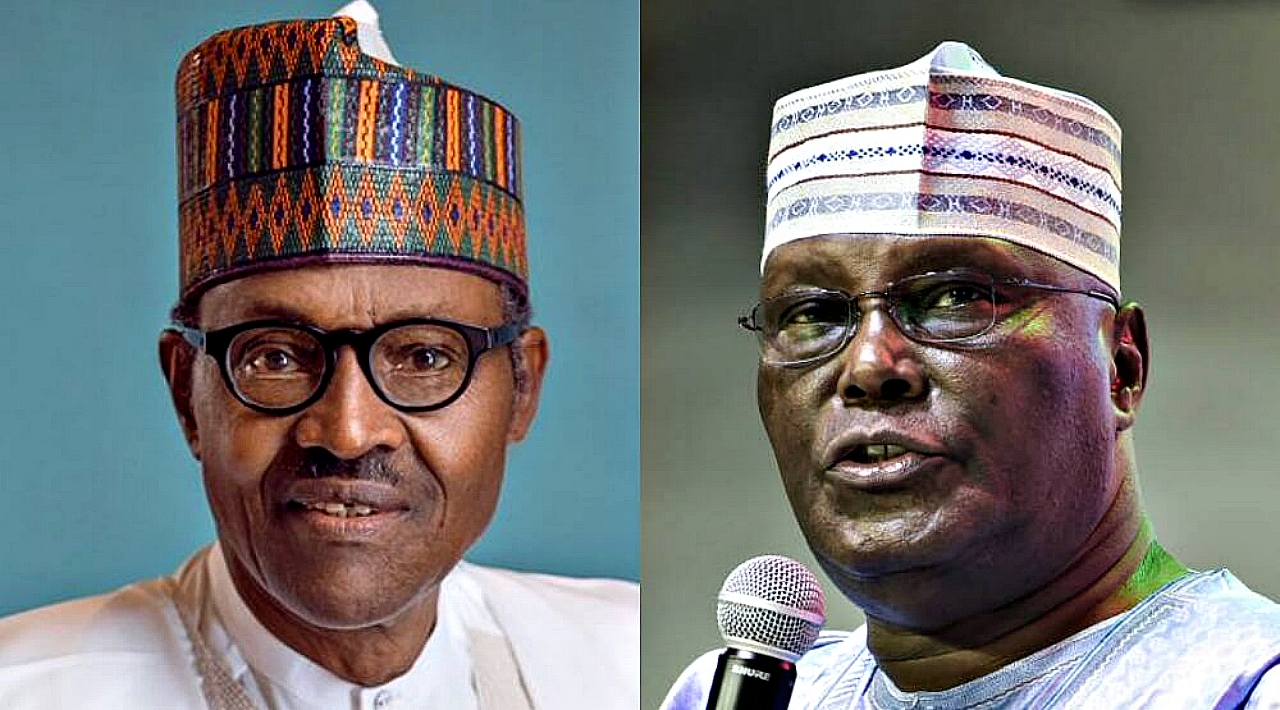
By Max Siollun
Incumbent President Muhammadu Buhari of the ruling All Progressives Congress and his main opposition rival, Atiku Abubakar of the People’s Democratic Party, have opened the door to political forces they cannot control or stop. The issue of restructuring the country’s delicate federal system has long been off limits. Both candidates have now put it front and center, ensuring that reforms are on the way.
On February 16, Nigerians will go to the polls for a presidential election. At stake is not only who will be president but also fundamental issues about the structure of the Nigerian state and relations between its constituent units. Who should control the country’s oil resources and security forces? In which areas should the federal and state governments have preeminence over each other? These previously taboo questions have been elevated as key topics on the national political agenda. Regardless of who wins, President Muhammadu Buhari of the ruling All Progressives Congress (APC) and his main opposition rival, Atiku Abubakar of the People’s Democratic Party (PDP), have opened the door to political forces they cannot control or stop.
At first glance Buhari and Atiku – as he is known in Nigeria – appear to be opposites. Buhari is austere, tough on corruption, and lacking in flair. The euphoria that greeted his election victory nearly 4 years ago has dissipated, and some say his antiquated fiscal approach has contributed to economic stagnation. Last year, former President Olusegun Obasanjo – who remains a vital kingmaker despite leaving power nearly 12 years ago – told Buhari to “dismount from the horse” and retire from politics.
Atiku is a gregarious multibillionaire businessman and veteran politician who is seen as business-savvy and has promised economic liberalization, but he has been dogged by corruption allegations. It seems that voters can have a fight against corruption or economic stimulus, but not both. But there is a third and more serious issue bubbling beneath the surface.
Similar levels of support for both main candidates have made the election result too close to call. Since both men are ethnic Fulani Muslims from northern Nigeria, neither can resort to pandering based on ethno-regional or religious sentiment to take votes away from the other, as is frequently the case in Nigerian elections. Due to Nigeria’s gentleman’s agreement to rotate the presidency between the country’s north and south, there is not much southern ferment against the regional origin of the two leading candidates, with the expectation that the south will have its turn in power next time.
Yet between the candidates, the pressure to secure a decisive advantage has changed the political narrative and forced both Buhari and Atiku to address uncomfortable existential questions about Nigeria that were delicately circumvented by past governments. For the past 20 years since Nigeria returned to democracy, the country has been stuck with a highly centralized federal structure bequeathed to it by past military governments.
This structure gives the federal government huge power over states, control of the country’s oil deposits and security forces, and the power to declare a state of emergency in any state whether or not that state consents. Rather than being reservoirs for local interests, Nigeria’s states are consequently little more than conduits for the implementation of federal government policies.
Atiku has described Nigeria’s current political system as “unworkable” and has advocated “devolution of powers and resources to states and local governments” and greater autonomy for states. To combat the insecurity that has led to the military being deployed in at least 32 of Nigeria’s 36 states, he also supports allowing Nigeria’s states to form their own police forces to reinforce Nigeria’s currently federally-controlled military and police forces. Buhari is a conservative and has rejected a political restructuring of Nigeria.
Such proposals will reverberate at both ends of Nigeria. The issue of restructuring Nigeria’s unusual federal system has been a big talking point for the last 3 decades. However, regional autonomy is a potentially explosive issue in a country that fought a civil war from 1967 to 1970 and sacrificed over 1 million of its citizens to prevent 1 of its southern regions from seceding, and in which just 3 of the country’s 36 states today produce 75 percent of the country’s oil and over 50 percent of government revenues.
Those revenues, derived from the oil-producing states in the country’s south, are shared between all of Nigeria’s states and the federal government. The oil-producing states currently receive 13 percent of oil revenues derived from their lands, but if they claw back a greater share of those revenues, many states that are not oil-producing would be pushed into extreme poverty. Indeed, only eight of Nigeria’s states are thought to be economically viable enough to survive without financial allocations from oil revenue.
Atiku’s proposals will delight many younger and southern Nigerians who have campaigned for such measures for 3 decades, hoping that it will allow Nigeria’s oil-producing states to have a greater say over and share of the profits from the oil drilled from their lands. These proposals seem radical coming from a northern Muslim such as Atiku, who comes from the part of the country that has traditionally resisted southern-inspired changes to Nigeria’s political order.
The original version of this article was published in the Foreign Policy Magazine.