Owusu on Africa
New Fault Lines: The Escalating Risk of Cross-Border Rivalry
For decades, African states feared collapse from within. Now the threat is increasingly the country next door.


By Fidel Amakye Owusu
When African states won independence, their leaders were haunted less by foreign armies than by their own maps. The borders they inherited had been drawn by outsiders, often with little regard for the people living on either side. The fear, entirely rational, was that the new states would come apart: that secessionist movements, regional grievances, and competing loyalties would tear them into pieces before nationhood had a chance to take root.
The great task of the era was therefore consolidation. Governments worked to hold territory together, to build a shared national identity, and to defeat those who would carve up the state. Even the most ambitious African leaders knew that to quarrel over frontiers was to invite the very fragmentation they dreaded. The organization that eventually emerged to speak for the continent enshrined the colonial borders as inviolable, a pragmatic bargain that accepted an imperfect map in exchange for stability.
The bargain largely held. Borders were contested, but rarely fought over. Disputes between governments flared, as they do everywhere, yet interstate friction was seldom the dominant source of insecurity. Africa’s wars were mostly fought inside states, not between them. The central drama of the postcolonial era was the struggle to make the state cohere.
That pattern is now shifting.
A Troubling Drift Toward Confrontation
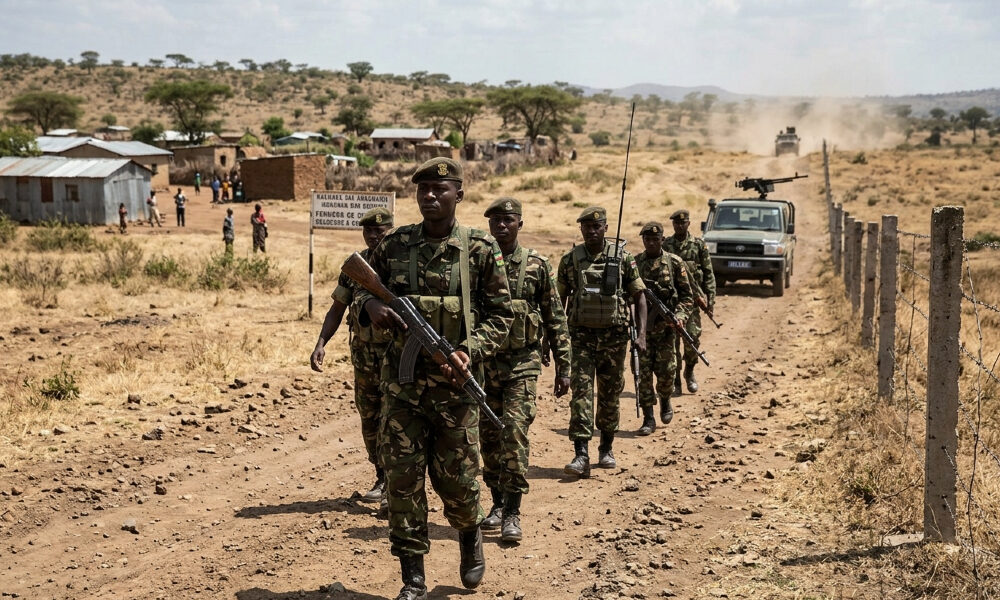
Over the past three months, tensions between neighboring states have escalated, extending a worrying trend visible for several years. The vocabulary of these frictions is increasingly familiar to students of regional rivalry: accusations and counteraccusations, diplomatic spats, drone strikes, and military maneuvers along contested or sensitive frontiers.
No full-scale war has yet broken out between any two African states. That is cause for relief, but not for complacency. The danger lies in the trajectory. Each incident, taken alone, can be explained away as a misunderstanding, a provocation, or an act of self-defense. Taken together, they describe a region in which trust is eroding and the tools of confrontation are becoming easier to use. Cheap, accessible drone technology in particular lowers the cost of striking across a border, and with it the threshold for escalation.
This marks a profound change in the continent’s security logic. For most of the postcolonial period, the principal risk was fragmentation: a state breaking apart under internal pressure. Today a second risk has joined it, and may eventually eclipse it. It is the prospect of a major clash between states, one that could draw in allies, destabilize whole regions, and unravel the diplomatic habits that have kept the peace.
The Human Cost Travels Far From the Front Line
It would be a mistake to treat these tensions as a matter of chancelleries and generals alone. Their consequences are borne first by ordinary people, and they do not stay where they begin.
In a recent interview, I reflected on the strong link between internal displacement and the perilous journeys that Africans make across continents in search of safety. The connection is simple, yet too often ignored. Migration policy tends to be debated at the destination, in terms of borders, quotas, and enforcement. But the decision to leave is made at the origin, long before anyone boards a boat or crosses a desert.
People do not abandon their homes lightly. They go when staying has become unbearable or unsafe. Many begin by fleeing within their own countries, and only some of those later undertake the far more dangerous journey abroad. As conflicts deepen and regional tensions worsen, the year ahead could bring a significant rise in both groups: those displaced within their countries and those who risk their lives to cross continents.
Peace is the Only Durable Migration Policy
The implication is uncomfortable for those who prefer technical solutions. Managing movement, whether through reception centers, patrols, or readmission agreements, treats the symptom and ignores the cause. Addressing displacement and perilous migration demands something harder: a sustained commitment to building and keeping peace.
That means investing in what scholars call positive peace, which is more than the mere absence of fighting. It is the presence of institutions that are trusted, economies that offer opportunity, and communities that feel secure and heard. It also means taking conflict prevention seriously, which is cheaper, in money and in lives, than any response after violence has begun. Early diplomacy, credible mediation, and regional mechanisms with real authority are not luxuries. They are the first line of defense.
The international community and every relevant stakeholder, from the African Union and regional bodies to donors and neighboring governments, must intensify their support for this work. The goal should be modest in its phrasing but ambitious in its effect: to make it possible for people to live safely and with dignity in their own communities.
Africa’s founders feared a continent that would fall apart from within. Their successors face a subtler test: preventing rivalries between neighbors from hardening into the wars their predecessors worked so hard to avoid. The answer will not be found in better border patrols. It lies in the harder, less glamorous business of peace.
Fidel Amakye Owusu is an International Relations and Security Analyst. He is an Associate at the Conflict Research Consortium for Africa and has previously hosted an International Affairs program with the Ghana Broadcasting Corporation (GBC). He is passionate about Diplomacy and realizing Africa’s global potential and how the continent should be viewed as part of the global collective.