Politics
New CAR PM says ending atrocities is priority
Andre Nzapayeke says ending violence between Christians and Muslims is key to restoring security in African nation.
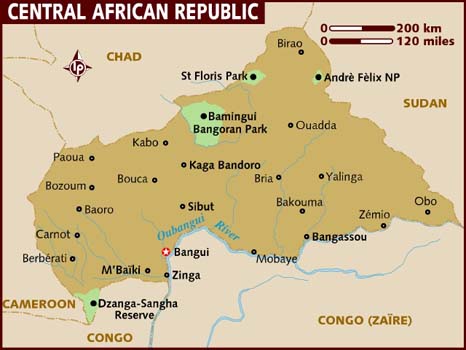
Central African Republic’s new Prime Minister Andre Nzapayeke has said that his priority would be to put an end to the massacres and other atrocities that have shaken the country for months. Speaking a day after he was named prime minister, Nzapayeke, a former banking official, said on Sunday that ending the violence between Christians and Muslims was key to restoring security and a functioning state.
In an interview with French radio station, RFI, Nzapayeke stated, “I am going to be speaking with the different groups so that we immediately stop certain… atrocities being carried out in this country. We have to put a stop to all that quickly.” Furthermore, he said, “There’s a certain number of very clear actions the government is going to tackle starting this week,”
Nzapayeke was appointed to the post by interim President Catherine Samba-Panza. Samba-Panza, who took office two days ago, seeks to build an interim government to restore order to the former French colony after months of sectarian violence which has left thousands dead or homeless.
The mineral-rich country descended into chaos last March when mostly Muslim rebel group known as Seleka seized power in a coup. Its leader, Michel Djotodia, was installed as president. This action triggered revenge attacks by Christian militia known as anti-balaka, or anti-machete, and fighting has escalated in recent days despite the presence of around 1,600 French troops and 5,000 African Union peacekeepers.
The new prime minister said he planned to put a team in place whose primary focus is to deal with the question of national reconciliation. “We have to tackle that quickly, it will make the security question easier,” said Nzapayeke. “Once this is accomplished,” he said, “the next step would be helping the one million people who have fled the violence to return home.”
Nzapayeke, a former secretary-general of the African Development Bank and vice president of the Development Bank of Central African States, suggested that the country would seek help from its “friends in the international community” to end the crisis.
Sectarian violence
Coup leader, Djotodia, failed to rein in a wave of killing, raping and looting by his former fighters, leading to reprisal attacks from Christian vigilante groups such as anti-balaka that are accused of committing atrocities of their own against Muslims, including civilians.
Samba-Panza, the country’s first woman leader, was elected by the interim parliament to replace Djotodia after he resigned under international pressure on January 10. She and Nzapayeke are tasked with forming a government to end the bloodshed, restoring the operations of a state whose coffers are empty, whose employees have not been paid in months, and organizing general elections by February 2015.
On Sunday, violence continued in the capital, Bangui, where gunshots rang out as looters tried to raid the central business district. Looters and anti-balaka fighters have been regularly pillaging the neighborhood, whose shops are mostly Muslim-owned.
A Muslim former minister was hacked to death by machete-wielding militiamen in Bangui on Friday and last week, two Muslim men were lynched in Bangui by Christian mob, in a gruesome attack. Aid organisations, including the International Committee of the Red Cross, has said more than 50 people have been killed in the past two weeks.
The violence has killed more than 2,000 since December, and forced about a million people – nearly a quarter of the population – to flee their homes.
Source: Al Jazeera