Opinion
New brainstorming event in preparation to advance Africa’s economic integration and prosperity agenda


By Danilo Desiderio
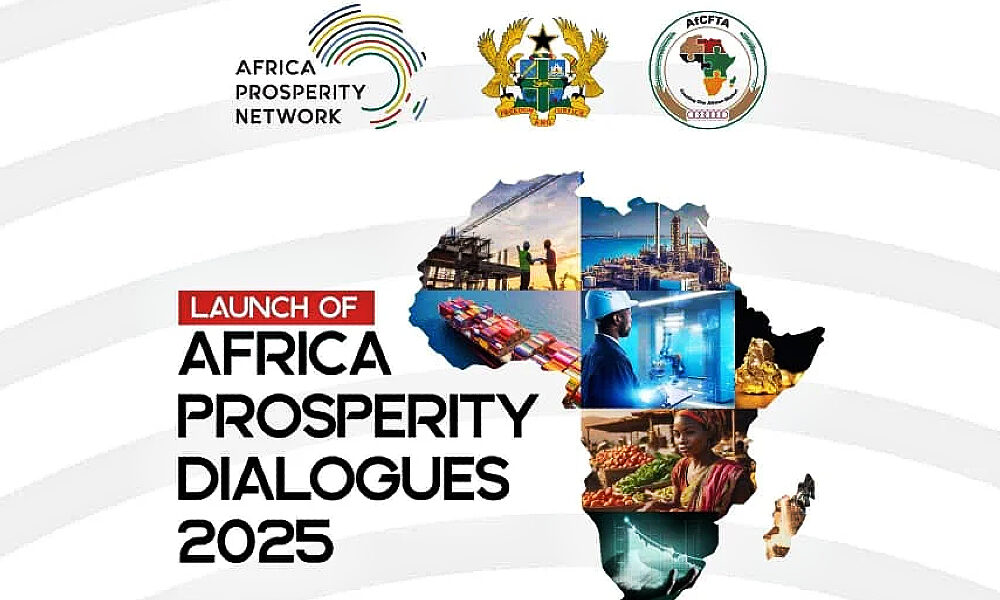
Preparations are underway for the 2025 edition of the Africa Prosperity Dialogues (APD), which will take place in Accra, Ghana, from Thursday, January 30 to Saturday, February 1, 2025. The event will bring together over 3,000 delegates from more than 46 countries, including several African Heads of State, at the Accra International Conference Centre (AICC).
The primary focus will be on advancing Africa’s economic integration and prosperity agenda. Key sessions will address critical topics, including female entrepreneurship, housing, payments, youth empowerment, public-private partnerships, and venture capital and private equity.
The Africa Prosperity Dialogues is an annual event, with the inaugural edition held in Ghana from January 26-28, 2023. It is organized by the Africa Prosperity Network, a Ghanaian private non-profit organization, in partnership with the African Continental Free Trade Area (AfCFTA) Secretariat.
The event serves as a platform for African policymakers, industry leaders, and representatives from multilateral development agencies and international organizations to exchange ideas on policies, initiatives, and actions necessary to achieve a more economically integrated Africa. Last year’s discussions primarily focused on the AfCFTA, particularly the achievements, lessons learned, and challenges faced in its implementation.
The theme for the APD 2025 will be: “Delivering the African Single Market Through Infrastructure: Invest, Connect, Integrate.” The discussions will center on the critical role of infrastructure development and investment in driving the integration process across the continent.
Transport, Trade, and Market Access Challenges
Achieving this integration is essential for realizing Africa’s vision of a single, interconnected continental market.
The importance of infrastructure in achieving the goal of a fully integrated African single market cannot be overstated. Effective trade and the successful implementation of the AfCFTA are impossible without addressing Africa’s significant infrastructure gaps.
These gaps, particularly in transport infrastructure such as roads, railways, ports, and airports, result in high transportation costs, making intra-African trade less competitive and African products more expensive for consumers. For instance, the African Union Framework for boosting intra-African trade in agricultural commodities and services recently highlighted that transport costs for agricultural goods in some regions of Africa account for up to one-third of the farm gate price (the price at which goods are sold from farms to the first buyer).
The 2025 Africa Prosperity Dialogues is expected to establish a foundation for new collaborations between African governments, development partners, and private sector stakeholders
Without addressing these infrastructure challenges, the benefits of tariff reductions under the AfCFTA could be nullified. Additionally, inadequate infrastructure causes delays in goods transport, leading to higher insurance and warehousing costs and increasing the risk of spoilage, especially for perishable goods, which make up a significant portion of intra-African trade.
Poor infrastructure also limits market access, particularly in remote areas, hindering the movement of goods and services and resulting in missed opportunities for African businesses.
Unlocking Opportunities for Innovation and Job Creation
However, infrastructure extends beyond roads and transport. In today’s interconnected world, reliable energy and robust digital infrastructure are equally essential for economic growth and social development.
Investment in these sectors is vital for supporting industrialization across African nations and for developing strong and resilient regional value chains—one of the primary objectives of the AfCFTA. Electrification and digitalization are crucial for:
- Automation of production processes: Reliable and affordable energy is necessary to operate machinery and power production processes. Without access to low-cost energy, industrial growth is severely restricted.
- Increased productivity: Consistent energy supply improves productivity and efficiency in industries, leading to economies of scale and reduced production costs, which enhance the competitiveness of African products.
- Technological advancement: Access to energy and robust digital infrastructure facilitates the adoption of new technologies, including artificial intelligence (AI) and deep learning models, which are energy- and data-intensive.
Energy and digital infrastructure are intrinsically linked. For example, renewable energy systems often rely on advanced digital technologies for monitoring, control, and integration into the grid.
Additionally, investing in energy and digital sectors can create significant employment opportunities in fields such as power generation, transmission, software development, digital marketing, cybersecurity, and e-commerce.
The 2025 Africa Prosperity Dialogues is expected to establish a foundation for new collaborations between African governments, development partners, and private sector stakeholders. Given Africa’s vast size and the challenges it faces, it is crucial that all parties work together to create synergies and partnerships that can drive sustainable growth, starting with the development of high-quality infrastructure.
Danilo Desiderio serves as the CEO of Desiderio Consultants Ltd in Nairobi, Kenya, specializing in African customs, trade, and transport policies. He is a customs and trade expert at the World Bank and a senior associate to the Horn Economic and Social Policy Institute (HESPI).