Opinion
Navigating Africa’s Growing Middle Class: Shifting Consumer Trends and Opportunities


By Dishant Shah
Africa’s rapidly expanding middle class is reshaping the continent’s consumer landscape, and businesses must take note of the shifting demands that accompany this growth. Over the past two decades, millions of people have moved out of poverty, creating a robust market for goods and services.
By 2030, Africa’s middle class is projected to reach 1.7 billion people, wielding a staggering US$6.7 trillion in purchasing power.
This transformation is driving change across multiple industries, from retail and technology to healthcare and real estate. As more people enter the middle class, demand is surging in various sectors, creating new opportunities for businesses to capitalize on.
Urbanization: A Key Driver of Change
A key force behind this shift is urbanization. Today, more than 40 percent of Africa’s population lives in cities, with that number expected to double by 2050.
Urban living brings higher disposable incomes, a preference for convenience, and increased access to global brands, all of which are shaping consumer behavior.
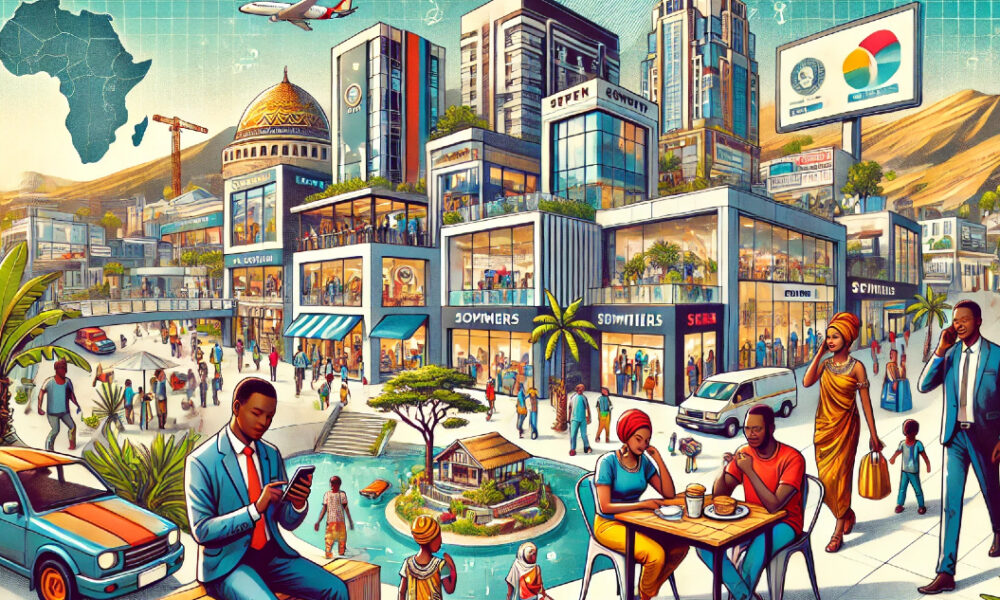
Cities like Nairobi, Lagos, and Accra are seeing a surge in modern shopping malls, a direct response to the growing demand for sophisticated retail experiences. At the same time, e-commerce platforms such as Jumia Group and takealot are experiencing explosive growth as consumers embrace online shopping.
Shifting Consumer Behavior: Quality Over Quantity
However, it’s not just that Africa’s middle class is spending more – it’s spending differently. There’s a growing preference for quality over quantity, with consumers increasingly gravitating toward branded goods, organic food, and digital services.
Smartphone penetration has surpassed 50 percent in many African nations, spurring demand for mobile banking, digital entertainment, and social commerce.
The fintech boom is a clear reflection of this shift. Mobile money services like M-Pesa have revolutionized financial transactions, making them more accessible and convenient for consumers across the continent.
Growing Demand for Education, Healthcare, and Housing
As people’s aspirations rise, so too do their expectations for better education, healthcare, and housing. Private schools, hospitals, and real estate developments are all expanding to meet these demands.
That said, the African middle class is not monolithic. There are stark differences between countries – and even within cities.
In some areas, economic instability and rising inflation have made middle-class status precarious, with many households on the brink of falling back into poverty. For businesses, this means navigating not only consumer preferences but also affordability concerns and shifting priorities.
Understanding Local Preferences: The Key to Success
To succeed in this evolving market, companies must understand local tastes and nuances. While international brands are increasingly in demand, African consumers are also taking pride in homegrown products.
Fashion, beauty, and tech startups are flourishing, with middle-class consumers willing to spend on brands that align with their cultural identity.
A Transformative Force in Africa’s Economy
The African middle class is not just a market – it’s a transformative force driving the continent’s economic future. Businesses that understand its diversity and evolving needs will be best positioned to thrive.
The question remains: Are companies moving quickly enough to stay ahead of this profound shift?
Dishant Shah is a partner at Legion Exim, a company specializing in facilitating the export of high-quality engineering products directly sourced from manufacturers in India to Africa. His areas of expertise include new business development and business management.