Life
Multiple sclerosis not as rare in African-Americans as previously thought – study
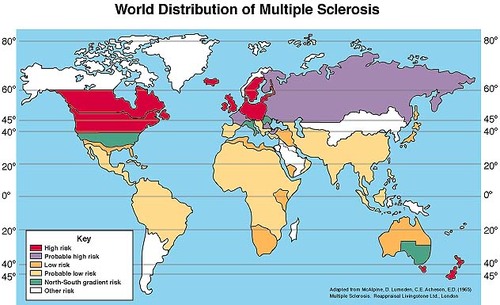
Contrary to a widely accepted belief, African-Americans may have a higher rather than lower risk of developing multiple sclerosis than Caucasians, according to a new study in the May 7, 2013, print issue of Neurology.
“Our population-based study is the first of its kind to look at this question. The belief that African-Americans have a lower risk of developing multiple sclerosis was based on evidence that was problematic,” said study author Annette Langer-Gould, MD, with Kaiser Permanente Southern California Department of Research & Evaluation in Pasadena, Calif., and a member of the American Academy of Neurology.
For the study, researchers examined the entire database of more than 3.5 million members of the Kaiser Permanente Southern California health plan over a three-year period and identified 496 people with newly diagnosed multiple sclerosis.
This type of study, which is termed population-based, is considered a more accurate way to determine disease risk than to examine only those people who attend a specific clinic or hospital. The study found that African-Americans had a 47 percent increased risk of multiple sclerosis compared with Caucasians, while Hispanics and Asians had a 58 and 80 percent lower risk than Caucasians.
Sex differences in multiple sclerosis risk were also highlighted in the study. The higher risk in African-Americans was found in women only whereas the lower risk for Hispanics and Asians was found in both sexes. African-American women had triple the risk of MS compared to African-American men.
African-Americans made up 21 percent of those with multiple sclerosis, while they made up only 10 percent of the total study population. Caucasians made up 52 percent of those with multiple sclerosis, compared to 38 percent of the total population. A total of 23 percent of those with multiple sclerosis were Hispanic, compared to 40 percent of the total population. Asians made up 3 percent of those with multiple sclerosis, compared to 9 percent of the population.
“One explanation for our findings is that people with darker skin tones have lower vitamin D levels and ultimately, an increased risk, but this would not explain why Hispanics and Asians have a lower risk than Caucasians,” said Langer-Gould. “About 19,000 people per year, or 250 people per week, will be diagnosed with multiple sclerosis in the United States alone.
These numbers highlight the need for more minorities to be included in multiple sclerosis studies, so that we can fully understand how race may play a role in developing the disease.”
Source: American Academy of Neurology