A Diaspora View of Africa
Modern Warfare Techniques Come to Africa


By Gregory Simpkins
Unfortunately, the African continent is abounding in conflicts. Africa’s Sahel region is the most active jihadist theater globally, but many other areas are witnessing conflicts as well. At least 34.5 million people have been displaced in sub-Saharan Africa alone, about 16.2 million of them are Christians. Communal violence produces civilian harm comparable in scale to the more prominent insurgencies. The numbers killed or wounded are difficult to calculate.
There are myriad reasons for African conflicts, including competition over land, water, pasture and minerals; climate change and the strains from population growth; political elites arming ethnic militias for election dominance or protection, and weak states failing to prevent external weapons flows involving gold, drones, mercenaries and foreign funding of wars.
Flashpoints Across the Continent
As I wrote in an earlier post, the Sudan Armed Forces versus the Rapid Response Force is at the core of the Sudan conflict along with heavy ethnic targeting of non-Arab groups in Darfur and western regions. This conflict is driven by gold trade, land and control of the capital city of Khartoum and the resource-rich Darfur region. About 12 million people have been displaced.
In Ethiopia’s Oromia and Amhar regions, there is ongoing ethnic violence, and in the country’s predominantly Tigray region, there are security concerns that have flared again after the 2020-2022 war, and mass atrocities, including sexual violence, have been documented. Disputes over political representation, land and the fallout from an untrusted federal system are to blame.
In South Sudan’s Jonglei State, there is intercommunal violence between the Nuer, Dinka and Murle communities, driven by cattle raiding, water and pasture disputes and revenge cycles.
Nigeria is plagued by a myriad of struggles. In the country’s Middle Belt, there is a continuing farmer-herder conflict between mostly Muslim Fulani herders and mostly Christian farming communities, although in recent years some of their offspring are collaborating in cattle raiding. In southern Kaduna, there are roots in religious and historical land disputes. In the Niger Delta, Urhobo and Itsekiri groups battle over oil resources and revenue. Increasingly deadly religious disputes, climate change issues, population growth and the breakdown of customary land-sharing exacerbates all these situations.
In the Democratic Republic of Congo’s Ituri and South Kivu provinces, there is identity-based conflict among ethnic groups in eastern DR Congo, with dozens of militias plaguing the citizenry. The the M23 militia, allegedly backed by Rwanda continues to fight the DR Congo military despite the December 2025 Washington Accords.
In the Sahel, a jihadist insurgency has waged war in Mali, Burkina Faso and Niger. Jama’at Nusrat al-Islam wal-Muslimin (an al-Qaeda affiliate) and the Islamic State Sahel Province is expanding. Between 2025-2026, JNIM blockaded the Malian capital of Bamako. IS-Sahel attacked Chad’s Niamey airport in January 2026. More than 3,000 jihadist events are projected to occur before the end of 2026. State collapse, local grievances and anti-French sentiment have made bad situations even worse.
In the Central African Republic, Seleka Muslims are fighting anti-Balaka Christians in Ouaka, Haute-Kotto and Mbomou.
Religious Persecution and Regional Tensions
There have been targeted attacks on Christians reported across West Africa, the Sahel, Lake Chad, Mozambique, Sudan and Somalia. There are increasing reports of targeted attacks on Orthodox Christians in Ethiopia’s Oromia region. According to the Open Doors organization, which monitors religious repression globally, 35 of 54 African states experience Christians facing harassment or open oppression.
The eastern Horn of Africa, including Ethiopia, Eritrea and Somalia are undergoing regional tensions and conflicts. In addition to Ethiopia-Somalia tensions, the Somalian government is fractured even as it is fighting the al-Shabaab terrorist group. Meanwhile, Eritrea has been engaged in conflict throughout the region.
As destructive as these conflicts have been, added warfare technologies threaten to make each one even more catastrophic. Modern weapons are changing African conflicts in three big ways: who can fight, how they fight and how long they can keep fighting. It’s not just about more guns – it’s gold-funded drones, logistics and outsourced mercenaries.
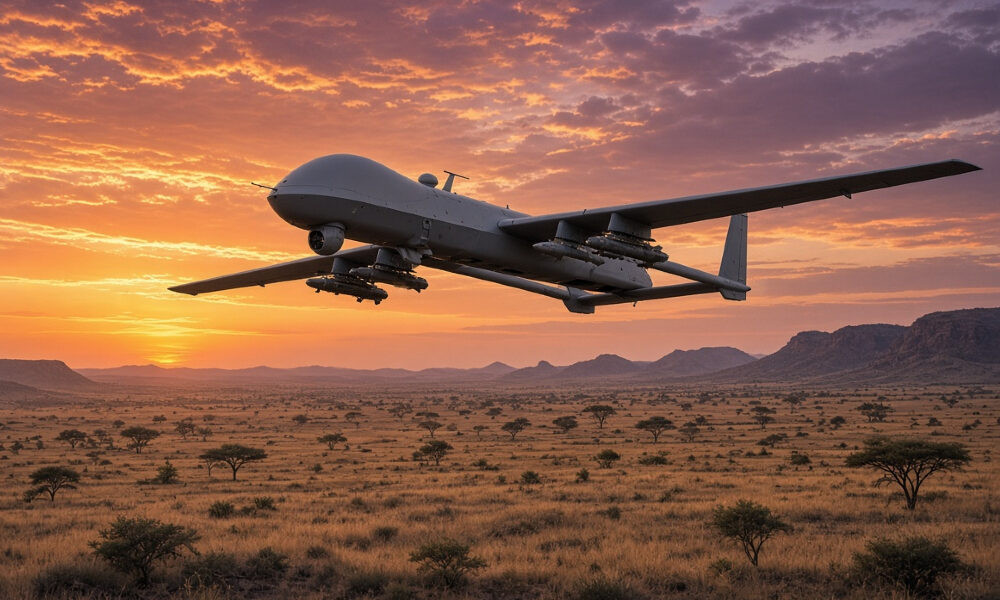
Drones and precision strike weapons make urban warfare even deadlier. These weapons are being used by the SAF in Sudan and government forces in Ethiopia, Somalia and Nigeria. Such weapons allow state armies to hit rebel convoys from the air without risking pilots. They change the calculation of siege warfare.
Iranian Shahed-type and commercial drones are used by Sudan’s RSF, Yemen’s Houthis and jihadists in Sahel. They are cheap, hard to detect and used for spotting and dropping grenades. It levels the playing field for non-state groups.
First Person View (FPV) “kamikaze” drones are used by the RSF and various militias. These US$500 drones destroy US$500,000 vehicles and makes armor and bases vulnerable.
Frontlines have become less important and cities such as Sudan’s Khartoum and El Fasher and locations in the Sahel can be hit without troops ever entering.
Mercenaries for Hire: Warfare Goes Private
Warfare has been increasingly outsourced. Wagner/Africa Corps from Russia trains and equips armies in Mali, CAR, Burkina Faso and Libya. They are paid in gold and mining concessions. They also have supplied missiles to the RSF in Sudan. Colombian mercenaries have been reported fighting for the RSF in Sudan, paid for by United Arab Emirates networks. Turkish and Emirati logistics enable drone training, airlift and satellite intelligence.
A local commander with gold and foreign backing can now run a war without a national army. That’s exactly what happened with the RSF.
There also are anti-air and anti-tank guided missiles (ATGMs). Sahel jihadists now have Man-Portable Air Defense Systems (MANPADS) and drones, forcing UN/French forces out of Mali. Naval drones and other Red Sea tech are used in Sudan and Yemen, The Horn conflicts now spill into international shipping lanes.
Computer and information technology only add to the potential chaos created on the continent. Encrypted communications and the Starlink satellite system allow militias to coordinate across borders in real time.
Artificial Intelligence targeting and satellite intelligence are provided to proxies by UAE, Türkiye and Iran, making small forces much more lethal.
Finally, social media is used for recruitment, disinformation and fundraising.
Precision doesn’t mean fewer civilian deaths. Artillery and drones in cities have caused 12 million displaced people in Sudan alone. With cheap weapons, splinter groups can keep fighting even if leaders sign peace accords. African Union/UN peacekeeping missions don’t have counter-drone systems. That’s why several missions withdrew from the Sahel. A drone strike can trigger a regional response in hours, not weeks.
Africans appear to be well able to cause their own destruction, but Middle Eastern nations especially seem determined to accelerate the devastation for profit, regardless of the cost in human lives. Divide and conquer was a successful strategy from colonial times. Too bad Africans have not fully learned what outsiders have adopted from their past.
Gregory Simpkins, a longtime specialist in African policy development, is the Principal of 21st Century Solutions. He consults with organizations on African policy issues generally, especially in relating to the U.S. Government. He further acts as a consultant to the African Merchants Association, where he advises the Association in its efforts to stimulate an increase in trade between several hundred African Diaspora small and medium enterprises and their African partners.