Alorh’s eye on the Motherland
Military Build-Up on the Red Sea: Geopolitical Tensions and Strategic Implications


By Mary Alorh
The world’s most powerful nations are increasingly establishing military bases along Africa’s Red Sea coast and beyond, raising concerns about a growing militarization of the region and the potential for conflict. This strategic expansion underscores Africa’s rising importance in global geopolitics and highlights the continent’s critical role in shaping international power dynamics.
These military installations carry significant implications, particularly in the event of global conflicts. Strategically positioned bases enable rapid regrouping, refueling, and redeployment of forces, allowing for swift operations against emerging targets.
This logistical advantage is a cornerstone of modern military planning and could prove decisive in any large-scale confrontation.
Russia, for its part, is reportedly planning to establish a logistical support center on Sudan’s Red Sea coast, a move that many analysts see as a precursor to securing a full-fledged naval base in the country. Since February 2025, Sudanese and Russian officials have been engaged in discussions regarding this military cooperation, signaling Russia’s intent to expand its footprint in the region.
The Strategic Importance of the Red Sea
The Red Sea is one of the world’s most vital waterways for global trade, with approximately 12 percent of the world’s commerce passing through it. Connecting Europe, Asia, and Africa, this maritime corridor serves as a crucial artery for international trade.
The Red Sea links the Suez Canal to the Indian Ocean via the Bab-el-Mandeb Strait, a narrow but essential shipping route that facilitates efficient trade between Europe and Asia.
A Russian naval base in this strategically sensitive region would provide Moscow with direct access to the Red Sea, potentially reshaping the dynamics of future conflicts. Such a development could have profound implications for regional security and global geopolitics.
Beyond securing a foothold in a key shipping route, the base would also allow Russia to broaden its military presence in Africa, furthering its ambitions as a global power.
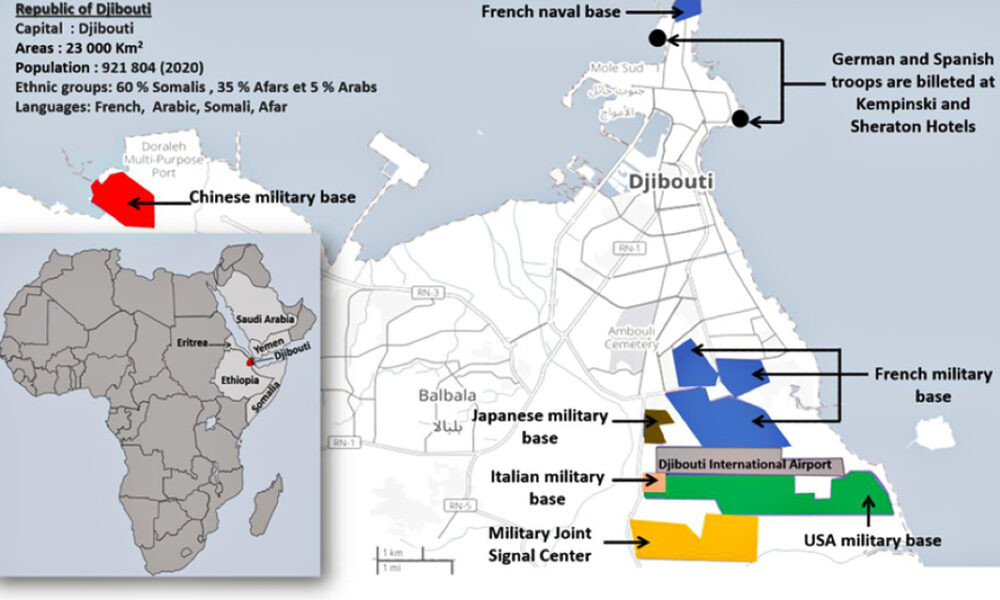
The establishment of a Russian base would place the country alongside other major powers, such as the United States and China, which already maintain a military presence in the Horn of Africa. This move would underscore Russia’s growing global ambitions and its desire to project power in strategically significant regions.
As competition for influence in Africa intensifies, the Red Sea is becoming an increasingly contested arena, with far-reaching consequences for both regional stability and international relations.
In this context, the militarization of the Red Sea coast represents not only a shift in geopolitical priorities but also a potential flashpoint for future conflicts, underscoring the urgent need for diplomatic efforts to mitigate tensions in this critical region.
Mary Alorh is Director of Administration at DefSEC Analytics Africa Ltd., and is an expert in Gender, Youth, and Peace & Security initiatives in West Africa.