Life
Michaela DePrince: African ballerina rises to top, inspires young girls
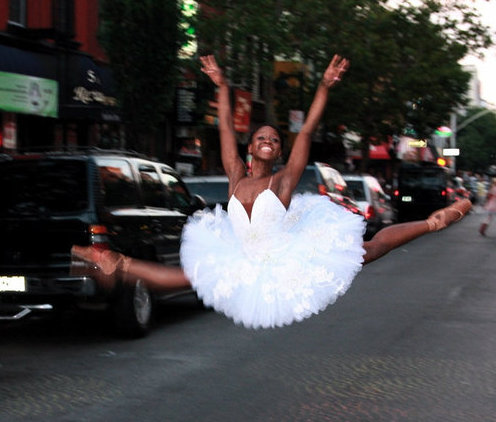

Michaela DePrince. PHOTO/First Position
Michaela DePrince was little more than a toddler when she saw her first ballerina — an image in a magazine page blown against the gate of the orphanage where she ended up during Sierra Leone’s civil war. It showed an American ballet dancer posed on tip toe.
“All I remember is she looked really, really happy,” Michaela DePrince told The Associated Press this earlier week. She wished “to become this exact person.”
From the misery of the orphanage “I saw hope in it. And I ripped the page out and I stuck it in my underwear because I didn’t have any place to put it.”
Now Michaela DePrince is the one inspiring young Africans: She’s an African dancer in the world of ballet that sees few leading black females. She was adopted and raised to become a ballerina in the U.S. — a country where she believed everyone walked around on tippy toes.
On July 19, DePrince performs in her first professional full ballet, dancing the part of Gulnare in Le Corsaire, as a guest artist of South Africa’s two biggest dance companies, Mzansi Productions and South African Ballet Theatre.
Her ascent to stardom in the ballet world has been fast, if not typical. At 17, she’s already been featured in a documentary film and has performed on TV-show “Dancing With the Stars”. She just graduated from high school and the American Ballet Theatre’s Jacqueline Kennedy Onassis School, and will go on to work at Dance Theatre of Harlem. Her family recently moved from Vermont to New York City to support her dance career and her sister’s acting and singing. Michaela said she has been offered many opportunities to dance with companies in Europe and in the U.S.
“I lost both my parents, so I was at the orphanage for about a year and I wasn’t treated very well because I had vitiligo,” she said Monday. “We were ranked as numbers and number 27 was the least favourite and that was my number, so I got the least amount of food, the least amount of clothes and what not.”
DePrince said she walked shoeless for miles to reach a refugee camp after word came that the orphanage would be bombed. Elaine DePrince, who adopted Michaela and two other girls, Mia and Mariel, from the orphanage, said she met the girls in Ghana in 1999. Michaela was 4.
DePrince said the war and her time in the orphanage affected her for years.
Her adoption took place as Sierra Leone suffered a decade-long war that ended in 2002.
DePrince said her father, a trader, was shot dead by rebels and her mother starved to death. It is unclear if she has family left in Sierra Leone.
But DePrince said she does eventually want to return to her birthplace to open a school for dance and the arts.
“I hope to inspire a lot of young children,” DePrince said, “no matter what people tell you, you should focus on your goals and you should do what you want to do, especially if you want to be a ballet dancer.”
DePrince counts many African American ballet dancers among her role models: “They all have conquered something in the dance world because they were black and they have slowly broken down barriers.”
When she was around 8 and rehearsing for The Nutcracker, just a few days before the performance she was told, “I’m sorry, you can’t do it. America’s not ready for a black girl ballerina.”
For DePrince, “to say this to an 8-year-old is just devastating. It was terrible.”
When she was 9, a teacher told her mother: “I don’t like to put money into black dancers because they grow up and end up having big boobs and big hips.”
DePrince looked down at her petite figure and protested, “I don’t have boobs. I don’t get it.”
Instead of getting her down, “It makes me more determined,” she said. “Because I’ve been through so much, I know now that I can make it and I can help other kids who have been in really bad situations realize that they can make it too.”
Her story, her technique, her focus, is set to inspire other young black and African girls who face hardship to pursue their dreams.
Her presence “shakes and rattles the whole idea that ballet is not for black people and shows it’s for all people,” said Dirk Badenhorst, CEO-designate of South Africa Mzansi Ballet. “Brilliance is colorblind and it really is proved by Michaela DePrince.”
Copyright 2012 The Associated Press