Owusu on Africa
Mexico’s Cartel Nightmare: A Warning Africa Cannot Afford to Ignore


By Fidel Amakye Owusu
The violent aftermath of a drug kingpin’s elimination offers a sobering warning for a continent that may be sleepwalking into a narco-state catastrophe.
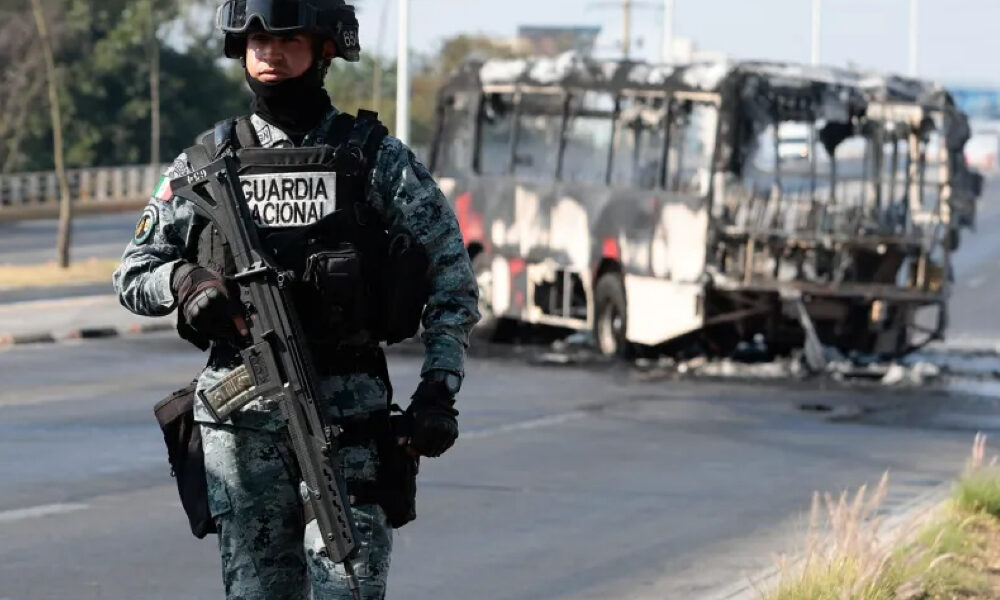
The scenes that unfolded in Mexico following the elimination of a senior cartel leader were a grim reminder of just how thoroughly organized crime can hollow out a state. Armed militants flooded the streets, torched vehicles, and brazenly challenged security forces – not as a desperate last gasp, but as a demonstration of institutional power.
For most Western observers, this registered as another grim chapter in Mexico’s long war against its cartels. For African policymakers, it should register as an urgent warning.
Mexico has spent decades building a security architecture capable of absorbing, if not always defeating, the cartels that have embedded themselves in its economy, politics, and social fabric. Its federal police, military, and intelligence services – however imperfect and however compromised – represent a formidable institutional bulwark.
Very few African nations can claim anything approaching that capacity.
A Continent Already in the Crosshairs
Latin American drug cartels did not discover West Africa yesterday. For well over a decade, trafficking networks have systematically targeted the subregion as a transshipment corridor for cocaine bound for European markets.
Guinea-Bissau – a state so thoroughly penetrated by narco-interests that analysts have long described it as a “narco-state” – stands as the most documented case. Sierra Leone and Guinea have similarly appeared in intelligence assessments and investigative reports as operational bases and safe-haven territories.
Cartel activity has also been reported in Ivory Coast and Ghana, countries with comparatively stronger institutions but by no means immune to the structural vulnerabilities that traffickers expertly exploit.
Those vulnerabilities are not incidental. They are structural. Weak rule of law, underfunded and ill-equipped security services, porous borders, chronically underpaid civil servants, and political systems susceptible to capture by illicit money – these are not random misfortunes.
They are precisely the conditions that transnational criminal organizations seek out and, over time, deepen.
The Weapons Problem
What should concentrate minds most urgently is the military-grade firepower that Mexico’s cartels have accumulated. Armored vehicles, anti-aircraft weapons, high-caliber rifles, and explosives have turned cartel confrontations with the Mexican state into near-conventional military engagements.
When drug organizations reach that level of armament, the calculus of state power changes entirely.
The uncomfortable question for African governments is this: if a well-armed cartel faction were to consolidate in a country like Guinea-Bissau or Sierra Leone – or to decide that transit arrangements were no longer sufficient and that territorial control was more profitable – what realistic military response would be available? The honest answer, in most cases, is an inadequate one.
This is not a theoretical concern. The Sahel provides a live case study in what happens when non-state armed groups, often financed in part by drug trafficking revenues, outgun and outmaneuver national armies.
The collapse of security in Mali, Burkina Faso, and Niger – accelerated by the proliferation of weapons from Libya after 2011 – illustrates how quickly the equilibrium between a state and its armed challengers can tip.
The Political Corruption Dimension
Perhaps the most insidious long-term threat is not military but political. Reports of high-ranking military officers and elected officials either actively cooperating with or being manipulated by cartel networks have surfaced repeatedly across West Africa.
This is not surprising. Cartels that generate hundreds of millions of dollars annually can easily outspend the annual defense budgets of small states when it comes to purchasing loyalty.
Once a trafficking network has embedded itself sufficiently within a country’s political and security elite, conventional law enforcement responses become self-defeating. Operations get leaked. Arrests get blocked. Prosecutions get derailed. Mexico has lived this reality for a generation.
The window to prevent it from becoming Africa’s reality is still open – but it is narrowing.
Prevention Is the Only Viable Strategy
Regional bodies, including the Economic Community of West African States (ECOWAS), have produced frameworks and action plans on drug trafficking. The gap between those frameworks and operational reality on the ground remains vast.
Customs cooperation is inconsistent. Intelligence sharing is limited. Prosecution rates for trafficking offenses are low. And political will – particularly when powerful domestic actors benefit from the status quo – is unreliable.
The lesson from Mexico is not that the cartels are invincible. It is that once they achieve sufficient scale, wealth, and political penetration, dismantling them becomes extraordinarily costly in lives, treasure, and institutional integrity – and success is never guaranteed.
Prevention is not merely preferable to cure. At a certain point, it becomes the only cure that is realistically available.
African leaders, regional institutions, and international partners would do well to treat the narco-state threat with the same strategic urgency they bring to counterterrorism or pandemic preparedness. The price of inaction has already been paid – violently and repeatedly – on the other side of the Atlantic.
Fidel Amakye Owusu is an International Relations and Security Analyst. He is an Associate at the Conflict Research Consortium for Africa and has previously hosted an International Affairs program with the Ghana Broadcasting Corporation (GBC). He is passionate about Diplomacy and realizing Africa’s global potential and how the continent should be viewed as part of the global collective.