Business
Media Mogul says Nigerian Entrepreneurs Must Take Risks
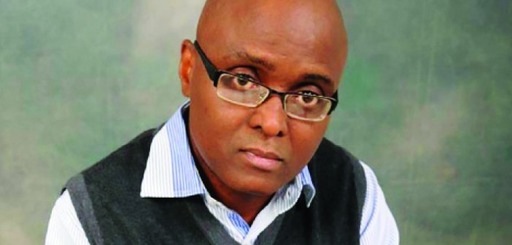
Martin Udogie is a trainer and a media personality with a peculiar story. After blazing through his academic pursuits, and graduating with First-Class in Business Administration, young Martin secured an automatic employment in a bank to the admiration of his peers. As he progressed in his job, he went on to study Accounting and subsequently got certification from the Institute of Charted Accountants of Nigeria (ICAN). Many watched with envy as Martin waltzed his way into a glamorous banking career for different banks.
But Udogie had another ambition he rated far greater than the banking profession. He was poised to break out into the society and test the water of running a private enterprise. He craved to impact lives rather than working in a cozy office with a steady pay check at the end of every month.
“I learnt what it means to make an impact. If you read John Maxwell, he says that there is a difference between when you are successful and when you make an impact, or achieve a life of significance.” In his quest to add value to people’s lives, the former banker took his destiny in his own hands, walked out of the secured environment of banking, and walked into the foggy territory of media practice.
Today, he is the brain behind BottomLINE magazine, a subscription-only newsletter targeted at Nigerian professionals and business executives. He is also the anchor of the Fidelity SME Forum, a popular radio programme that runs in many private radio stations in different parts of the country and in all FRCN broadcast stations in the 36 states of the federation.
And for more than 10 years, Martin Udogie has trudged on on the path of self-employment. He disclosed how the journey has been, his most trying period in business, his major motivation, among other issues. He spoke to HENRY OKONKWO. Excerpts…
Background
I graduated with a First Class degree in Business Administration at the University of Benin. After which I was trained and qualified as a chartered accountant of the Institute of Chartered Accountants of Nigeria (ICAN).
My first job was with City Bank of Nigeria. I was recruited straight from school because City Bank came to our graduation and offered employment to all First Class graduates. I worked with City bank for awhile and then joined Citizens International Bank. Thereafter, I worked in another bank called Commercial Trust Bank and my last banking job was with Fidelity Bank Plc. But in between these banks, I also had a career experience with a company called Anderson Consulting, but now it has been renamed Accenture.
For how long where you in the banking sector?
Overall if you count all the banks I worked with, it would amount to about 10 years. I didn’t spend more than two years in each of the banks that I worked. The reason being that I like to learn new things; and I am challenged by knowledge a lot. Back then, I viewed banking work as a routine, and a bit too procedural. I guess that explains why I left banking. But when I went into consulting, I learnt a lot. I saw myself growing intellectually and learning new things.
At what point did you decide to leave paid employment for self-employment?
I made the transition because of what I learnt working at Anderson Consulting. There I saw what you can do when you create value. I saw people who strike out in different directions and out of nothing, they create something. It was at that stage I learnt what it means to make an impact.
John Maxwell says there is a difference between when you are successful and when you make an impact or achieve a life of significance. And he explained by saying that being successful for many people, is making money thereby adding value to yourself only. But when you add value to people’s lives that is when you achieve significance. That spurred me to think of what I would do to make me touch lives and impact people.
Tell us about your first venture
My first project was publishing the BottomLINE newsletter in 2000; it was a subscription-only newsletter. The idea was for a high-end newsletter targeted at Nigerian professionals and business executives, which would deliver highly relevant and useful business and career information in an easy-to-read and remember format. It grew to become very popular and was about the only publication occupying that niche. At our peak, we boasted of over 10,000 paid subscriber base.
However, the economics of the business began to shift. It started first with the banking consolidation in 2007 that shrank the banking industry, the backbone of our business, from about 80 banks to 25. You know the Chinese sign for crisis is the same as the one for opportunity, ‘or breakthrough. This phase also coincided with the emergence of ATM, online banking, online content delivery and significantly, social media. Hence, even though the newsletter no longer exists in hard-copy, we have an archive of priceless BottomLINE content of over 10 years that we are uploading online and will soon be available as online blog content as well as a mobile app.
What are some of the challenges you faced when starting up?
The transition from paid employment to self-employment is one of the most difficult decisions one can make. It is one of the most uncertain leaps anybody can take.
One of the profound experiences that I had in entrepreneurship was when I started publishing BottomLINE. The first edition that was printed took 50 per cent of my capital but when the product came out it was a disaster because it didn’t come in the right quality I wanted. And so at that point in time, I faced a major decision on whether this is really what I wanted to continue doing giving that the very first edition was nothing to write home about. I pondered whether I should just go back to paid employment where my job was still waiting for me; because my boss assured me that if whatever I was doing did not work that I should feel free to come back to my job.
That was my most difficult experience in small business. But again it turned out to be one of the most beneficial. I realized I didn’t want to go back to paid employment as a failure. So, I took it upon myself to go back and produce one more edition. And I staked my all, and I learnt everything in humility.
The next publication that came out was one of the beautiful editions of BottomLINE and when it came out, I told myself that I most continue in this business and never look back. Turning failure to success has been one of my most profound experiences in entrepreneurship.
How has the journey been?
Making a transition from paid employment to self-employment has been in one breath, challenging and in the other breath, exciting. There are things that am doing today that have enabled me to build some kind of brand for myself and if I was in one company I probably would have limited opportunities to impact people. But I am excited that with the benefit of what I have learnt over the years, what I am doing and with the media exposure I have had, I find a platform to impact people through what I do.
What is the big idea behind the Fidelity SME Forum?
It is a very laudable idea of Fidelity Bank to have a platform that encourages wealth creation and job creation. They called me in, to come and anchor it on airwaves. The whole idea is to stem the high rate of unemployment. The established businesses are not enough to gainfully employ the high number of graduates produced from our universities. And the bank shares in the belief that one solution to this is to encourage entrepreneurship, and small businesses to be set up and to survive, so that they can absorb a number of these graduates.
Have you ever second guessed your decision to quit banking?
No. I have never regretted my decision to pursue entrepreneurship. Obviously there are benefits to paid employment, the certainty of monthly salary, the safety of having a regular job against the uncertainty of going out to hunt for clients. But remember that company called ‘Whatsapp’, that Facebook bought for 19 billion Dollars; think about it. If those young men had stayed back in their employment how would they have broken grounds with all these new businesses. You must be emboldened to step out of your comfort zone to go and do something that is bigger than you.
What is your motivation?
I am motivated by creativity, excellence. What challenges me is ability to create anything in our own environment that can be compared with any other product or service from anywhere in the world. Ability to create world-class solutions; and I believe that is the level every entrepreneur should be aspiring because there is no longer a Nigerian standard, we must always strive for world-class quality.
What would be your advice to aspiring entrepreneurs?
Aspiring entrepreneurs must prepare their minds never to be afraid of failure. It is more important they have ability to overcome failure. Two, no matter how big a business is, they all started small. So, don’t be afraid of small beginnings. Then follow your dream and passion. Every entrepreneur I have encountered, and hosted on the Fidelity SME Forum has always been driven by passion and not money. Money was secondary; the primary motive was a passion for excellence in doing something they love.
Copyright Sun News Online 2014