News
Mauritius ranked Africa’s most peaceful country; Gambia records largest improvement
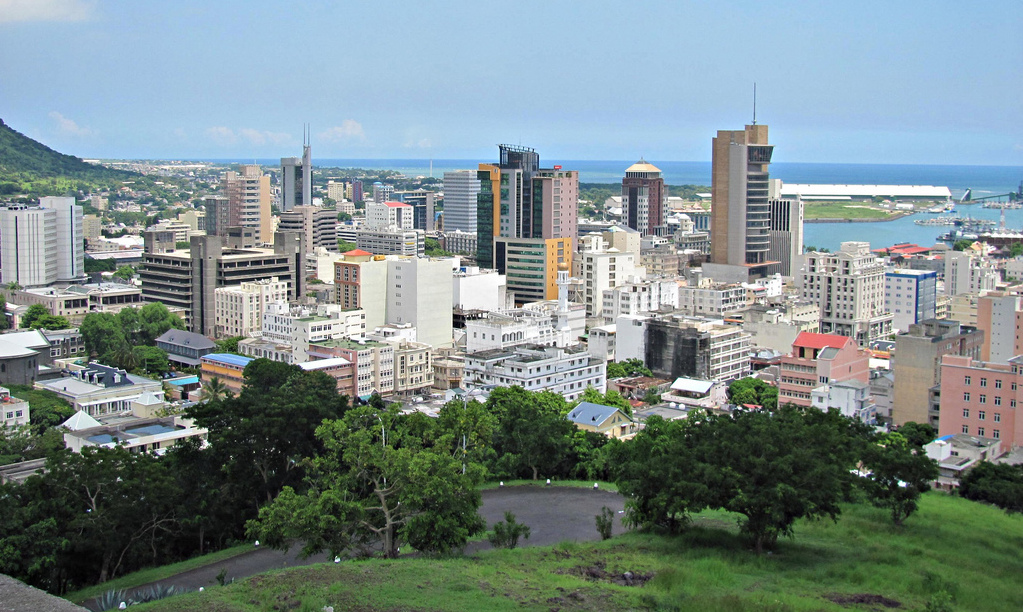
Mauritius has been ranked in the top 20 of the world’s most peaceful countries in the 2018 Global Peace Index (GPI). In the 12th edition of the Index, Mauritius was ranked number 20 out of 163 countries.
On the continent Botswana came 2nd, and ranked 29 globally. Sierra Leone was ranked (35), Madagascar (38), Ghana (41), Namibia (43), Malawi (44) and Zambia (48) respectively on the Global Index.
Free from internal and external conflict, Mauritius and Botswana are indeed a model for peace and stability.
Of the 5 countries with the largest improvements in peace, 4 are from sub-Saharan Africa, including the Gambia and Liberia, which had the largest overall improvements in peacefulness.
According to the index, the single largest country improvement occurred in The Gambia, “where improvements in political instability, perceptions of criminality, and relations with neighboring countries saw it improve 35 places in the rankings, moving up to 76th.”
“The election of the new president Adama Barrow lay behind the improvements in political stability and the Gambia’s relations with neighbouring countries.”
Liberia had the 2nd largest overall improvement in peace of any country, moving up 27 places in the rankings.
A product of the Institute for Economics and Peace (IEP), the index measures the relative position of nations’ and regions’ peacefulness using three broad thematic areas: the level of safety and security in society, the extent of domestic and international conflict, and the degree of militarization. It ranks countries based on 23 qualitative and quantitative peace indicators.
Iceland was ranked as the world’s most peaceful country, a position it has held since 2008 joined at the top of the index by New Zealand, Austria, Portugal, and Denmark. Syria was ranked as the world’s least peaceful country, followed from the bottom by South Sudan, Iraq, Afghanistan and Somalia.
While there are positives on the African continent, and indeed globally, the index reveals that the overall global levels of peace continue to deteriorate with the gap between the most and least peaceful countries widening.
The index shows that global deterioration in peace in 2015 was driven by amongst other factors, the increase in terrorism activity and higher levels of political instability.
The world became less peaceful in the last year, reinforcing an underlying decade-long deterioration in world peacefulness driven primarily by increased terrorism and higher levels of political instability.
The Lake Chad basin region continues to have problems with Boko Haram and a humanitarian crisis brought on by prolonged drought.
In eastern Africa, there seems little sign of an end to the 4-year old civil war in South Sudan.
Ethiopia fell 6 places to 139 after Amhara protesters targeted Tigrayan business interests and foreign investors, leading to deteriorations in its scores for violent demonstrations and political terror. Neighbouring Kenya, in contrast, gained three places as a result of a reduced number of attacks by militants allied to Somalia’s al-Shabaab move.
The largest deterioration in the region was recorded by the Democratic Republic of the Congo (DRC), where President Joseph Kabila’s refusal to step down at the end of his 2nd and final term at the end of 2016 has led to increasing violence, particularly in the country’s eastern provinces.
Source: This is Africa