News
Mali: UN chief proposes African Union peacekeepers
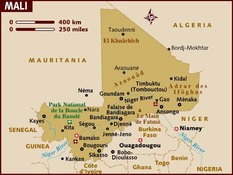
U.N Secretary-General Ban Ki-moon proposed a U.N. peacekeeping force for Mali with 11,200 troops working alongside a non-U.N. force that would conduct major combat and counter-terrorism operations against Islamic extremists Tuesday as one option to maintain security.
The U.N. chief said in a report to the Security Council that another option would be to strengthen the U.N.’s new political mission in Mali and give the African-led force in Mali known as AFISMA, responsibility for security and offensive combat operations, as a prelude to a U.N. stabilization mission.
Mali was plunged into turmoil after a coup in March 2012 created a security vacuum. That allowed secular rebel Tuaregs, who have long felt marginalized by Mali’s government, to take half of the north as a new homeland. But months later, the rebels were kicked out by al-Qaeda linked Islamic jihadists who imposed strict Shariah law in the north, including amputations for theft.
Unplanned military action in the past two months has forced the Security Council to revamp the two-track plan it adopted in December to reunify the country. The council had authorized African-Union forces (AFISMA) to support Malian authorities in recovering the north alongside a political process promoting reconciliation and leading to elections.
In Tuesday’s report, the secretary-general said that in response to a council request he was presenting two options for a possible U.N. peace and security presence in Mali that take into account “the fact that the United Nations is operating in a new geopolitical context and faces threats that have not been encountered before in a peacekeeping context.”
“The situation on the ground remains fluid,” Ban stressed. “Although the extremists and criminal elements have been dealt a heavy blow, they continue to pose a significant threat to the safety and security of the civilian population and any United Nations personnel deployed in Mali.”
Ban said that under the option that would give AFISMA a combat role and expand the U.N. political mission, the United Nations would work with the African Union and others to rapidly build up and improve the operational capabilities of the African force.
This could lead to a U.N. stabilization mission once critical benchmarks have been met and he identified several possibilities including an end to major combat operations, a reduction in threats from armed groups, the ability to safely deploy U.N. civilian staff, AFISMA’s capabilities, extension of the Malian government’s authority throughout the country, and progress toward presidential and legislative elections.
In the other option, Ban said a U.N. peacekeeping force would operate mainly in the north under robust rules of engagement with a mandate to protect civilians “under imminent threat of physical violence.” He said the bulk of AFISMA troops would transfer to the U.N. force, which would also include 1,440 police officers.
“Given the anticipated level and nature of the residual threat, there would be a fundamental requirement for a parallel force to operate in Mali alongside the United Nations mission in order to conduct major combat and counter-terrorism operations and provide specialist support beyond the scope of the United Nations’ mandate and capability,” Ban said.
He said “it is critical” that there is a clear distinction between the tasks of the two forces.
“Any blurring of this distinction would place severe constraints on the ability of United Nations humanitarian, development and human rights personnel to safely do their work,” Ban warned.
Copyright 2013 The Associated Press