News
Mali: U.N. OKs military intervention by African Union to eject al-Qaeda from the north
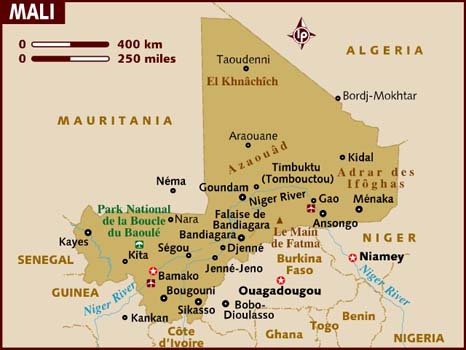
The U.N. Security Council on Thursday authorized military action to wrest northern Mali from the control of al-Qaeda-linked extremists but demanded progress first on political reconciliation, elections and training African troops and police.
A resolution adopted unanimously by the U.N.’s most powerful body stressed that there must be a two-track plan, political and military, to reunify the country, which has been in turmoil since a coup in March.
The Security Council authorized an African-led force to support Malian authorities in recovering the north — but set no timeline for military action. Instead, it set out benchmarks to be met before the start of offensive operations, starting with progress on a political roadmap to restore constitutional order.
The resolution also emphasizes that further military planning is needed before the African-led force is sent to the north and asks Secretary-General Ban Ki-moon to “confirm in advance the council’s satisfaction with the planned military offensive operation.”
Mali was plunged into turmoil after a coup in March created a security vacuum. That allowed the secular Tuaregs, who have long felt marginalized by Mali’s government, to take half the north as a new homeland. But months later, the rebels were kicked out by Islamist groups allied with al-Qaeda, which have now imposed strict Shariah law in the north.
Mali was thrown into more political turmoil earlier this month when the prime minister abruptly resigned, owing to increased pressure from the military.
As the council spent months negotiating over what action to take, an Islamist group behind public executions and amputations in northern Mali, Ansar Dine, or “Defenders of the Faith,” has expanded its reach. The fighters, whose territory includes Timbuktu, have stoned to death a couple accused of adultery, hacked off the hands of thieves and have recruited children as young as 12 into their ranks. Heavily armed men also have attacked bars that sell alcohol, and banned men and women from socializing in the streets.
On November 13, the African Union asked the Security Council to endorse a military intervention to free northern Mali. The plan, agreed to by leaders of the West African bloc known as the Economic Community of West African States (ECOWAS), called for 3,300 soldiers to be deployed to Mali for an initial period of one year.
The resolution authorizes an African-led International Support Mission in Mali, to be known as AFISMA, for an initial period of one year but makes no mention of its size. It welcomes troop contributions pledged by ECOWAS and calls on member states, including from the neighboring Sahel region, to contribute troops to the mission. Council diplomats say the best-trained African troops in desert warfare are from Chad, Mauritania and Niger.
The U.N. resolution stresses the importance of reconciliation, urging the transitional authorities to finalize a transitional roadmap to restore constitutional order, including holding elections by April “or as soon as technically possible.”
The council asked the secretary-general to provide support in critical areas to help the Mali government extend its authority during or following a military operation, including in the rule of law, removing land mines and promoting national dialogue and regional cooperation.
The Security Council expressed its readiness to consider “appropriate measures,” which could include sanctions, against those whose actions undermine peace, stability and security, “including those who prevent the implementation of the constitutional order in Mali.” It also reiterated its readiness to impose additional targeted sanctions against rebel groups and individuals that don’t cut ties to al-Qaeda and its affiliates, including al-Qaeda in Islamic Maghreb and the Movement of Unity and Jihad in Western Africa.
The benchmarks the U.N. Security Council set before the start of military operations are:
— Political progress, including on the roadmap and negotiations between Malian authorities and all parties in the north who have cut ties to terrorist organizations.
— Effective training of military and police units from Mali and AFISMA on their obligations under international human rights, humanitarian and refugee laws.
— The operational readiness of AFISMA including its leadership, equipment, adaptation to the climate and terrain, “and ability to conduct joint armed operations with logistical, air and ground fire support.”
— The efficiency of the chain of command of AFISMA including its interaction with Malian forces.
Copyright 2012 The Associated Press