News
Mali Presidential election 2013: Voters turn out in large numbers – hopeful election will heal nation
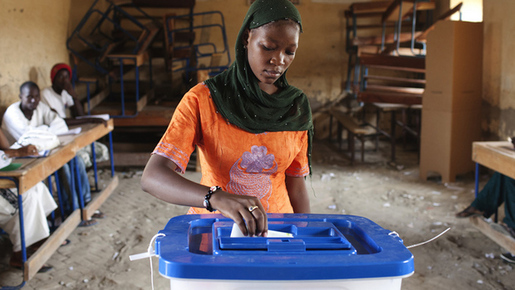
A Malian lady casts her vote during Mali’s presidential election, July 28, 2013. PHOTO/Joe Penney/Reuters
Voters in Mali turned out in large numbers to vote on Sunday in a presidential election they hope will provide a fresh start for the West African nation after more than a year of turmoil, that included an army coup and an invasion by al-Qaeda linked Islamists.
From the lush, bustling riverside capital, Bamako, to the northern desert town of Timbuktu, voters crammed into schools turned into polling stations for the day, protected by Malian, and African Union forces.
A successful presidential election on Sunday would mark a major step towards recovery in the country. High turnout out at 21,000 polling stations would breathe life into Mali’s 20-year-old democracy, which was disrupted last year.
“I came to choose a president capable of managing the country,” said Mamoutou Samake, 46, an agricultural engineer and the first to vote at a polling centre in Bamako’s Banankabougou neighborhood. “The priority of the new president must be to reestablish peace and security. The rest will come with time,” he said.
After some initial delays in deploying voter material, voters carrying identification cards formed long queues in the courtyards of schools by mid-morning. Turnout for a presidential election in Mali has never exceeded 40 percent.
Mali’s 6.8 million registered voters will choose from 26 men and one women. The field includes two former prime ministers – Ibrahim Boubacar Keita, known universally as IBK, and Modibo Sidibe – who are expected to be among the top finishers.
Soumaila Cisse, a respected economist, former finance minister and native of the region of Timbuktu, is also among the leading candidates. And relative political newcomer Dramane Dembele, chosen as the candidate of Mali’s largest party, ADEMA, could appeal to young voters.
Most of the front-runners are established political figures from the last 20 years of Malian politics so there is little likelihood of a radical overhaul despite calls for change after the unprecedented crisis in the West African nation. A second round is due to take place on August 11 if no candidate wins more than 50 percent of the vote.
Mali’s interim President Dioncounda Traore said the election had been the best the country had organized since independence. “Democracy is the law of the majority. I ask that all candidates accept the result of the ballot boxes,” he said.
Before last year’s crises, Mali, had built up a reputation for stability and become Africa’s 3 largest gold producer.
The new president will have to oversee peace talks with separatist Tuareg movement who have agreed to allow the election to take place in areas they operate in. It is hoped that by voting in large numbers Malians will revive a democracy that was envied as a model of stability but failed to mobilize enthusiasm at home, fostering weak system that lacked checks and balances. “The Islamist invasion and the coup may have taught us a lesson that we need to build a proper democracy,” said Gossy Dramera, a member of parliament, before he looked for his polling station.
Source: Reuters