News
Mali: Post-war government named following successful presidential elections
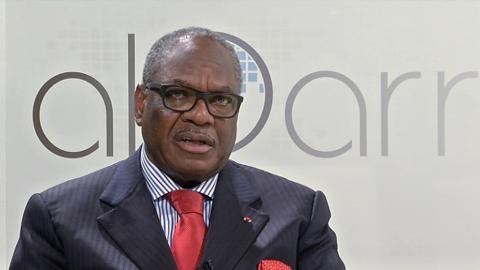
Newly elected Mali President Ibrahim Boubacar Keita. PHOTO/File
Mali’s first post-war prime minister has appointed a cabinet featuring a number of old hands and a new ministry charged with reconciliation in the conflict-scarred west African nation, according to a government statement.
Oumar Tatam Ly, named as head of President Ibrahim Boubacar Keita’s government last week, appointed 34 ministers and deputy ministers including a number of politicians who had held portfolios in previous administrations.
A new Department of National Reconciliation and Northern Development, headed by diplomat Cheick Oumar Diarrah, will be charged with healing the scars of an Islamist insurgency which followed a coup last year, and with improving conditions in the impoverished north.
In another nod to the need for national unity, the foreign ministry goes to Zahibi Ould Sidi Mohamed, a member of the Arab minority and a one-time leader of the Tuareg separatist movement in the northern desert.
Moussa Coulibaly Sinko keeps his post as interior minister, which he held as part of the transitional government formed after the coup in March last year.
Soumeylou Boubeye Maiga, a former chief of the intelligence services and holder of several cabinet posts, rerutns to the role of defence minister he held under the presidency of Alpha Oumar Konare in the 1990s.
As well as delivering on the president’s pledge to unite Mali and end endemic corruption, the cabinet will have to address an economy battered by conflict and ethnic divisions in the north, as well as managing the return of 500,000 people who fled the al-Qaeda-linked Islamist insurgency.
Army officers angry at what they considered a lack of support to combat the separatist Tuareg movement in Mali’s vast desert north overthrew the democratically elected government of president Amadou Toumani Toure on March 22, 2012.
In the ensuing chaos, the al-Qaeda-linked groups seized control of an area larger than France.
They imposed a brutal interpretation of Islamic law on the local population, carrying out amputations and executions, prompting worldwide condemnation.
Early this year, the Islamists were pushed out as a result of external military intervention.
The country’s return to democracy has allowed for some of the external military forces, though a contingent of African Union peace keepers will remain.
Source: AFP