Zina’s Youth View on Africa
Mali Deepens Strategic Ties with Russia Amid Shifting Alliances


By Godfred Zina
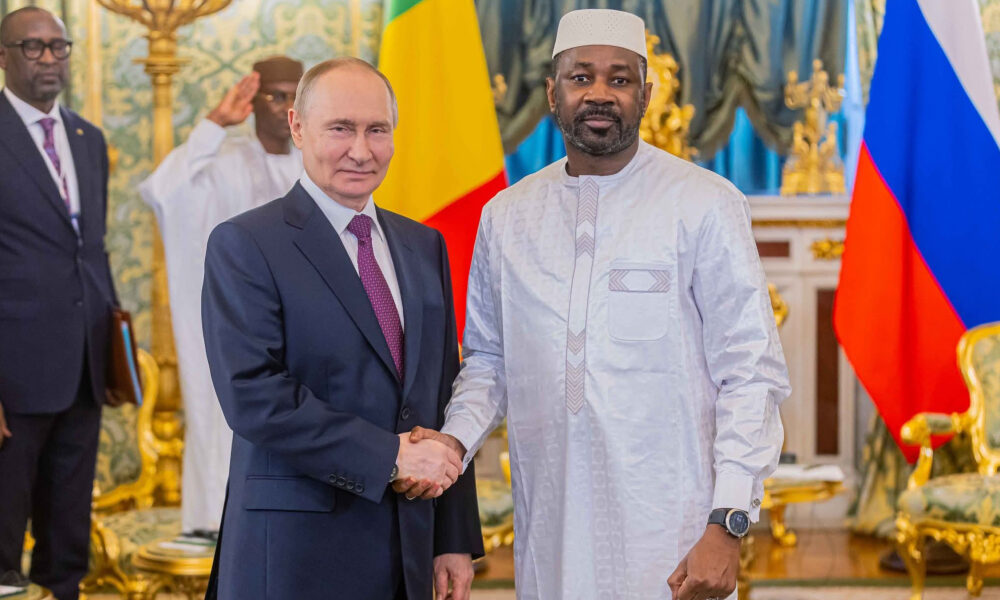
As Russia expands its influence across the Sahel region, its strategic partnership with Mali has grown significantly stronger. This week, Malian leader Colonel Assimi Goïta visited Moscow, where he signed a series of agreements aimed at boosting bilateral trade, enhancing economic cooperation, and advancing collaboration in nuclear energy.
During his talks with Russian President Vladimir Putin, Goïta emphasized deepening military cooperation – a key pillar of the growing alliance between the two nations. Since seizing power in a 2021 coup, Goïta has distanced Mali from its former colonial ruler, France, and joined forces with other members of the Alliance of Sahel States (AES) to forge closer ties with Russia.
Following the expulsion of Western forces – including French, U.S., and UN troops – Russian mercenaries from the Wagner Group have played a central role in supporting Mali’s government in its ongoing fight against regional insurgents. Against a backdrop of deteriorating security, Mali’s leadership has prioritized strengthening national sovereignty and achieving measurable improvements in stability.
Geopolitical Shifts and Regional Implications
Earlier this year, in April, Malian Foreign Minister Abdoulaye Diop and other Sahel ministers traveled to Russia for high-level consultations between AES member states and Moscow – an indication of the deepening diplomatic engagement.
But what does this shift mean for regional dynamics?
The growing alignment between the Alliance of Sahel States and Russia risks weakening traditional regional institutions like the ECOWAS (Economic Community of West African States), potentially undermining broader efforts to stabilize West Africa. While Mali benefits from new investment and security support, its increasing reliance on Russia raises concerns about long-term dependency.
Experts warn that without strong institutional safeguards, Mali could find itself constrained in its foreign policy and global negotiations. Moreover, by embracing Russian private military contractors accused of human rights abuses, Mali may inadvertently legitimize their operations under the guise of international security cooperation.
As Russia positions itself as a new security guarantor in the Sahel, replacing longstanding Western allies, it also opens the door to a more assertive geopolitical presence in Africa. Analysts caution that prolonged military governance in Mali could inspire similar upheavals in neighboring countries, further destabilizing the region and exacerbating divisions along geopolitical lines.
Godfred Zina is a freelance journalist and an associate at DefSEC Analytics Africa, a consultancy specializing in data and risk assessments on security, politics, investment, and trade across Africa. He also serves as a contributing analyst for Riley Risk, which supports international commercial and humanitarian operations in high-risk environments. He is based in Accra, Ghana.