News
Malawi and Tanzania vow to resolve border dispute diplomatically
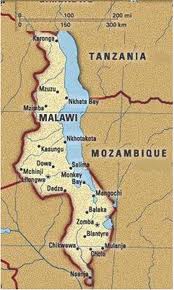
Malawi President Joyce Banda will meet her Tanzania counterpart, Jakaya Kikwete, in the next two days to discuss a dispute over Lake Malawi, where oilexploration is currently ongoing.
Presidents Banda and Kikwete will meet at Southern African Development Community (SADC) summit that begins today in Maputo, the capital of Mozambique. SADC, is a community of 15 southern African nations.
President Banda has vowed not to go to war with Tanzania “at any cost” and to resolve the border dispute diplomatically and as amicably as possible.
Malawi announced in October that it had awarded Surestream Petroleum Ltd., a license to search for oil in blocks 2 and 3 on Lake Malawi covering 20,000 square kilometers (7,724 square miles).
Tanzania says exploration has extended into its half of the lake, which it calls Lake Nyasa, and wants exploration halted until ownership of the water body is determined.
The Anglo-German Treaty of July 1, 1890, signed between Britain and Germany, the former colonial rulers of Malawi and Tanzania, gave ownership of the lake to Malawi.
Tanzania Foreign Minister Bernard Membe told parliament on August 5 that Tanzania owns 50 percent of the lake and that his government had asked Malawi to stop crude oil and natural-gas exploration on the lake until the dispute over ownership was resolved, according to the Citizen newspaper based in Dar es Salaam, Tanzania.
“Our position is not to do any exploration activities on the lake, because there is a process of resolving the dispute under way,” Salvator Rweyemamu, director of presidential communications in Tanzania, said in an interview on August 8 from Dar es Salaam.
Banda and Kikwete plan to hold further discussions on the issue on August 20 in Malawi. Banda said the country was exploring many avenues to resolve the dispute and doesn’t expect conflict to erupt between the two countries.
Tanzania already holds the second-largest natural-gas reserves in eastern Africa after Mozambique, having discovered about 30 trillion cubic feet of the resource so far.