A Diaspora View of Africa
Making the African Diaspora the 6th Region of Africa

By Gregory Simpkins
I have been blessed to be a part of some important developments involving African issues: the creation and extension of the African Growth and Opportunity Act (AGOA), the development of the Prosper Africa initiative and the African Union (AU) designation of the African Diaspora as the continent’s 6th Region.
My involvement on the 6th Region issue was made possible by Fred Oladeinde, President of the Foundation for Democracy in Africa (FDA)., who convinced the AU Economic, Social and Cultural Council (ECOSOCC) to support a Western Hemisphere African Diaspora conference in December 2002. He asked me to design and manage that conference, which had a dramatic and nearly immediate impact. Within weeks of our conference, the AU had amended its charter to make the Diaspora Africa’s 6th Region.
I have heard and read a lot from those who believe it was their efforts that led to this decision. However, Oladeinde’s visionary effort in convening this conference proved revelatory to the AU officials in attendance and those within the AU system who heard what happened. The most important thing the AU officials learned was how limited their interpretation of the term African Diaspora had been. Before our conference, when they referred to the Diaspora, they meant those born on the continent who now lived outside. While that is certainly one part of the Diaspora, it is by no means its entirety, as these officials discovered.
Attending our conference in Washington were recent African immigrants and historic African descendants from across the United States, Canada, Latin America and the Caribbean as well as Europe. We even had as a participant the Diaspora advisor to incoming Brazilian President Luiz Inácio Lula da Silva, who was called home suddenly during the conference to advise the new Brazilian administration.
The AU officials in Washington were challenged early on in the conference as to their definition of Diaspora. As we discussed the ways in which collaboration of all parts of Africa’s family would be mutually beneficial, it became clear that the broader Diaspora had much to contribute and much to gain from a closer connection.
Unfortunately, while we had broad representation from the Diaspora at our conference, there was no mechanism nor leadership capable of pulling together a cohesive unit from among the various elements of the global African Diaspora. The Americans, Canadians, Caribbeans, Latins and Europeans each had their own leaders, and in each part of the Diaspora there were divisions that prevented these internal elements from coalescing.
This was despite the post-conference creation of the Western Hemisphere African Diaspora Network (WHADN) by FDA. Too many established Diaspora organizations in the United States resisted being coordinated by a group they saw as a newcomer, despite its obvious international connections and creativity in organizing this conference.
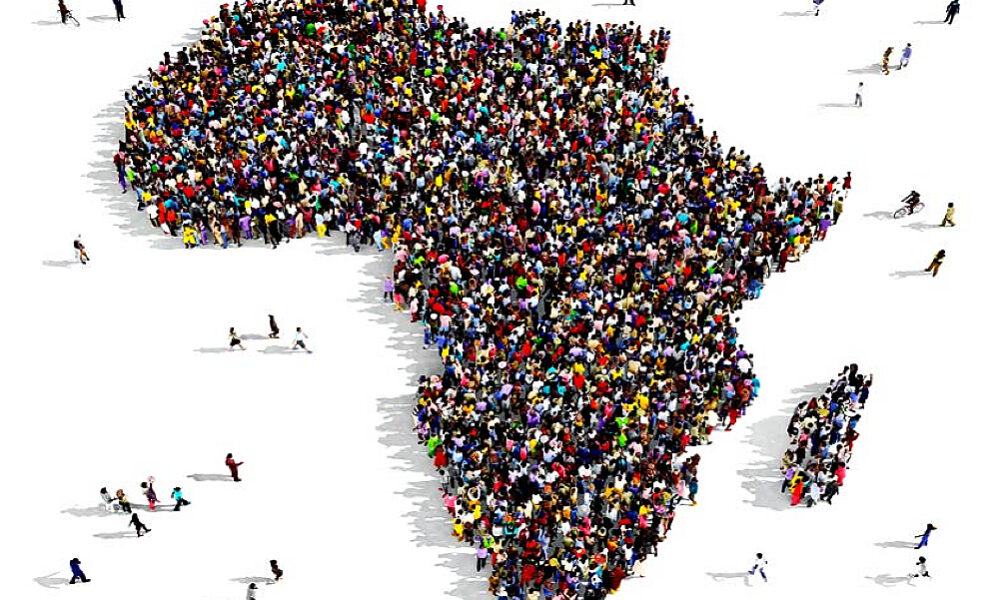
It is estimated that the African Diaspora is more than170 million people who live all over the world. There are approximately 39 million in North America, 113 million in Latin America, 14 million in the Caribbean and 4 million in Europe.
I have worked for Ambassador Andrew Young – both at his GoodWorks International firm and at the Leon H. Sullivan Foundation while he was Board Chairman. He has been widely respected internationally, and a figure such as himself had the potential to connect and help organize the disparate elements of the Diaspora. However, this opportunity came too late in his illustrious career. We seem to have run out of Diaspora world figures known and respected in all corners of the Diaspora, leaving us with enthusiastic but separate elements thus far unable to take full advantage of the 6th Region opportunity.
The 6th Region Campaign
I have known people who have organized to overcome this disconnection over the last couple of decades. The current champion of unity in this country is known as the African Unity Sixth Region USA, which describes itself on its web site.
“The African Unity Sixth Region USA is a network of People of African Descent, individuals, and their organizations, including both non-profits and for-profits. This AU6RUSA Network is expected to be engaged, through strategic programming and work, to elect representatives for the USA in the AU ECOSOCC Assembly, in line with the AU Constitutive Act Article 3(q), which invites the African Diaspora to participate as an essential component in the building of the African Continent, and to build sustainable partnerships between the African Continent and the African Diaspora through sustainable dialogue and effective collaboration with governments for the rejuvenation of the global African family as an instrument of a wider renaissance; and ultimately to enable the African Diaspora to increase their participation as observers in the affairs of the African Union and as the Sixth Region of the Continent that would contribute substantially to the implementation of policies and programs,” it states.
Of course, any successful effort to align the elements of the Diaspora should go beyond the United States, but how could Americans ask others to join with us if we are not united ourselves? The AU6RUSA effort is a good start to building a unified response to the 6th Region challenge posed by the AU. We may not have a widely recognized inspirational figure to lead the charge, but if we can coalesce the various groups and individuals in this country, we will be in a much stronger position to approach those of us in Canada, LAC and Europe and especially those of us in places such as the Middle East, the Pacific Islands and even the Aboriginal peoples of Australia.
When FDA organized the 2002 conference, we didn’t have the time or connections needed to reach those last groups.
It is estimated that the African Diaspora is more than 170 million people who live all over the world. There are approximately 39 million in North America, 113 million in Latin America, 14 million in the Caribbean and 4 million in Europe. It is undetermined how many live in other areas of the world, partly due to differences in racial identification. For example, in countries such as Cuba, Brazil and South Africa, Diasporans may be identified in classifications such as Colored, which could obscure their membership in the Diaspora.
Several years ago, my colleague Bartolomeu Capitua, a longtime activist for separation of the enclave of Cabinda from Angola, authored a paper that stated that continental Africans and the Diaspora will never be respected so long they we remain disconnected.
He wrote:
The overall situation of Africans in the Diaspora will get no improvement unless the overall situation of the Continental Africans is improved. As long as the political, social, and economic chaos continues to characterize Continental Africans, nowhere will Africans in the Diaspora be respected as full human beings.
Indeed, Africans on the continent, those who have left Africa and those of us born outside Africa have long been taught to suspect and disrespect each other. Images on television and in movies and negative news articles have given all parts of the Diaspora the notion that other elements are not worth unifying our efforts because we are either mindlessly savage, hopelessly corrupt, irredeemably ignorant or incurably lazy.
Back in 2018, when I wrote the U.S. government’s first paper on Prosper Africa, I cited estimates of more than one trillion dollars in disposable income among the Diaspora in America, at least part of which could be used for investment in African enterprises. I recall the deafening silence with which that was greeted by most of my government colleagues at the time. It was mostly repeated by me in government circles subsequently. Years ago, it was estimated that remittances from Diasporans to Africa had exceeded development aid from foreign governments. That news has been responded to by the insistence of many that most remittances have been to pay for family needs and not business investment. The potential combined economic power of continental Africans and their Diaspora seems to be a fact on which many in powerful positions don’t want us to focus.
In addition to our combined economic power alone, Africans and their Diaspora have long held significant cultural influence globally. Working in concert, that influence could not only generate income but also advance the image of Africa’s children worldwide. We can blame people from foreign governments and societies for working to denigrate our global image over time, but if we continue to allow that denigration, then it becomes our fault. We realize how wrong it has been so it is up to us collectively to challenge the negative images distributed about African and Diasporan people, but first, we ourselves must realize and accept this this has been a tragic misrepresentation and understand that we are greater than many have portrayed us as being. Our historic and ongoing accomplishments must be promoted, which is what we try to do at The Habari Network & Journal.
The American Civil Rights Movement was an inspiration to Africans and others in the Diaspora in their fight for liberation. In the United States, the arrival of diplomats from newly independent Diaspora-run countries helped to break the color barrier at hotels and restaurants for black Americans, for example. Whether we knew then of our mutual benefit to one another or not, we did help each other achieve our goals for liberation from colonialism and discrimination.
I don’t know what others in the Diaspora intend to do about the 6th Region movement, but I intend to renew my past effort to make it a success so that one day, the global Diaspora can express its voice in the AU councils and facilitate successful economic, political and cultural partnerships.
Gregory Simpkins, a longtime specialist in African policy development, is the Principal of 21st Century Solutions. He consults with organizations on African policy issues generally, especially in relating to the U.S. Government. He further acts as a consultant to the African Merchants Association, where he advises the Association in its efforts to stimulate an increase in trade between several hundred African Diaspora small and medium enterprises and their African partners.