Opinion
Maize in Africa: From Staple Crop to Engine of Innovation and Resilience


By Jean Claude Niyomugabo
When most people think of maize – commonly known as corn – in Africa, they picture a golden cob on a plate, a steaming bowl of ugali, or a bustling market piled high with the continent’s most widely grown crop. It’s easy to see maize as just a food staple.
But to reduce it to that is to overlook its profound role as a cornerstone of food security, rural livelihoods, and economic resilience across Africa.
Maize is more than a meal – it’s a lifeline.
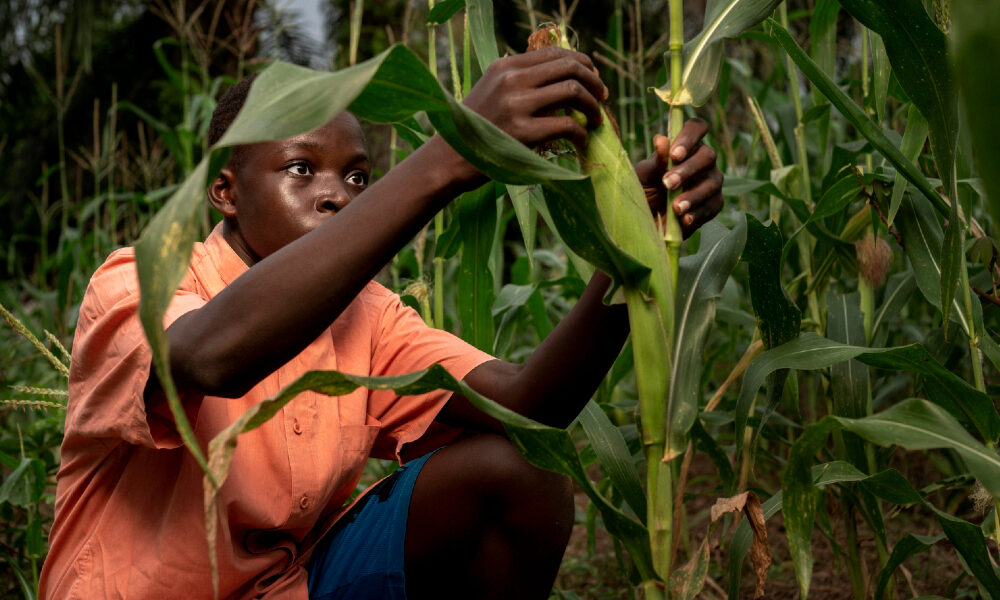
For generations, African farmers have cultivated maize using time-honored traditions. With hoes in hand and the rhythm of the rainy season as their guide, smallholder farmers planted seeds saved from the previous harvest, passed down through families like heirlooms.
Knowledge of soil health and pest control was limited, and farming remained a precarious gamble with nature. Drought, pests, and poor yields could mean the difference between abundance and hunger. For millions, the success of the maize harvest wasn’t just about profit – it was about survival.
Rooted in Tradition: The Legacy of Maize Farming
Maize was introduced to Africa in the 16th century and quickly became a dietary cornerstone due to its adaptability and high yield potential. Over time, it replaced traditional cereals like millet and sorghum in many regions, becoming deeply embedded in cultural practices and farming systems.
Yet traditional farming methods, while resilient in their own right, often lacked the tools to combat modern challenges. Reliance on rain-fed agriculture, limited access to improved inputs, and minimal extension services left farmers vulnerable.
A single season of erratic rainfall or a pest outbreak could wipe out entire harvests, pushing families into food insecurity.
This legacy continues to shape the realities of millions of smallholder farmers – especially women, who produce over 60 percent of the continent’s food yet often face disproportionate barriers to resources and land ownership.
Growing Change: Technology and Transformation in Modern Farming
Today, the story of maize farming in Africa is being rewritten.
A quiet revolution is underway. Across countries from Kenya to Zambia, Nigeria to Ethiopia, farmers are embracing modern tools and techniques that are transforming the way maize is grown.
Improved hybrid and drought-tolerant seed varieties are boosting yields. Fertilizers and targeted pesticides are protecting crops from disease and pests like the devastating fall armyworm.
Mechanization – though still limited – is beginning to ease the backbreaking labor of land preparation.
And technology is bridging the gap between tradition and innovation. Through mobile phones, farmers now access real-time weather forecasts, agronomic advice, and market prices – empowering them to make smarter decisions and get better returns.
Digital platforms are connecting smallholders directly to buyers, reducing post-harvest losses and increasing incomes.
Yet, despite these advances, the road to sustainable maize farming remains uneven.
Millions of smallholder farmers still struggle to access high-quality seeds, affordable fertilizers, and credit. Climate change is intensifying, bringing erratic rainfall, prolonged droughts, and extreme weather that undermine even the most resilient farming systems.
Rural infrastructure – roads, storage facilities, and electricity – lags behind, making it difficult to move crops to market or preserve harvests.
The stakes could not be higher. Maize feeds over 300 million Africans and supports the livelihoods of more than 40 million small-scale farming households. It’s not just a crop – it’s a critical component of national food security and rural economies.
Harvesting the Future: Innovation, Inclusion, and Shared Prosperity
The next era of maize farming in Africa must be smarter, more resilient, and inclusive. Climate-smart maize varieties – engineered to withstand heat, drought, and pests – must become the norm, not the exception.
Precision agriculture, powered by drones, satellite imagery, and soil sensors, can help farmers optimize water, fertilizer, and pesticide use, reducing costs and environmental impact.
Electric and automated machinery could revolutionize productivity, especially as Africa’s youth seek modern, tech-driven opportunities in agriculture. Digital marketplaces and fintech solutions will enable farmers to sell their produce more efficiently, access credit, and build financial resilience.
Beyond the field, maize will fuel new value chains – flour milling, animal feed production, brewing, and bio-based products – spurring rural entrepreneurship and job creation. Reducing post-harvest losses through improved storage and processing will ensure more of every harvest reaches consumers.
But none of this will happen in isolation.
Realizing this future requires collaboration. Governments must invest in rural infrastructure, support agricultural research, and create policies that empower smallholders.
The private sector must scale up innovation and inclusive business models. Researchers and development partners must co-create solutions with farmers.
And young innovators must be given the tools and incentives to lead the agricultural transformation.
Maize has long been a symbol of sustenance in Africa. Now, it can become a symbol of progress.
With the right investments, partnerships, and vision, maize farming can evolve from a subsistence activity into a thriving, sustainable, and profitable enterprise – one that feeds nations, empowers communities, and drives inclusive growth.
The cob may look the same, but the future of maize in Africa is anything but ordinary.
Jean Claude Niyomugabo is an entrepreneur and digital communication specialist with a strong passion for Africa’s development. He is dedicated to harnessing the power of social media to drive positive change and enhance livelihoods. With diverse interests and a strategic approach to digital engagement, he strives to create meaningful impact through innovation and connectivity.