Owusu on Africa
Liberia’s $4.8 Billion Test: Can Resource Wealth Finally Lift Its People?
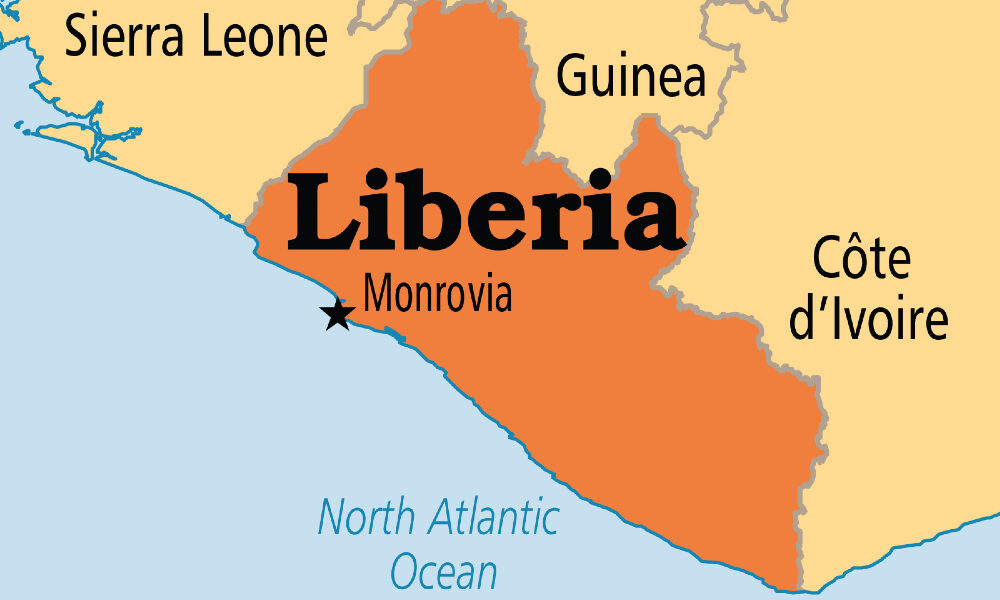


By Fidel Amakye Owusu
For decades, Liberia stood as a beacon of stability in West Africa. Then came the late 1980s, when civil war shattered that peace, unleashing one of the continent’s bloodiest conflicts.
The violence that consumed the country through the early 1990s left deep scars – economic, social, and political – that would take generations to heal.
Yet today, Liberia’s story is one of remarkable transformation. After more than a decade of devastating unrest, the nation achieved a fragile peace in the early 2000s, thanks largely to the deployment of forces by the Economic Community of West African States (ECOWAS) and the determination of regional leaders to enforce peace agreements between warring factions.
This intervention remains one of ECOWAS’s most significant security achievements since the bloc’s formation in 1975.
Two decades on, Liberia has emerged as one of West Africa’s most stable democracies. The country has conducted peaceful elections that produced smooth political transitions – a rarity in a region where power transfers often spark violence.
More impressively, Liberia has passed the “two turnover test,” a critical benchmark of democratic maturity where power changes hands between political parties twice consecutively. Nigeria, by contrast, has yet to reach this milestone.
A Window of Opportunity
The recent announcement of US$4.8 billion in mining and oil deals represents more than just foreign investment returning to Liberian shores. It signals a pivotal moment: after two decades of hard-won stability, the nation finally has the foundation to leverage its abundant natural resources for the benefit of its people, who remain among the poorest in the region.
The economic devastation wrought by civil war need not be permanent. With sound policy decisions and visionary leadership, Liberia can reverse decades of setbacks.
The country possesses significant mineral wealth, including iron ore, gold, and diamonds, alongside promising offshore oil reserves. The question is not whether these resources exist, but whether they will translate into broad-based prosperity or simply enrich a narrow elite.
Strategic Positioning for Growth
Liberia’s potential extends beyond extractive industries. The African Continental Free Trade Area (AfCFTA) presents unprecedented opportunities for the country to capitalize on its comparative advantages within the region.
As a member of ECOWAS with established trade relationships and strategic coastal access, Liberia is well-positioned to become a logistics and manufacturing hub for West African markets.
Furthermore, renewed American interest in African investment creates favorable conditions for attracting critical capital. Last year’s White House invitation to Liberia – one of only five African nations selected by the Trump administration – underscores the country’s growing strategic importance.
This diplomatic recognition should be leveraged to secure technology transfers, infrastructure development, and capacity-building initiatives that extend beyond resource extraction.
The Path Forward
Yet optimism must be tempered with realism. Resource wealth has proven a curse as often as a blessing across Africa.
Without transparent governance, equitable revenue distribution, and environmental safeguards, these mining and oil deals could exacerbate inequality rather than alleviate poverty.
Any sustainable development strategy must be bottom-up and people-centered. Liberians themselves – not foreign investors or international institutions – should determine how their natural wealth serves the national interest.
This means ensuring that contracts are publicly disclosed, that local communities affected by extraction receive fair compensation, and that revenues fund education, healthcare, and infrastructure rather than disappearing into offshore accounts.
The international community, for its part, must support Liberia’s developmental aspirations without imposing conditions that perpetuate dependency. The country has demonstrated its commitment to peace and democracy; now it deserves genuine partnership, not paternalism.
Liberia stands at a crossroads. The US$4.8 billion in deals could mark the beginning of an economic renaissance – or simply another chapter in the familiar story of resource extraction that enriches foreigners while leaving locals impoverished.
The difference will come down to choices made today: whether to prioritize short-term gains or long-term development, whether to concentrate wealth or distribute it equitably, whether to extract resources or build an economy.
After decades of conflict and two decades of rebuilding, Liberia has earned the right to determine its own future. The world should watch – and support – as this resilient nation writes its next chapter.
Fidel Amakye Owusu is an International Relations and Security Analyst. He is an Associate at the Conflict Research Consortium for Africa and has previously hosted an International Affairs program with the Ghana Broadcasting Corporation (GBC). He is passionate about Diplomacy and realizing Africa’s global potential and how the continent should be viewed as part of the global collective.