Politics
Liberia: Voters go to the polls tomorrow – thankful for peace under Johnson Sirleaf, excited for change
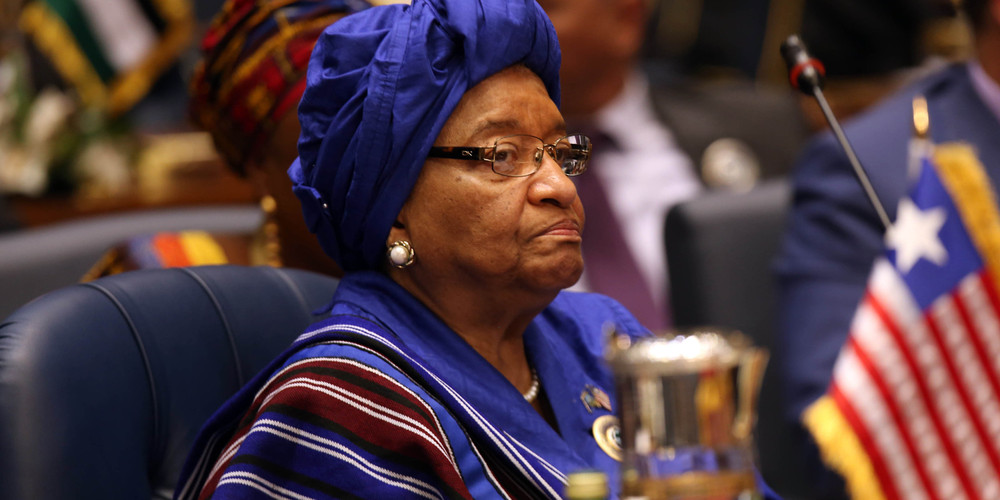
Reuters | After years of recovery under Ellen Johnson Sirleaf, who won the Nobel Peace Prize for helping bring peace after civil war turned her country into a wasteland, Liberians are hopeful about their first democratic power transfer for 73 years.
Twenty candidates are standing to replace Johnson Sirleaf in a first round on Tuesday. With nobody likely to win a majority outright, the top 2 are expected to face each other in a run-off in around a month.
Johnson Sirleaf, 78, has many accomplishments to boast since she became Africa’s first modern female head of state.
The economy is 4 times the size it was when she took office in 2006. The effects of a bloody civil war that ended in 2003 are a vivid but receding memory.
Charles Taylor, who was in office during Liberia’s darkest days, is in prison serving a life sentence for crimes against humanity, including terrorism, pillage, rape, murder and sexual slavery – the first former head of state convicted by an international tribunal since the Nuremburg trials (1945 – 1946).
Under Johnson Sirleaf, the country survived another existential crisis 3 years ago with an outbreak of the Ebola virus that overwhelmed its health services.
Residents say that while they are thankful for the peace and growth that Johnson Sirleaf brought, they are excited about the prospect of change.
Former soccer star, Weah likely front-runner
Among the front-runners seen as likely to win a place in the run-off are Vice President Joseph Nyuma Boakai, representing the ruling Unity Party, and soccer star George Weah, who lost to Johnson Sirleaf in 2006.
Weah has served in the senate since 2014 for the opposition Congress for Democratic Change.
Candidates have held enthusiastic rallies attended by thousands of supporters wearing T-shirts, drenched by downpours in a carnival atmosphere.
Many have promised a break from the past. One poster carried around by opponents read: “Another 6 years of this…” with a photograph of a distressed woman seated in a damp home with walls made of corrugated iron.
“There will be no business as usual. We are going to end the era of selective justice so people are given equal protection under the law,” Charles Walker Brumskine, a lawyer running as the candidate of the Liberty Party, 3rd biggest in Congress, told reporters.
Liberia’s recovery since the war has been remarkable. Gross domestic product (GDP) for the country of 4.6 million reached US$2.1 billion last year up from just US$550 million the year Sirleaf Johnson took office.
The outgoing president was a former finance minister in the 1970s who fled after a coup and worked for the World Bank and Citibank during her exile, she restored a measure of professionalism to a government that had been seized by a military junta in 1980 and collapsed under the predation of the warlords.
Outside her home country, Johnson Sirleaf has served as an ambassador for peace in the region, on diplomatic missions such as one last year to persuade Gambia’s ruler Yahya Jammeh to step down.
She leaves office with a legacy of economic and political success.
In 2011, Johnson Sirleaf was awarded Nobel Peace Prize along with Liberian activist Leymah Gbowee and Yemeni journalist Tawakkol Karman for their nonviolent struggle for the safety of women and women’s right to full participation in peacebuilding work.
She has disclosed that she is considering an offer of a fellowship from the Georgetown University in the United States, she also has plans for her farm, where she wants to spend more time.