Opinion
Lessons from the 2024 Paris Olympic Games for Africa
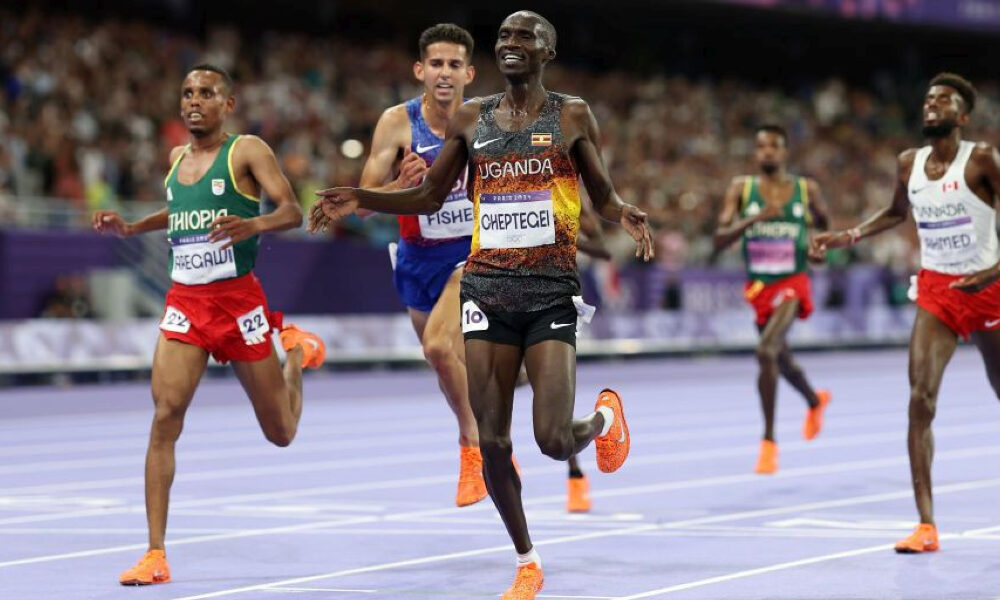
By Emmanuel Musaazi
Africa has one of the fastest-growing populations in the world. More than half of global population growth between now and 2050 is expected to occur in Africa. The population of sub-Saharan Africa is projected to double by 2050. To put this in some context about 60 percent of the population in Africa is 25 years or younger. Nigeria, the most populous country in Africa with a population of 218 million has a youth demographic of 70 percent.
The Olympic games showcase predominantly youth energy and abilities, indeed 72 percent of Olympians are in the youth demographic. In this respect, one would expect Africa to be an Olympic Games powerhouse, but the reverse is the case, as Africa’s youth are the least represented and among the worst performing. For instance, at the recently completed Paris Olympics, Africa as a continent won a total of 38 medals, while Nigeria sent 88 participants and won no medals. In contrast Netherlands a country about 12 times smaller than Nigeria with a by far smaller youth demographic (27 percent), won 34 medals.
So why the discrepancy, why are youth underperforming so badly at the ultimate global stage of sports such as the Olympic Games?
One could relate Africa’s youth underrepresentation and underperformance at the Olympics as a symptom of youth negligence. Unaddressed youth negligence is a big part of national underdevelopment. Government policies in Africa, have tended to neglect youth interests not only in sports but in healthcare, education, jobs, leadership, etc. Given that the youth demographic is more than half the population, that translates to neglecting most of the country.
Development tool
The interests of youth are being neglected at the worst time possible when their numbers are growing such that their political agency is significant. When it should be in the interest of the country/continent to engage and integrate youth vibrancy, potential, and vision into development efforts. After all, they are the future so it makes sense to include them in the development of that future.
Yet the recent outpouring of youth grievances in Kenya and South Africa has generally gone unheeded by respective governments. Investing in sports, for instance, offers an important opportunity for building the life skills of at-risk youth that allow them to better cope with daily life challenges and move away from involvement in violence, crime, or drug use.
So, sports can be viewed as a national development tool. No wonder that a correlation can be made between the number of medals won at an Olympic games by nations and their development status. Those that win the most medals tend to be more developed than those that win the least medals. African countries being generally at the bottom of the medal table, with the smallest representation, despite having the largest youth populations is a problem of African governments continuously dropping the ball on the most significant demographic and inadvertently self-sabotaging their development agenda.
It is also important to note that successful participation in sports is also an indicator of good physical and mental health of most of the population as well as great infrastructure. Great infrastructure and a healthy capable youth are the basis for a forward-looking nation development-wise.