Business
Lessons from the Westgate Mall for America
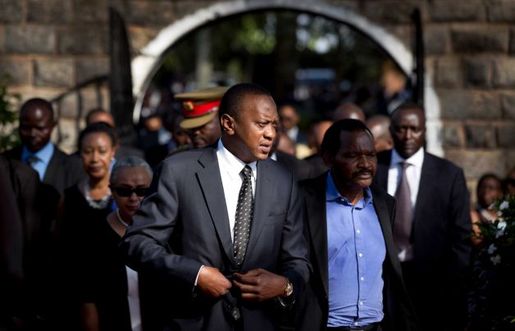
Kenyan President Uhuru Kenyatta. PHOTO/File
By Stephen Lande & Dennis Matanda | Just like Kenya deftly managed a post-inferno crisis that shut down its international airport this August, the al-Shabaab attack that left over 70 dead at a Nairobi suburb mall, may – tragedy notwithstanding – allow President Uhuru Kenyatta to emerge stronger. In fact, the terror incident may have just provided Kenyatta the dejure recognition he did not receive from the U.S. after his March 2013 electoral victory. Simply, an International Criminal Court indictment for electoral violence shouldn’t be hung over a sovereign’s head – especially if that sovereign and his Vice President, William Ruto, have availed themselves to a fast dissipating Hague case, and must be presumed innocent until a verdict is made.
According to Reuters, President Obama called Kenyatta on September 22, to express America’s sympathy, offering U.S. support for efforts to bring perpetrators to justice. Four days later, Kenyatta reciprocated by rejecting calls to withdraw from AMISOM, African Union’s effort to stabilize Somalia. On its own, this call further illustrates the delicate plexus of U.S. hegemony; providing outlook on how the U.S. should deal with the fog of Africa’s path to prosperity.
Essentially, until the U.S. develops a comprehensive policy that recognizes Africa for its true value, she mustn’t focus on indictments or imperfect elections, but Fareed Zakaria’s ‘illiberal democracies. The argument goes that America’s obsession with balloting belies the steady progress towards better governance and fewer failed states within which al Qaeda and al-Shabaab thrive. Zakaria suggests that international entities are better placed to promote economic freedom and democracy, and in this case, the African Union and regional entities should be deemed more effective by applying peer pressure to induce better governance amongst brothers than via U.S. unilateralism.
A one-size-fits-all U.S. foreign policy that withdraws market access privileges, and USAID and Millennium Challenge Corporation (MCC) programs, not only slights Africa; it does irreparable damage to U.S. business interests, affects ordinary Africans like the Malagasy women in 2010, and shoves the continent deeper into China’s bear hug. In Kenya’s specific circumstances, although The Economist suggests that Kenyatta and Ruto will continue to face the ICC, its economic growth will accelerate further due to infrastructure investments and as an East African Community business hub.
Of course, the challenge lies with cobbling together a mutually beneficial plan for America’s commercial relationship with Africa. Fortunately, during the 2013 African Growth and Opportunity Act (AGOA) Forum in Addis Ababa, Ambassador Michael Froman, Obama’s influential U.S. Trade Representative launched an AGOA review to ensure the program’s strengths were part of an enhanced initiative, and past weaknesses dispensed of.
In the meantime, aside from its contribution to AMISOM, Kenya must be seen as a hinge to an effective Tripartite group of the East African Community (EAC), Common Market for Eastern and Southern Africa (COMESA) and Southern Africa Development Community (SADC). Made up of over 400 million Africans, Obama’s Trade Africa and influence may, in fact, depend on Kenya’s goodwill, or else continue to dissipate under China’s strong push for infrastructure contracts and development finance. Perhaps, the EU is even putting intense pressure on Kenya to sign a premature economic partnership agreement (EPA) because the U.S. hasn’t provided a counterweight.
Conversely, this mall incident might as well quell this ICC thing; ensure that EPAs are off the table, and generate an economic integration that both allows a sovereign to serve the millions who voted him into office and American firms to operate their world-class supply chains and distribution networks in Africa. Analysts suggest that in spite of this recent incident, Kenya will not suffer a capital flight ala Egypt. Instead, with Christmas season starting a few short weeks from now, shoppers will return to the malls, and like it did following the 1998 embassy bombings, Kenya will arise from its ashes to hold multiple elections and continue to grow as a non-LDC, alongside South Africa, Ghana and Nigeria.
Stephen Lande + Dennis Matanda work for Manchester Trade Limited, Inc., a Washington, DC trade policy + strategy firm.