Business
Lagos Business School to host Africa Business Conference
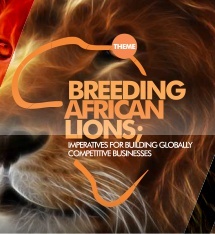
The theme of for this year’s conference is “Breeding African Lions: Imperatives for building globally competitive businesses“.
(Sponsor Wire) – Until the late 1990s, Africa was considered a remote and dark continent fraught with unemployment, poverty, armed conflicts amongst other ills.
These, several analysts pointed out were indices of the unbridled and corrupt leadership manifest in all tiers of government across the continent. For decades, the continent’s struggle for her economic emancipation have borne little or no fruit as most efforts were hampered by the selfish interests of the ruling political class. As a result, after difficult years of struggling to make an impact on the global scene, Africa is still reached out to with the proverbial long spoon of caution.
However, over the past decade, the changing fortunes of the “world’s poorest continent” has become a theme of magazine covers, investment conferences and a recent summit of the BRICS (Brazil, Russia, India, China and South Africa) emerging economies.
A steadily growing economy has made a big difference.
Over the past ten years real income per person has increased by more than 30 percent, whereas in the previous 20 years it shrank by nearly 10 percent. Africa is currently the world’s fastest-growing continent.
Over the next decade its gross domestic product (GDP) is expected to rise by an average of 6 percent a year, fueled largely by increasing foreign direct investment (FDI).
FDI has gone from US$15 billion in 2002 to US$37 billion in 2006 and US$46 billion in 2012.
A report by the World Bank predicted that sub-Saharan Africa’s expansion would be 4.9 percent, 5.1 percent and 5.2 percent in 2013, 2014 and 2015 respectively, again comfortably outstripping the global average.
Increased investment, high commodity prices and a recovery in the world economy are likely to sustain the narrative of “Africa Rising”, the bank said. Foreign direct investment inflows to sub-Saharan Africa are projected to increase to record levels each year over the next three years, reaching US$54 billion by 2015.
The fundamental reasons behind the continent’s growth surge include government action to end armed conflicts in warring regions of the continent, improve macroeconomic conditions through adoption and enforcement of robust fiscal and monetary policies, and undertake micro-economic reforms to create a better business climate.
In recognition of the need to correct the mistakes of the past years, several African countries halted their deadly hostilities, creating the political stability necessary to revive economic growth. Next, Africa’s economies grew healthier as governments reduced the average inflation rate from 22 percent in the 1990s to about 8 percent after 2000. Foreign debt by was shaved by one-quarter and budget deficits were shrunk by two-thirds. These amongst many other efforts have ensured the continued growth of Africa’s economy.
If recent trends continue, Africa will play an increasingly important role in the global economy. By 2040, it will be home to one in five of the planet’s young people, and the size of its labor force will top China’s. Africa has almost 60 percent of the world’s uncultivated arable land and a large share of the natural resources. Its consumer-facing sectors are growing two to three times faster than those in the OECD countries. And the rate of return on foreign investment is higher in Africa than in any other developing region. Global executives and investors cannot afford to ignore this. A strategy for Africa must be part of their long-term planning.
The time for businesses to act on those plans is now. However, the question is how do businesses convert these vast opportunities into successful ventures and further actualize tangible developments for Africa? How do we leapfrog these challenges? How do we make our small and medium sized enterprises (SMEs) more competitive and position them successfully against the influx of global players?
These are questions that participants will get answers to at the LBS Africa Business Conference. The LBS Africa Business Conference seeks to bridge the gap between future business leaders (an emerging crop of high potential young entrepreneurs) and successful business leaders who have risen above the daunting challenges of doing business in Africa and have metamorphosed into entrepreneurial prodigies.
The LBS Africa Business Conference will set the pace in creating a prosperous future for the continent. The Conference will also be a rare opportunity for participants to gain key insights from, and engage with prominent Business Leaders, Senior Public Sector Representatives, Investors and the Academia who are shaping Africa.
The LBS Africa Business Conference is organized by the MBA students of Lagos Business School in Nigeria. It is the first student-run event focused on business in Africa. This maiden edition of the Conference will hold on the 31st of May 2013, at the Lagos Business School campus.
The LBS Africa Business Conference will bring together over 15 business and community leaders, in addition to over 400 participants across all sectors of the economy across the continent (business leaders, financiers, SME owners and regulators). Speakers already confirmed include:
– Aliko Dangote (CEO and Founder, Dangote Group)
– Tony Elumelu (Chairman, Heirs Holdings)
– Omobola Johnson (Minister for Communication Technology, Nigeria)
– Akinwunmi Adesina (Minister for Agriculture, Nigeria)
– Andrew Alli (CEO, Africa Finance Corporation)
– Lazarus Angbazo (CEO, General Electric- East, West & Central Africa)
– Emmanuel Onyeje (GM, Anglophone West Africa, Microsoft)
– Eyo Ekpo (Commissioner, Market Competition & Rates, Nigerian Electricity Regulatory Commission)
– Tunde Reis (Director, First World Communities)
– Jeje Olatunbosun (Commissioner for Housing, Lagos State Government)
– Adeniyi Adeleye (Head Real Estate Investment, Stanbic Bank)
– Anton Wagenaar (GM, Shoprite Nigeria)
– David Ladipo (CEO, Azura Power)
– Eghosa Omogui, (CEO EchoVC)