Business
Kenya’s mobile money, M-Pesa increasing user’s savings – World Bank
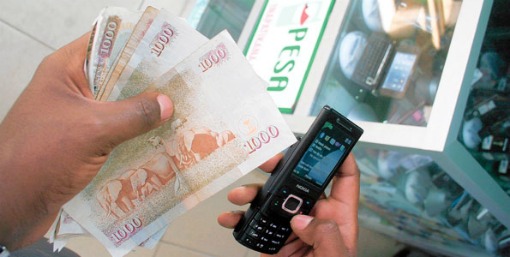

Registration for M-Pesa, Kenya’s dominant mobile phone money transfer service, increases the likelihood of having some savings by 20 percent, according to a new World Bank research.
The survey found that 65 percent of M-Pesa users reported having some savings compared to 31 percent of those who were not M-Pesa users.
“This result provides some evidence that M-Pesa may increase the prevalence of savings,” said the World Bank research. “Those who save only with M-Pesa save on average KSh1,305 (US$ 15.80) per month. M-Pesa savings are less than savings with other vehicles but still substantial.”
Those who save only with other accounts save an average of Sh2,282 (US$ 27.60 ) per month while those with M-Pesa and other accounts save Sh2,959 (US$ 35.74).
The difference in amount is driven by the fact that those who save with bank accounts tend to be wealthier and are inclined to save more.
M-Pesa is marking five years as a money transfer service but has grown into a deposit mobilization and savings platform deepening financial inclusion in the country.
“That M-Pesa increases savings may seem surprising, given that it does not pay interest and functions as a mere storage,” reads the report. It explains that the preference for the system stems from the fact that M-Pesa funds are hidden from others making it easier to decline requests to share funds.
However, its prevalence over other savings account, which offer interest pose a challenge to financial institutions to ensure they reward persons holding accounts with them.
“If the banks were rewarding the savers by offering more incentives then most people would move savings from mobile platforms, where they are not rewarded,” said Dr Mbui Wagacha a macro-economics consultant.
Current savings interest rates stand at an average 1.62 percent while the inflation rate is at 16.7 percent implying highly negative real interest rates for deposits with commercial institutions.
“Although some interest is better than none, if the rate of interest is very low compared to the inflation rate the possibility of interest may not matter much for savings decisions,” said the World Bank report.
Dr Wagacha points out that the mobile network operators are, however, mandated to hold trustee accounts with one or two commercial banks, from which they earn interest. The firms are meant to spend the interest earned on charity with the only issue being that the mobile money users do not have a say on the programme to be awarded.
Analysts hold that the use of the platform for savings does not impact cash availability for onlending in the money markets.
“When money goes to M-Pesa, physical money goes to banks or it is held by traders so it is still available for activity,” said Francis Mwangi, an analyst with Standard Investment Bank.
The amount held as electronic float has been on the rise, estimated to be more than 25 percent of the country’s gross domestic product (GDP). Mobile money has contributed to deepened financial inclusion with banks also integrating their systems with mobile platforms to ensure seamless transfer of funds from mobile money to bank accounts and vice-versa.
The platform has penetrated deeper than other financial services since there is less paperwork involved.
The number of agents makes it convenient for customers. Mobile money (M-Pesa) transactions hit KSh1.1 trillion (US$ 13.3 billion) last year up from KSh732 billion (US$ 8.8 billion) in 2010.
The report concludes that mobile savings have the potential to add social value, especially to those constrained by the cost or distance in opening and maintaining traditional accounts with commercial banks.
Source: Business Daily Africa