Business
Kenya plans zones to draw textile firms away from Asia
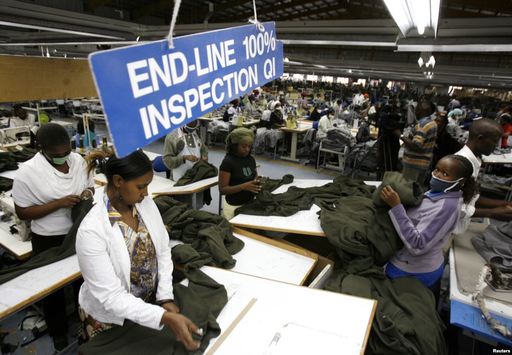
Kenya is setting up three special economic zones that will offer tax breaks to lure global textile firms and help it seize a share of the West’s textile market now dominated by Asian rivals, the industry minister said. The east African nation of 40 million people has a fairly diversified economy and is popular with tourists, but exports are dominated by farm commodities with volatile prices and low returns, leading to a gaping current account deficit.
If it succeeds in drawing textile investors, it would be following nations like Mauritius, an island off the east African coast, that already has a thriving textile industry. Kenya’s neighbour Ethiopia has also started drawing in textile firms. Kenya is setting aside land for the special zones near its ports and will offer incentives such as land for lease and tax breaks that include duty-free imports and waivers on value-added tax, the cabinet secretary for industrialisation and enterprise development, Adan Mohamed, told Reuters.
“We want manufacturing capability for the international market,” Mohamed said in an interview late on Monday. “We want to attract businesses that today have a choice between setting up in Burma, Vietnam, China or South Africa.” The government has identified 2,000 square kilometers of land near the nation’s main port of Mombasa, which will be the first of three special zones, the minister said.
A second zone will be created at the planned Indian Ocean port of Lamu and a third will be established in Kisumu, in the west of the country near Lake Victoria, he said. Mohamed said a law to create the zones was expected to have passed through parliament by the end of June. But the minister, a former chief executive of Barclays Kenya who was brought into President Uhuru’s first cabinet after his election as one his technocrat ministers, said the biggest challenge was implementing plans with Kenya’s slow bureaucracy.
“The concept is very good but implementation is going to be hard,” Mohamed said. He said it would take two to three years to identify the land, draw up the master plans and market the zones to potential investors. ‘THE BIG PRIZE’ Once up and running, the zones would allow companies to cut down on red tape. Businesses have long complained about bureaucratic hurdles and said the high cost of commercial credit was a deterrent to industry.
Commercial interest rates usually top 15 percent. Kenya may also find itself battling regional rivals like Ethiopia, one of sub-Saharan Africa’s fastest growing economies, which is also setting up new industrial zones and has already attracted interest from global fashion retailers such as Hennes & Mauritz (H&M) but the minister said there was enough opportunity for all, putting the combined U.S. and European textiles market at $300 billion a year.
“There is no competition. The market is huge. We just need to be efficient. The big prize is out there,” he said, citing data showing Africa supplies less than 1 percent of the U.S. demand for textiles and apparels annually. Building up industry is vital for Kenya to plug a persistently wide current account deficit, projected to stand at 8.4 percent of the gross domestic product this June, he said.
The new zones are also designed to create 10 million jobs in the next 30 years, Mohamed said. The zones could attract other industries, such as car assembly plants, to feed the growing African consumer market. Kenya is already the main trade gateway to east Africa. “Africa is becoming the future market for many companies worldwide,” he said. “The market is there, the middle class is growing. Where is the manufacturing capability today? It is in China. It is in Japan. We need to be able to provide some of that capacity.”
Copyright The Africa Report 2014