Business
Kenya advised by UN body to abandon nuclear programme
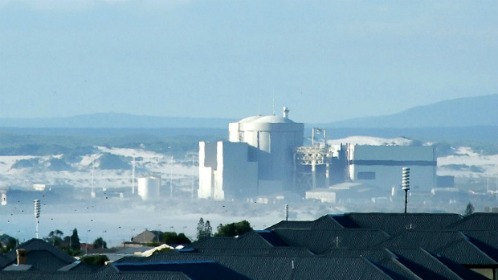

South Africa’s Koeberg Nuclear Power Station. PHOTO/AFP/Getty Images
Kenya has been advised to shelve its intended development of nuclear power to meet its growing energy needs, but instead concentrate on the vast renewable energy resources.
According to the United Nations Environment Programme’s (UNEP) Year Book 2012, one of the emerging global concern is the challenge of decommissioning the growing number of end-of-life nuclear power reactors.
Countries have also been reviewing their nuclear programmes following the tsunami that struck Fukushima and its nearby nuclear power plant in Japan, last year.
The UNEP Year Book says the cost of decommissioning varies greatly, depending on the reactor type and size, its location, the proximity and availability of waste disposal facilities and the condition of both the reactor and the site at the time of decommissioning.
Kenya is striving to become a middle-income country by 2030 and seeks to develop a viable nuclear energy programme within the next 15 years to meet its growing energy demands.
A government commission formed last year is conducting a feasibility study and the University of Nairobi is setting up programs to train people for the nuclear program. Critics say they’re concerned about plant worker safety and the risk of environmental contamination.
For the UN, this will could mean more old nuclear plant closures.
“Considering dangers and cost involved, it will be surprising if Kenya opted for nuclear energy rather than the clean, cheap and available energy potential the country has,” said Achim Steiner, UN Under-Secretary General and UNEP Executive Director at Gigiri, Kenya.
He said Kenya has the option of getting energy from bioenergy, geothermal, solar, hydropower, ocean and wind energy. – (East African Standard)