Life
Jamaican Research on Lionfish Published in Scientific Journal
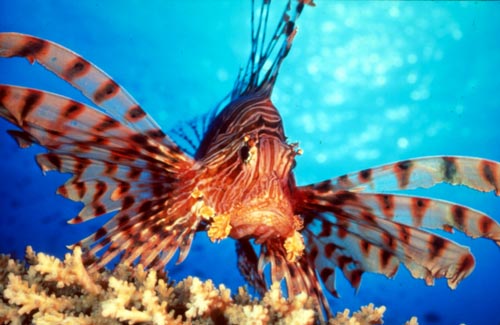
A four-member team of Jamaican scientists working at the International Centre for Environment and Nuclear Sciences (ICENS), University of the West Indies, Mona, has had its groundbreaking research on the lionfish published in Food and Chemical Toxicology, one of the world’s leading platforms for high-quality, peer-reviewed, full-text scientific journals.
The study, ‘Evaluation of dietary exposure to minerals, trace elements and heavy metals from the muscle tissue of the lionfish Pterois volitans’, was received on April 10 last year and accepted by July 17, with the online version available nine days later. The study highlights the work of Leslie Ann Hoo Fung, Johann Antoine, Charles Grant and Dayne Buddo.
Antoine, who initially brainstormed and initiated the research decision, put everything into the following perspective: “It’s very rare that you have the opportunity to test food for its safety for anything, not just elements but for any number of parameters for food, just at the point it’s being introduced to a local or regional diet. That was the crux of it, where we thought, okay, we’re telling people you should do this, not because it’s necessarily good for you, we didn’t know that yet.”
He told The Sunday Gleaner: “We were telling you to eat it because we wanted to get rid of an environmental problem, an invasive species. So we thought, suppose the thing (lionfish) is not good for you. Just supposing it turns out to have high mercury or arsenic levels, or nutritionally it’s poor.” He also added, “So we decide to find out those things first before we rubber-stamp what everybody else is saying. Because maybe at the end of the day we can find something that is not good for you, and morally we feel we should say that.”
Although fish is considered highly nutritious due to its high protein content and low levels of saturated fats as well as the purported benefits of omega-3 fatty acids, mercury tends to be concentrated in aquatic environments, more so marine, where it is regarded as the number one toxic element.
Therefore, the lionfish’s reputation as a voracious predator makes it a potentially ideal source of contamination due to the bioaccumulation of several elements, particularly heavy metal such as mercury. In fact, the neurotoxicity of mercury in humans – from foetus to adult – has been well documented. Because of this, doctors often advise pregnant women against consuming a lot of large fish such as tuna which feed on a lot of other (smaller) fish.
Caught Off Guard
Despite this, the Jamaican research team were caught off guard by their findings leading up to the start of the project. Hoo Fung explained: “We actually looked at the literature before, we started work and were very surprised to find that nobody had ever done it before. Nobody had even looked at mercury so we are actually the first people in the world to do an elemental study of lionfish.”
She added: “Since then, some researchers in Florida have done a study of the mercury content but they’ve only done mercury, we’ve done 25 elements. So our study is a little bit different from theirs in that they had a different slant and were really just interested in the mercury. We were very surprised to find that nobody had ever looked at it before, and particularly that nobody had done the mercury because that’s always the first concern when looking at fish.”
In fact, research done by American scientists studying the total mercury concentrations in lionfish from the Florida Keys National Marine Sanctuary, where consumption is being promoted as a management strategy, acknowledged the Jamaicans’ contribution in an article published in the Marine Pollution Bulletin. It reads in part, “Until now, information regarding concentrations of total mercury in lionfish was only available in Jamaica … To our knowledge, the only total mercury concentrations published for lionfish apply to Jamaica …”
But what is it exactly that the Jamaican scientists found out? Well, the last line of the project summary reads, “It was concluded that P volitans appears to contribute modestly to mineral and trace element nutrition, while not being a significant contributor to dietary exposure of toxic elements.”
Hoo Fung also went on to explain, “We found that it does have pretty low levels of heavy metals. Nothing to be concerned about, so you can eat up, and we found that it would contribute modestly to trace element nutrition.” Her colleague, Antoine, went on to add, “You’re not going to pick up any toxic elements, based on the amount of lionfish we estimate you’d be eating and, from the nutritional benefits, it’s no worse or better than any other fish that you’re normally eating, snapper or barracuda.”
Source: The Jamaica Gleaner