News
Issue of risk in Africa is often exaggerated – Ramaphosa
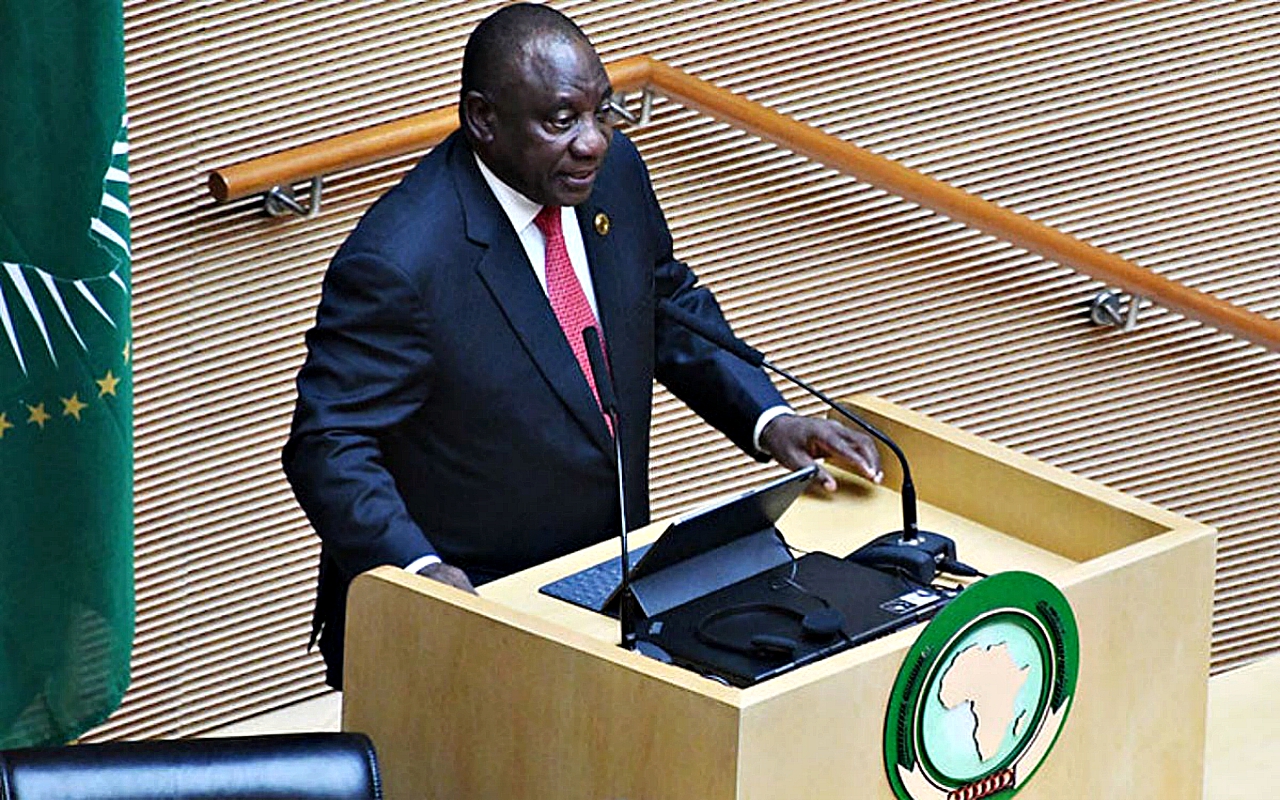
- The issue of risk in Africa is often exaggerated, despite the risk of loss being lower than in Latin America, President Cyril Ramaphosa said on Saturday, 8 February.
Addressing a New Partnership for Africa’s Development (NEPAD) heads of state and government orientation committee meeting of the Presidential Infrastructure Championing Initiative (PICI) in Addis Ababa, Ethiopia, South African President Cyril Ramaphosa said that as African countries strove collectively to meet their industrialization goals, infrastructure featured heavily in Agenda 2063.
The African Development Bank (AfDB) estimated that Africa’s infrastructure needs amounted to about US$130 billion to US$170 billion a year.
What Africa needs
More dams, power plants, fibre optic cables, and ports were necessary, as well as more social infrastructure such as roads, schools, public housing, and clinics.
- As all developing countries, we cannot sate our continent’s infrastructure hunger with our limited resources, and it goes without saying that this presents a major investment opportunity for our respective countries, Ramaphosa said.
According to the AfDB, the financing gap was between US$68 billion and US$108 billion. Ramaphosa said that South Africans “must think creatively and expansively about how we can close this gap”. He added:
- “We also must be open to various financing models, such as public-private partnerships, commercial loans, development funding, and sovereign bonds. Furthermore, as the bank has noted, the excess savings in many advanced countries could be channelled into financing profitable infrastructure projects in Africa”.
“Issue of risk in Africa is often exaggerated”
Ramaphosa explained that the “issue of risk in Africa is often exaggerated, and that risk of loss in Africa is lower than in Latin America. However, funds are not being channelled into Africa.
He gave an example: there are US$8 trillion of assets under management in London, but only 1 percent is invested in Africa. Ramaphosa continued:
- “In South Africa, for example, we are in the process of setting up a national infrastructure fund to leverage investments from financial institutions, multilateral development banks, asset managers, and commercial banks in both greenfield and brownfield projects.”
South Africa assumed the Chair of the African Union (AU) at an immensely exciting time for the continent as the African Continental Free Trade Agreement (AfCFTA) began trading.
Boosting intra-Africa trade and re-igniting industrialization
This was a milestone in the continental integration project, with Africa destined to become the biggest common market in the world.
The implementation of this seminal agreement would boost intra-Africa trade, re-ignite industrialization, and pave the way for the meaningful integration of Africa into global value-chains and the global economy.
- “Ours is a continent on the rise. Consider for example that last year 17 African countries grew by 3 to 5 percent and 20 countries grew by 5 percent and above. Six of the fastest-growing economies in the world are in Africa. Foreign direct investments (FDI) to Africa grew at 11 percent last year, far exceeding the 4 percent growth in Asia, even as FDI declined by 13 percent globally and by 23 percent in developed economies,” he said.
Africa was diversifying its international partnerships, thus broadening the scope of cooperation with various players. This would create further linkages for Africa to pursue infrastructure build on a massive scale, Ramaphosa said.
African News Agency © Copyright 2020