Opinion
Is the United States Quietly Alienating Africa?


By Dishant Shah
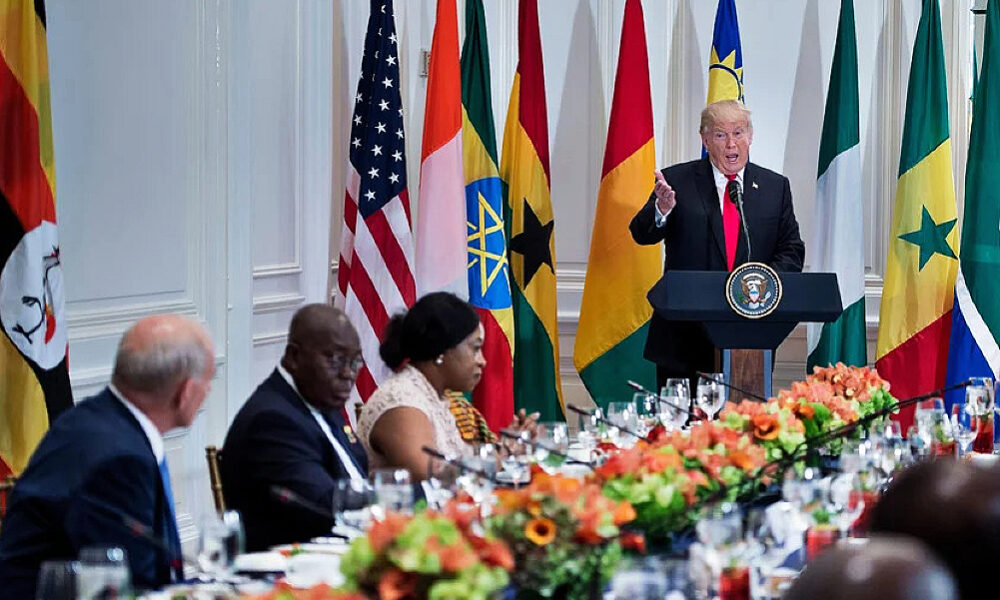
Recent reports that 25 African nations are under consideration for inclusion in a new U.S. travel ban have sparked difficult but necessary questions about America’s evolving relationship with the continent.
Among the countries reportedly on the list are key regional powers such as Nigeria, Ethiopia, Ghana, Egypt, Tanzania and Uganda – nations that represent some of Africa’s largest economies and most populous centers. A potential travel ban would not only affect millions of people directly but also strain the deep familial, educational, and business ties many of them maintain with the United States.
Yet this possible restriction is only one symptom of a broader pattern – one that suggests the U.S. may be stepping back just as Africa rises in global importance.
Africa’s Rise: A Continent of Now, Not Later
Africa is no longer a region of potential – it is a region of momentum. With the world’s youngest population, vast natural resources, and a booming tech sector, the continent is increasingly shaping the future of the global economy.
But while China expands its infrastructure investments and Russia strengthens military partnerships across Africa, the U.S. appears to be retreating: reducing diversity visa quotas, scaling back diplomatic missions, and now possibly tightening travel restrictions further.
The numbers speak volumes. By 2050, one in every four people on Earth will be African.
And as of 2023, six of the ten fastest-growing economies in the world were located on the continent.
These are not just statistics – they are signals. Africa’s moment is now.
And yet, U.S. policy seems increasingly driven by short-term political optics rather than long-term strategic vision. Travel bans do more than restrict movement; they erode trust.
They hinder cultural exchange, discourage student mobility, and weaken investor confidence. As a result, African professionals, entrepreneurs, and young leaders may begin to look elsewhere – to countries that see them not as security threats, but as partners in growth.
A Shifting Global Landscape: Who Fills the Void?
There is also a deeper shift at play: perception. Across much of Africa, there’s a growing sentiment that the Global North views the continent not as a partner, but as a problem to be managed.
This narrative is reinforced through restrictive visas, trade barriers, and a lack of meaningful diplomatic engagement.
Meanwhile, other global players are stepping up. In 2023, trade between China and Africa reached US$282 billion (according to the China-Africa Research Initiative at Johns Hopkins SAIS), compared to U.S.-Africa trade of approximately US$44.9 billion.
At the same time, the benefits of AGOA – the African Growth and Opportunity Act – are being selectively threatened or withdrawn, sending mixed messages about U.S. commitment.
So what does this mean for American influence in Africa?
In an increasingly multipolar world, relevance isn’t inherited – it’s earned. Through respect. Through consistency. Through mutual benefit.
Perhaps the real question isn’t just whether the U.S. is alienating Africa – but who is filling the void left behind.
Dishant Shah is a partner at Legion Exim, a company specializing in facilitating the export of high-quality engineering products directly sourced from manufacturers in India to Africa. His areas of expertise include new business development and business management.