Business
IrokoTV does not need Hollywood to win
Walter Taylaur, a Nigerian writer-director, needed a place to shoot his movie, Gbomo Gbomo Express, a low-budget “comedy-thriller.” In the movie, the head of a music label hits it off with a socialite while out on the town in Lagos. On their way home, 3 working-class Lagosians kidnap the couple for ransom, but the hapless kidnappers realize too late that they are in over their heads.
In Nollywood, as the Nigerian movie business is known, there are no actual studios. Filmmakers usually rent an abandoned or empty mansion and transform it into a set. But Taylaur had not found one yet. Then a friend came through. He owned a derelict in Ebute Metta, a congested neighborhood in one of the oldest parts of Lagos. Taylaur could use it if he wanted, for free. He would just have to clean it up first. The street outside might present a problem, though. It was loud: generators rumbling, people shouting, horns blaring from vehicles languishing in traffic. No, Taylaur said, that sounded perfect.
When he showed up at the house 2 days later, Taylaur had to cut the padlock off the gate (his friend had lost the key). Inside, he found rooms knee-deep in trash; it took several hours – and dumpsters – to get rid of it all. He and his crew gutted, cleaned, and painted one space to use as a greenroom, adding fans, lights, tables, and mattresses for soundproofing. They also built sets that passed for an office and a hospital suite. When they began filming, they left the street noise in.
Taylaur shot the movie on digital video for less than 10 million naira, or about US$50,000, over 18 days in January 2015. “There is a lot of freedom, and you can make anything happen, and people do,” Taylaur says of Nollywood. It is a “do-or-die” trade, where productions shoot anywhere they want, provided they have the right fixer, and turn logistical challenges into plot twists.
The movie, Gbomo Gbomo Express, was released in theaters last October, and then – a first for Taylaur – on an Internet streaming service called IrokoTV in January.
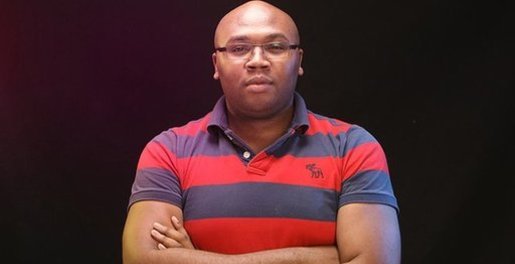
IrokoTV is a subsidiary of Iroko Partners, founded in 2011 by Jason Njoku, a 35-year-old Nigerian-British entrepreneur.
Iroko Partners operates the service and has amassed a catalog of several thousand Nollywood films, most in English, but some in Yoruba. Starting in 2013, Iroko Partners began producing its own original content, making it the West African answer to Netflix. It offers Africans, on the continent and in the diaspora, a way to watch Nollywood fare wherever they find themselves.
After India’s Bollywood, Nollywood is now the world’s second-busiest and second-largest movie industry, cranking out 1,000 titles per year.
Njoku, launched Iroko Partners after raising US$3 million in an initial financing round from New York hedge fund Tiger Global Management and Swedish investment firm Kinnevik. He later raised an additional US$5 million. The company says it’s now one of the largest funders, co-producers, and commissioners of content in Nollywood. The question on many minds, however, is whether Iroko Partners has built up enough of a lead: Netflix itself announced early this year that it wants to become a global Internet TV network and intends to expand into Africa, though it has not said when. Although Netflix has no specific plans for Nigeria yet, the country would have to be near the top of any list the company’s drawn up.
Iroko Partners has been the only company of its kind on the continent, surviving while similar ventures have failed, but is it ready for serious competition?
Serial Entrepreneur Jason Njoku
When Njoku’s irreverent culture magazine, Brash, closed in Manchester, England, in 2008, he had a backup plan—several, actually. He started an event-management company, set up his own T-shirt brand, consulted for nightclubs hoping to break into the Manchester student market, and ran graphic design and Web development outfits.
“What else did I do?” he asks himself on a recent afternoon in Lagos, trying to recall. Oh right, he almost forgot, the blog network he operated in his spare time. “I always had 2 or 3 projects going at the same time.” After none of them really worked out, he decamped to London in 2009, where he had been raised by his mother in a state-run council flat.
With a chemistry degree from the University of Manchester on his résumé, he reluctantly took a job with a market intelligence firm, only to quit not long after because it was “incredibly boring.”
Living back at home, discouraged and restless, he found inspiration for his next hustle in an unlikely place: his mother’s movie-viewing habits. “She went from watching typical soap operas to Nollywood movies,” he says. “That my mother could sit in front of them for 3 hours straight was pretty remarkable. Here is someone who had Sky, satellite television, but chose these movies.” The films were not of great quality. “People were shouting, and the production values were low,” Njoku says. Still, the movies had a certain appeal.
The fantastical stories, combining familiar family drama with elements of the supernatural, were far more entertaining than a church service, but just as morally instructional and virtue-oriented. They offered an escape from your own problematic life into the salacious troubles and scandals of outrageous characters, without the associated shame. When Njoku went to the shops and hair salons in the neighborhood where he grew up, Nollywood movies were always on, and their audiences were always captivated.
“I would never have discovered that Nollywood films have a devoted following if I had not moved back in with my mother because I was broke, basically,” Njoku says.
In early 2010 he got on a plane to Lagos. “I had nothing to lose. I came to try and explore the movie industry here.” He ventured to the infamous Alaba Market, a mazelike bazaar where vendors buy Nollywood titles from “marketers,” dealers who may have also financed the films they sell. The movies eventually end up in the hands of hawkers selling them on Nigerian streets, in other markets, in suitcases headed to other countries, or on YouTube, the easiest way to watch them abroad.
Because no Nollywood production house controls a major share of the movies, it was easier for Njoku to enter the market and disrupt it. He charmed his way into personal relationships with the traders and used some cash from his old friend and partner Bastien Gotter to pay in the low hundreds of dollars for each of the 200 titles he acquired. He then uploaded the films to YouTube, calling the channel NollywoodLove. He and Gotter say they ended up making US$1.2 million in gross revenue during 2011. Hulu was big at the time, and a model of sorts. But Njoku wanted more. He wanted to control the viewer’s total experience.
Nigerian subscribers pay a monthly fee of 500 naira (US$2.50) for them, the bulk of the cost of watching IrokoTV is paid to carriers for the data they use while streaming. Internet access is still expensive in Africa, though prices are gradually falling. Customers complain that “IrokoTV is eating all our data,” even though their money is going to their telecom providers, not the streaming service. IrokoTV has responded by offering downloads, which take up less data than streaming, for its films; it provides low-quality downloads as another data-saving option. As a substitute for Internet streaming, many in Nigeria have at least 1 – 2 movies on their smartphone they share via phone-to-phone file-transfer apps such as Xender.
Iroko Partners is also looking to link up with telecom companies to offer users a discount on their data use while watching movies and TV shows. Its viewership is overwhelmingly from the diaspora, a proportion Njoku wants to change.
IrokoTV began as a freemium platform, meaning 90 percent of the content was free, with heavy advertising. The model ended up being not very profitable and unpleasant for users because of all the ads; it was killed in 2014. Customers would have to accept paying for content. “Here, it’s much more figuring out—based on the data that people have and can afford, based on when they have access to the Internet and how much they will truly be watching—how much are they willing to pay,” says Adi Nduka-Agwu, Iroko Partners’ head of business development.
IrokoTV began charging a subscription fee and added a mobile app. It’s trying to make its platform as simple as possible for subscribers, who are mostly in Lagos, Abuja, Port Harcourt, and other big cities. “Data still feels so unaffordable, and the infrastructure in this country is genuinely unreliable and expensive,” Nduka-Agwu says. “There is a shift that needs to happen. We need to convince more and more people that it is affordable.” The mobile app was streamlined with adjustments, letting users log on with their phone number instead of forcing them to come up with a unique username. The company is considering doing away with passwords altogether.
In 2013, IrokoTV started its own in-house production with ROK Studios, which has released movies and viral TV shows. It wanted to control the quality of its content and to capitalize on the addictive nature of the shows, with short episodes suited to mobile phone viewing. IrokoTV still posts free movies heavy on mysticism and traditional values—it calls them “village movies”—with advertisements on YouTube channels, which it says attracted more than 300 million views last year and drew new customers.
Shortly after Netflix’s announcement in January, Iroko Partners revealed it had closed on US$19 million in deals from investors, including French media company Canal Plus, to produce original content and expand throughout the continent. The new investors noticed the company had made “significant gains in content production and distribution,” Njoku says. Despite that vote of confidence, “there are no other profits,” he says. “None,” he repeats, laughing. He says he hopes to become “cash-flow positive” this year.
Nollywood’s Massive Impact
Nollywood – the second-largest employer in Nigeria – makes up 11 percent of the country’s nonoil exports. The industry is known for its guerrilla approach. In the early 1990s mostly self-taught filmmakers, lacking financing or production studios, shot movies on video cameras over the span of a week, usually for less than US$20,000. Low production values became part of their charm.
The love of Nollywood films around Africa, says Nduka-Agwu, has guided the company’s growth strategy. The company also has offices in New York and London, but, Nduka-Agwu adds, “we can grow our customer base a lot faster and a lot bigger here in Africa.”
Iroko Partners believes that, as a niche service for an audience that prefers Nigerian films, it can withstand the entry of a bigger company into its market. For Nollywood fans, IrokoTV will likely remain the most comprehensive database for the near future. For viewers interested in both Nollywood and foreign-made entertainment, their loyalties may be divided.
Netflix, too, won’t have it easy. “Streaming in this country and Africa is a very difficult thing. It is getting better, but it is not good,” Nduka-Agwu says of Nigeria. She allows that the streaming giant may have one advantage: It “can partner with every Internet service provider.”
Source: Bloomberg Business