A Diaspora View of Africa
Internationalizing America’s elections


By Gregory Simpkins
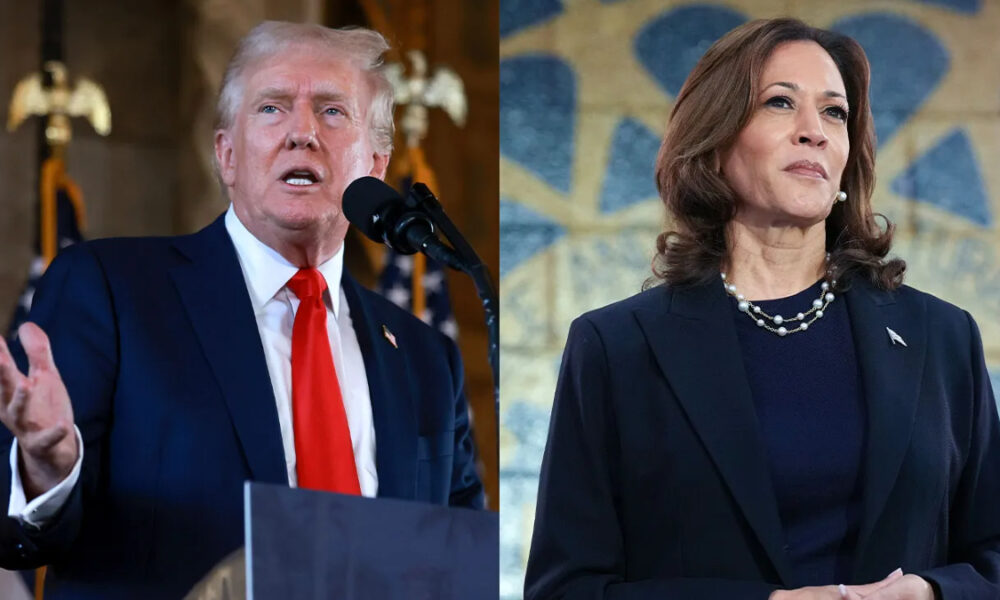
By the time this is posted on our website, there will be only days until the 2024 national elections in the United States. It would be foolhardy to expect to accurately predict the results, so I won’t try.
What I will do, however, is note how these elections, especially the presidential race, affects policy toward Africa and, frankly, the rest of the world. The tone and tenor of the next administration will decide whether the United States remains competitive with the increased competition for African support or falls behind in the race for critical minerals, a growing consumer sector and political support in international fora.
Ally Relations
The United States has a troubled relationship with the Caribbean nation of Haiti so although this government would like to address the gang violence and takeovers. This administration put together a coalition highlighted by the involvement of forces from Kenya.
Two contingents from the East African nation deployed to Haiti. However, Kenya now has its own internal violence challenges.
The Armed Conflict Location & Event Data (ACLED) organization is reporting the following incidents:
- From September 14 to October 11 2024, ACLED records 107 political violence events and 71 reported fatalities in Kenya. Most events took place in Makueni, which saw nine political violence events that were mainly linked with mob violence.
- Tana River and Meru counties had the highest number of reported fatalities, with 20 reported in Tana River and eight reported in Meru. Most of the fatalities in Tana River were linked to clashes between suspected Wardei and Wailwana ethnic militias over land disputes.
- The most common event types during the reporting period were riots, with 69 recorded events, followed by violence against civilians and battles, each with 18 recorded events. The majority of riots were in Makueni and Machakos counties, each with eight recorded events.
Kenya faced considerable unrest in September and October. One element of this was the impeachment process taking place against Deputy President Rigathi Gachagua, which was catalyzed by the response of President Wiliam Ruto to the Gen Z protests of June and July.
At this point in US-Africa relations, direct American intervention often is not seen positively, but hopefully there are behind the scenes moves to assist an ally upon whom the US government is depending for help in this hemisphere.
Dollar Shortages
As I have written about previously, there is a deepening shortage of hard currency on the continent and governments are turning to bartering, currency devaluations, central bank exchange controls, and help from the International Monetary Fund and Middle East to shore up their balance sheets.
Bloomberg reported on November 19 last year that investors are rewarding nations whose efforts to boost dollar liquidity are paying off. But they are punishing those that can’t guarantee access to the currency they need to invest and repatriate returns, and are steering clear of countries without adequate reserves to cover import costs or debt repayments.
African currencies are the worst performers in the world this year, with about a dozen sliding at least 15 percent against the dollar.
“The foreign funding squeeze implies African countries are unable to fully finance their current-account deficits, leading to foreign-exchange shortages,” said Yvonne Mhango, Africa economist at Bloomberg Economics. “The most vulnerable countries are those with overvalued currencies, including Nigeria, Kenya and Angola, and those with low foreign-exchange reserves, like Malawi.”
This is one of the issues pushing developing nations in Africa towards the BRICS coalition’s membership and newly-announced currency. The BRICS coalition has doubled in size this year with at least 30 other nations interested in joining.
Human Rights
The Universal Declaration of Human Rights was signed in December 1948. The international community, led by the United States as a chief architect and guarantor of the postwar international order, has built on this foundation and developed a comprehensive array of human rights mechanisms meant to protect and promote global human rights.
Some governments have used ruthless, often unimaginable, means to punish dissenters. During my work in Equatorial Guinea, including human rights work commissioned by President Teodoro Obiang Nguema Mbasogo, I found that his predecessor – his uncle Francisco Macias Nguema – had used horrific tactics to punish opponents and send a signal to outside powers.
His government tortured dissidents and those suspected of being in league with coup plotters. The torture took bizarre forms, such as bending people into pretzel-like positions and placing them in boxes or forcing them to jump up and down on one leg and beaten when they fell down due to lack of balance or exhaustion.
President Obiang officially stopped such tactics, but it is believed that human rights violations continue there. In situations like this, the US government has turned a blind eye or commented but not acted when it wanted to assure cooperation on other matters from the offending government.
At the same time, the Biden and Obama administrations have operated under what is perceived to be an anti-gay furor in Africa and the belief that it was an ideological infection from the United States as seen elsewhere on the continent.
When I was on Capitol Hill as a House staff person, I worked on the foreign adoption issue in the Democratic Republic of the Congo (DR Congo), and the reason many Congolese gave for their objection to Americans adopting the many children orphaned by the frequent conflicts in the country was what they considered to be a stridently pro-gay America.
Looking at the level of the homosexual content in American movies and the many television programs, for example on the CW Network, you can understand that from an African perspective our country vigorously promotes the homosexual lifestyle they do not support.
What prompted me to move forward with writing about this matter is an angry video from a Ghanaian legislator who threatened US-Ghana relations if his colleagues were sanctioned by the US government for taking part in their pending legislation on LBGTQ rights as has happened to Ugandan legislators who wrote and passed what is most certainly an overly harsh response to the LBGTQ community in that country.
While I was a Congressional staff member, I attended a House of Representatives Foreign Affairs meeting with a Nigerian delegation. Members of the House cautioned the Nigerians that they could lose American financial support if they didn’t satisfy American concepts for honoring LBGTQ rights. The Nigerians angrily reacted and dared the US to cut off support because their government could not be forced to abandon its principles on the matter.
This only adds to the belief that the US is being high-handed when it focuses on LBGTQ rights as the main human rights concern when so many other human rights issues are often ignored.
Is Global War Ahead?
The Nigerian website Tekedia wrote on October 20 that it is very likely that in 2025 the United States will be at war. The vectors are consolidating from all corners.
Israel vs Gaza, Lebanon, Iran, etc., will bring the US into the theater. Ukraine vs. Russia will likely escalate more especially if the Democrats retain the White House.
Also, what is happening in the Korean peninsula is troubling, as North Korea makes its case that it will not disarm since doing that will likely make its leader another Gaddaffi or Saddam Hussein. So, its posture will not change.
Of course, Sudan has attained a stable crisis state, and could be there for a decade, as there is no global leadership to bring warring factions to diplomatic tables.
“The United Nations is lost, and your village school headmaster has more influence than whatever they put out as a statement”, Tekedia stated. “A new World Order is evolving and even the UN is threatened, because from Gaza to Ukraine to Sudan, it is now a place to speak grammar and nothing more!”
The international focus on the Ukraine war, the Gaza conflict and Asian tensions distracts from issues on the African continent such as Sudan and budding conflicts elsewhere. The perception of American neglect or bias has hampered US efforts to mediate African disputes such as in the Horn of Africa and the Sahel.
The next administration in Washington must examine its relations with Africa and other developing nations as well as with other international powers to promote lasting peace, justice for citizens and a cooperative world order.
Gregory Simpkins, a longtime specialist in African policy development, is the Principal of 21st Century Solutions. He consults with organizations on African policy issues generally, especially in relating to the U.S. Government. He further acts as a consultant to the African Merchants Association, where he advises the Association in its efforts to stimulate an increase in trade between several hundred African Diaspora small and medium enterprises and their African partners.