Opinion
Independence Redefined: A Sovereign Playbook for Africa’s Next Century (Part 1)


By Victory Azimih
Power is rarely lost first on the battlefield. It is lost in identity, confidence, memory, and long-term intent.
Psalm 137 captures this with unsettling clarity: a displaced people, their captors demanding songs, their harps hanging silent. The first thing they take from a conquered people is not their weapons – it is their songs.
History is consistent – once a society loses its inner coherence, the loss of territory, capital, and agency inevitably follows.
This is the strategic frame through which Africa’s future must now be assessed. Not emotionally. Not rhetorically. But structurally.
Working with long-horizon capital, policy architects, and infrastructure builders, one conclusion is unavoidable: Africa’s next phase will not be decided by GDP growth rates, election cycles, or headline reforms. It will be decided by whether independence is understood as a systems problem.
Beyond Flags and Markets
Independence is not a flag. It is not access to markets. It is not debt relief.
Independence is the capacity to design, finance, build, own, govern, and protect strategic systems across generations. From a sovereign lens, Africa remains under-systemd.
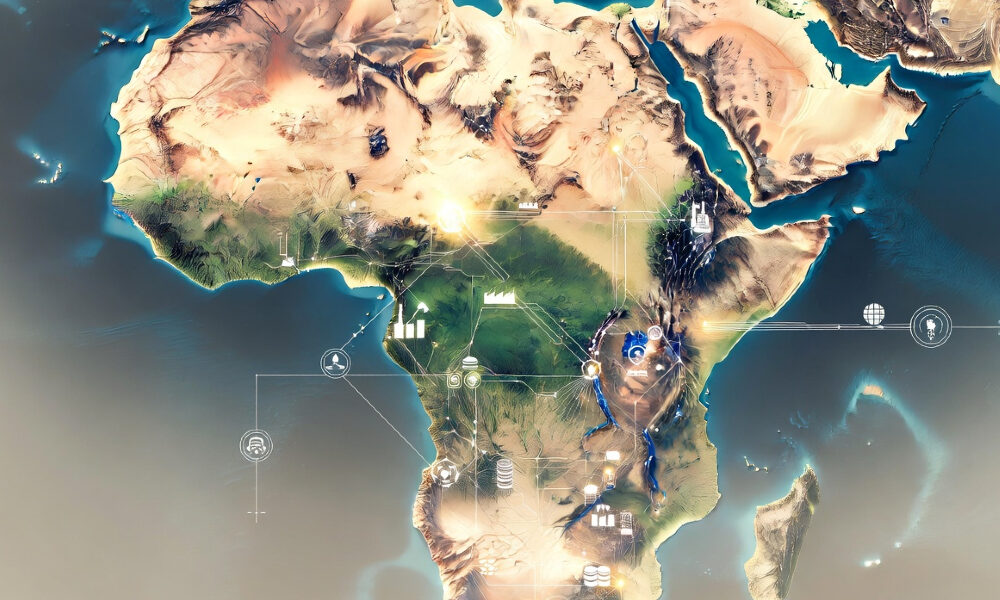
Trade corridors fail to integrate farms, factories, and ports. Energy systems prove too small for industrial and intelligence-era demand. Logistics architectures inflate the cost of competitiveness.
Data and digital infrastructure remain largely externalized. Education pipelines misalign with engineering, manufacturing, and applied intelligence.
These are not development gaps. They are sovereignty gaps.
This is precisely why many Africa strategies underperform. Capital flows into weak systems do not compound – they leak. Projects without institutional continuity decay. Reforms without enforcement capacity collapse under political cycles.
For sovereign funds, presidential advisors, and national planners, the implication is clear: the highest-impact investments in Africa over the next 30 to 50 years will not be speculative. They will be foundational.
The Infrastructure Imperative
Rail and logistics networks must bind regional markets into single economic organisms. Ports, refineries, and processing capacity need to retain value instead of exporting it raw.
Power and data infrastructure must be sized for industrialization and AI-scale demand. Housing and food systems should absorb population growth without instability.
Human capital pipelines must align to production, not consumption.
Yet infrastructure alone is insufficient. No system survives without cultural and institutional coherence.
States that lack narrative legitimacy, civic discipline, and long-term policy alignment struggle to protect assets across political transitions. Culture, education, and shared national purpose are not soft variables – they are balance-sheet risks.
The sovereign edge comes from integrating three layers: hard infrastructure, industrial capacity, and cultural-institutional resilience.
Population as Power
Africa’s population growth is often framed as a liability. In reality, it is latent power.
Without systems, it becomes pressure. With systems, it becomes the largest production engine of the 21st century.
The era of extraction is ending. The era of system builders has begun.
Those who engage Africa now with a builder’s mindset – long capital, aligned policy, and institutional patience – will not simply participate in growth. They will help define the architecture of the next global economic order.
A Call to Action
This is not a call for aid. It is a call for statecraft, capital discipline, and construction at scale.
Independence is being redefined. The question is who is prepared to build it.
Victory Azimih is a visionary entrepreneur and global investment consultant specializing in Africa’s economic growth and industrial transformation. As the CEO and founder of Azeemi Global, he leads a pioneering firm dedicated to accelerating the continent’s development through cutting-edge technology and infrastructure solutions. Under his leadership, Azeemi Global focuses on harnessing the potential of artificial intelligence, blockchain, and smart infrastructure to unlock sustainable investment opportunities across Africa. Based in Lagos, Nigeria, Azimih is at the forefront of driving Africa’s future as a hub of innovation and industrialization.