A Diaspora View of Africa
How Would the Loss of AGOA Affect US-Africa Trade?


By Gregory Simpkins
I have been associated with the African Growth and Opportunity Act (AGOA) since House staffer Mike Williams wrote the first draft. I worked for former Rep. Ed Royce, who was the original floor leader for the bill to gain passage, and subsequently, I worked for the Corporate Council on Africa to encourage corporate support for this trade process.
I later taught African government officials and businesspeople how to understand AGOA and take advantage of its benefits.
I say all this not to toot my own horn because there were many people who actively promoted AGOA along with myself, but rather, I seek to establish that I have been a part of this trade process from the beginning and active in its promotion. Therefore, I hope this establishes me as having some expertise about AGOA and the ups and downs of establishing US-Africa trade under it over the past quarter century.
AGOA’s Uncertain Future in Congress
The African Growth and Opportunity Act (AGOA) is set to expire on September 30, 2025. Despite its importance, the prospects for its renewal have long been doubtful. Here are some key points to consider:
- Bipartisan Support: AGOA has historically enjoyed bipartisan support, but the current political climate and upcoming elections might affect its renewal.
- Proposed Extension: Senators Chris Coons and James Risch introduced the AGOA Renewal and Improvement Act of 2024, which proposed extending AGOA for 16 years, until 2041. Representative John James introduced the AGOA Extension and Enhancement Act of 2024, reauthorizing AGOA until 2037.
- Industry Advocacy: The American Apparel & Footwear Association (AAFA) urged Congress to immediately renew AGOA, citing its benefits for American companies, workers, and the U.S. economy.
- Importance to Africa: AGOA is crucial for many Sub-Saharan African countries, providing duty-free access to the U.S. market and supporting millions of dollars in revenue and hundreds of thousands of jobs.
Given the urgency of the situation, Congress needed to act quickly to renew AGOA before its expiration. Experts have recommended extending AGOA for at least 20 years to provide stability and predictability for businesses and investors.
Over the years, AGOA has been a strategic component of US economic statecraft, fostering economic ties with the rapidly growing African continent…
Waning U.S. Support and African Advocacy
Unfortunately, all the usual reasons for the extension of AGOA no longer appear to have worked. The bipartisan support for this trade process has dried up.
There seemed to be little appetite in Congress to fight for no tariffs on African countries while the administration is pushing a broader global tariff policy. Therefore, the prospects for the Coons-Reisch bill or the James bill currently appear to be dim.
Industry advocacy used to carry a lot of weight on AGOA, but the administration’s main commercial focus regarding Africa seems to be securing access to critical minerals and assuring security to achieve that. AGOA was established to facilitate economic development on the continent, raising wages creating wealth, lessening the need for development assistance and ensuring purchasers for American goods and services.
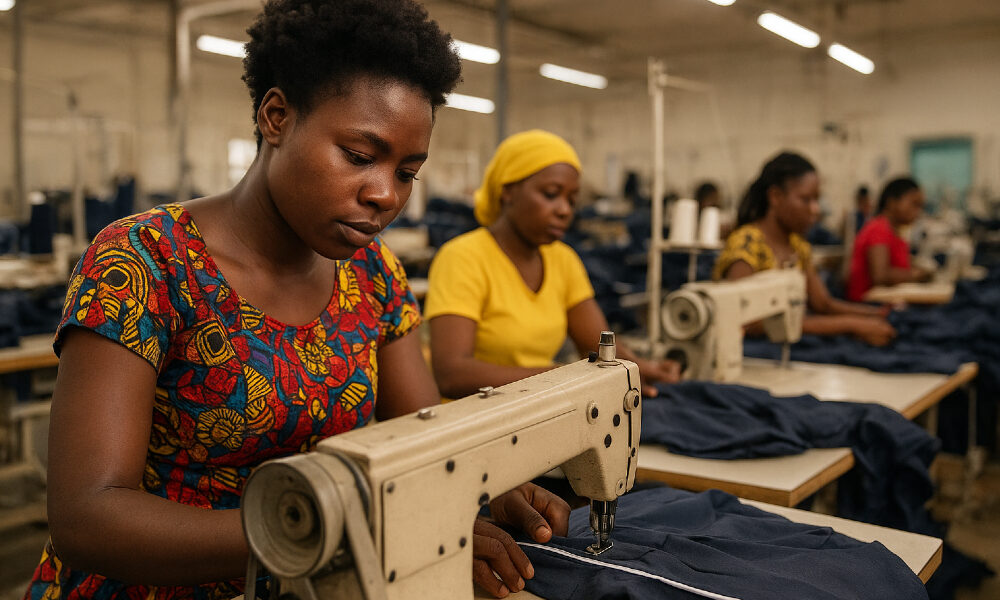
African manufacturers have lobbied Congress for a final extension of one or two years, citing potential mass layoffs and economic collapse if AGOA isn’t renewed. We saw this in prior periods in which the renewal of AGOA had been in doubt.
Kenyan factory owner Pankaj Bedi led a delegation of private investors and government officials to meet with Congressional members and their aides, receiving universal support for AGOA renewal, but that response has not seemed to move the needle as it were for achieving successful Congressional action on AGOA.
Strategic Importance Beyond Trade
There used to be a strong cadre of support for African development, but that has significantly lessened in the last couple of years and accelerated in the current administration. African development was the cornerstone of AGOA from its inception.
That was the key point its supporters used to obtain initial Senate support. Where is that support now beyond the Coons-Risch and James sponsors?
Even if the support for African development has dimmed in the US government, the commercial case for AGOA remains strong. As cited in a August 16 article by the Australian Institute of International Affairs, since its inception in 2000, AGOA has granted duty-free access to the U.S. market for thousands of products to over 41 African countries, currently 32 of which are eligible.
It has boosted trade from approximately US$24 billion in 2002 to over US$104.9 billion in 2024.
Over the years, AGOA has been a strategic component of US economic statecraft, fostering economic ties with the rapidly growing African continent while countering the dominance of China and Europe, the article stated. The initiative enhances economic diversification for the United States by broadening its supplier base and reducing its dependency on concentrated import sources, particularly for strategic commodities.
This diversification strategy proves especially valuable in securing access to critical raw materials from African suppliers, such as cobalt and manganese, which are integral resources to emerging U.S. industries, notably electric vehicle manufacturing.
Meanwhile, China is taking a page from the AGOA playbook by announcing the elimination of all tariffs on the exports of 53 African nations….
Risks of Non-Renewal and Global Competition
Nevertheless, the success of AGOA’s duty-free framework has not prevented the United States from losing ground to competitors in the broader African market, where it has scarcely kept pace with volumes in recent years. Against this backdrop, the surest way for the United States to reassert its trade dominance in Africa and frustrate any efforts to undermine this position was to maintain AGOA or amend it in a way that not only cements the U.S. trade interests in Africa but also realigns it with the goals and ambitions of the current America First Trade Policy.
The Institute’s piece opines that the termination or non-renewal of AGOA could have strategic backfire for the United States. Since AGOA requires participating nations to demonstrate “continual progress towards establishing a market-based economy,” ending the program would eliminate a key incentive for African countries to maintain market-oriented reforms.
This creates a dangerous domino effect: African nations might retaliate against Trump administration tariffs by restricting American goods and foreign direct investment, while simultaneously abandoning their commitment to free-market principles.
Meanwhile, China is taking a page from the AGOA playbook by announcing the elimination of all tariffs on the exports of 53 African nations. RFI news service reported on June 13 that China already offers duty- and quota-free market access to least developed countries (LDCs), but the new initiative will level the playing field by also offering middle-income countries similar market access.
Eswatini (formerly Swaziland) is the only African country excluded from the zero-tariff deal. It maintains diplomatic ties with Taiwan, whereas China regards it as a breakaway province.
After a quarter-century of AGOA, it may be that some administration advisers don’t see enough economic development progress to continue. It also may be that Africa just doesn’t enter into their line of sight in terms of considering policy.
Whatever the reasons for shortchanging Africa trade, there is little to no chance this direction will end up benefitting American business or consumers in the long run, and continuing along these lines will make it difficult for the next administration to successful change course.
Gregory Simpkins, a longtime specialist in African policy development, is the Principal of 21st Century Solutions. He consults with organizations on African policy issues generally, especially in relating to the U.S. Government. He further acts as a consultant to the African Merchants Association, where he advises the Association in its efforts to stimulate an increase in trade between several hundred African Diaspora small and medium enterprises and their African partners.