Opinion
How the World Misreads Africa – And What Africans Have Always Known


By Farhia Noor
The older I get, the more certain I become of one inconvenient truth: the world doesn’t misunderstand Africa by accident. It misunderstands Africa by design.
For generations, the narrative about our continent has been shaped by outsiders – observers who studied Africa from lecture halls, boardrooms, and newsrooms far removed from the rhythms of its streets, markets, and villages. They documented our crises but rarely our creativity.
They analyzed our economies but ignored our ingenuity. They filmed our hardships but missed our hope. From that distance, a distorted image of Africa took hold – one that the world mistook for reality.
A Single Story, Repeatedly Told
The global lens on Africa is stubbornly narrow. It zooms in on conflict, poverty, and dependency – while blurring out resilience, innovation, and self-reliance.
This isn’t oversight; it’s pattern. A narrative that magnifies wounds but erases wisdom.
That spotlights scarcity but obscures abundance. That frames setbacks as destiny, not circumstance.
As a Senegalese proverb warns: “Truth can walk naked; lies must be dressed.” Africa’s truth needs no embellishment – but the myths about us have always been meticulously costumed in data, media, and policy frameworks that serve external agendas.
But Africans Know a Different Continent
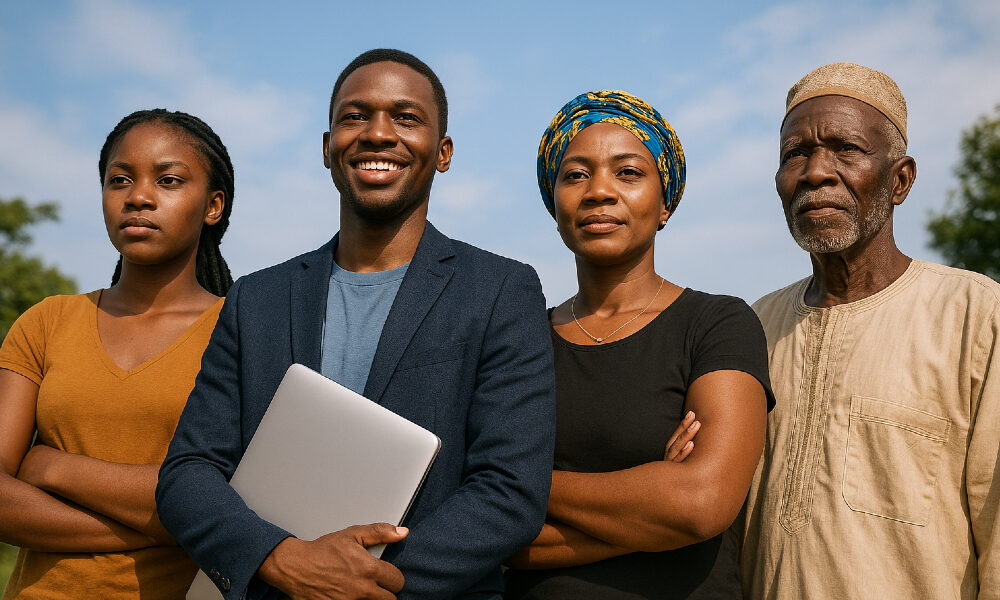
We see what others refuse to acknowledge. We see the fire in our youth – not just as job seekers, but as founders, coders, and climate entrepreneurs building digital economies from Lagos to Kigali.
We see the quiet strength of our mothers – holding together households, informal trade networks, and local governance systems that sustain nations. We see the discipline of our fathers – farmers, artisans, and small-business owners who feed communities with dignity and little fanfare.
We see the ancestral wisdom of our elders – guardians of languages, ecological knowledge, and social cohesion that predate colonial borders. We see the pulse of innovation in Nairobi’s tech hubs, Accra’s agri-processing startups, and Dakar’s design studios – solutions born not in spite of scarcity, but because of it.
Most of all, we know this: Africa’s greatness isn’t coming – it’s already here.
The World Sees Scars. We See Spirit
Where others perceive chaos, we recognize transition. Where they diagnose poverty, we detect untapped potential.
Where they narrate decline, we witness rebirth. You cannot understand Africa if you only study its pain while ignoring its power.
You cannot grasp its future if you have never respected its past.
Africa is not a monolith. It is 54 sovereign nations, 1.4 billion people, thousands of languages and cultures, and millions of untold stories – bound not by uniformity, but by a shared identity forged through resistance, resilience, and reinvention.
Africa is not “behind.” It has been held back – by extractive economies, artificial borders, and global systems that reward dependence over self-determination.
Africa is not “voiceless.” It has been muted – by platforms that amplify saviors over citizens.
Africa is not “weak.” It has been systematically underestimated – even as it supplies the world with minerals, talent, and demographic momentum.
What Africa Needs Is Not Rescue – But Respect
The continent does not need saving. It needs accurate narration. It needs authentic partnership, not performative pity.
It needs listeners, not lecturers. It needs global institutions, investors, and policymakers to engage African voices – not as beneficiaries of aid, but as architects of solutions.
When the world finally hears Africa through African ears – and sees it through African eyes – it will realize that the continent it once pitied is the very one humanity now needs: a source of demographic dynamism, cultural richness, and strategic agency in an increasingly multipolar world.
I am African. I live this truth daily – in boardrooms and village meetings, in agribusiness ventures and policy forums, in the quiet confidence of a generation done waiting for permission to lead.
And I say this without arrogance, only clarity: The future is not just in Africa. The future is African.
Farhia Noor is a seasoned business consultant based in Dar es Salaam, Tanzania. With a proven track record in developing enterprises and executing turnkey projects across both government and private sectors, she brings deep expertise to the table. Farhia is also a committed advocate for community-led development and is passionate about advancing sustainable, intra-African growth.