
- Africa’s swift action to contain COVID-19 has been effective in suppressing transmission so far.
- There is broad support for stay-at-home orders, but this could weaken easily.
- Sixty-nine percent of survey respondents said getting enough food and water would be difficult if they had to stay home for 14 days.
Two-thirds of people in 20 African countries fear going hungry if they had to quarantine for 2 weeks, according to a survey.
Confirmed cases of COVID-19 in Africa remain comparatively low, at 51,000 as of 6 May. But those numbers are growing fast. And a new report by the Partnership for Evidence Based Response to COVID-19 (PERC) reveals some worrying findings about the impact of Coronavirus on the lives of many Africans.
Half of respondents to the survey, conducted in 28 African cities, said they would run out of money if they had to stay home for 14 days. The lowest-income households expected to run out of food and money in less than a week. In Nigeria and Kenya, social media users have admitted that hunger has forced them to violate stay-at-home orders in order to search for food.

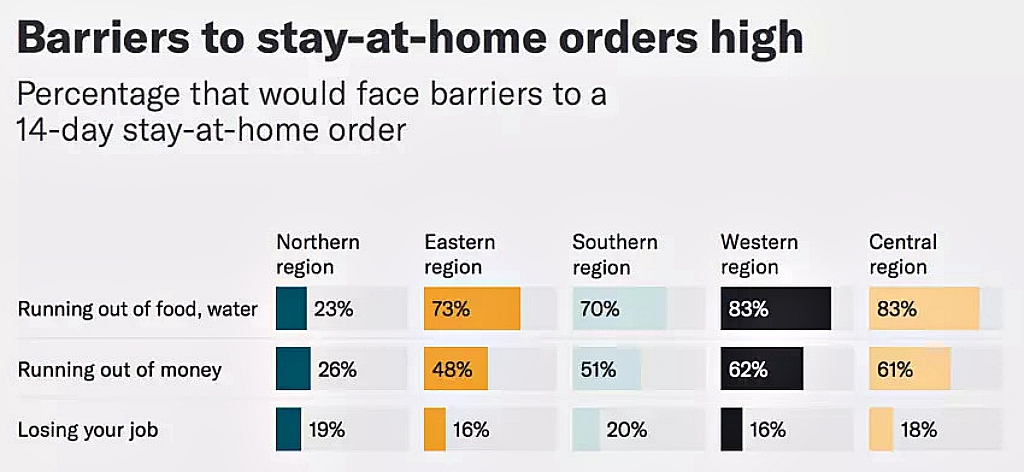
People fear they will run out of food if lockdowns are prolonged. IMAGE/PERC
Almost 60 percent of people responding to the survey said they did not have the space at home to isolate sick people.

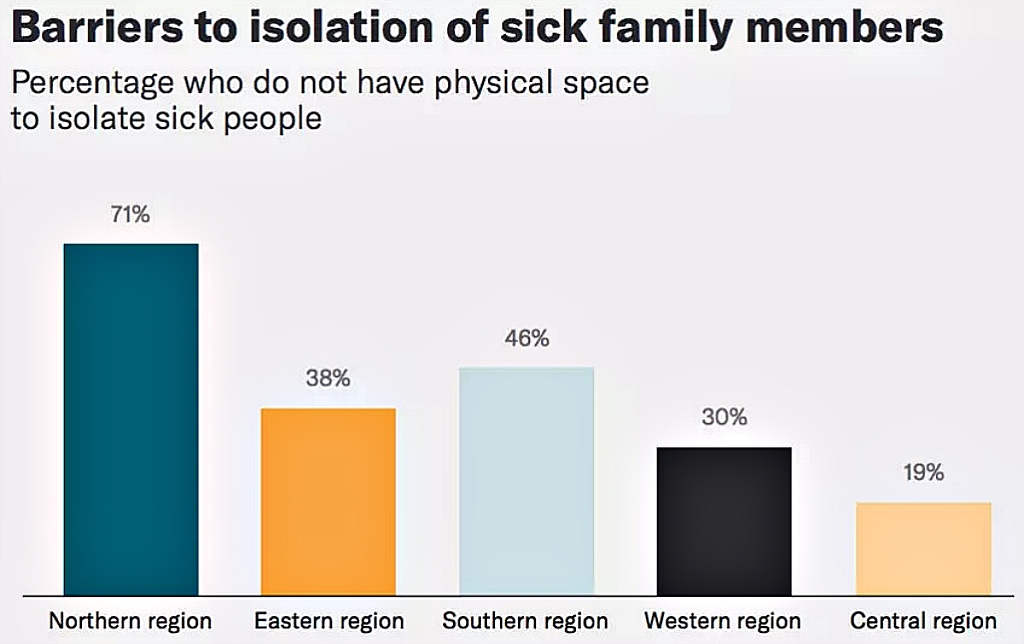
The majority of people do not have space to isolate family members. IMAGE/PERC
Fast response
Governments across Africa responded quickly to the pandemic with public health measures to prevent the spread of the virus. South Africa declared a national state of disaster and implemented a nationwide lockdown before reporting its first death from COVID-19. Uganda suspended public gatherings before the first documented case in the country. Nigeria began screening passengers at international airports nearly one month before the first case was detected.
It is thought that this has given African countries an advantage in limiting the spread of the virus. The report by PERC says: “Early, decisive action taken by many African governments may have slowed transmission. While it is difficult to measure the precise impact of any single intervention, African Union (AU) member states have yet to document the spiraling caseloads seen in parts of the United States and Europe.”
The relative youth of the African population may be another advantage. Current data suggest older people infected with COVID-19 are at significantly greater risk of severe illness. In sub-Saharan Africa only 3 percent of the population are 65 years or older, and 43 percent are less than 15 years old. By contrast, in the European Union, 20 percent of the population are 65 years or older and only 17 percent are under 15.
Fragile support for public health measures
PERC’s survey found that people in the 20 African countries currently support PHSMs, but that consensus may be weak. A large share of the population expect a prolonged quarantine to result in food insecurity and grave financial hardship.

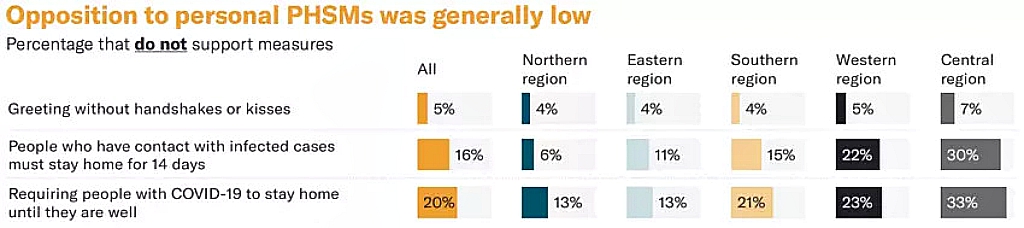
There is fragile support for public health and social measures in Africa. IMAGE/PERC
The report made 3 recommendations for African countries to restrict the spread of COVID-19.
1. While caseloads remain low, build public health capacity to test, trace, isolate, and treat cases – the necessary foundation for reopening society.
2. Monitor data on how PHSMs meet local COVID-19 conditions and needs, and to determine when and how to lift them in a way that balances lives and livelihoods.
3. Engage communities to adapt PHSMs to the local context and effectively communicate about risk to sustain public support, achieve widespread adherence, and shield vulnerable populations.
Dr Matshidiso Moeti, WHO Regional Director for Africa, said: “The findings of this report, along with COVID-19 trend data, will help countries make strategic decisions on relaxing their lockdowns. What we’ve learnt from Ebola and other outbreaks is that countries need to decentralize the response to the community level and increase their capacity to identify and diagnose cases.”
Josephine Moulds is a freelance journalist based, who writes regularly for The Times. She is a staff writer for The Telegraph and The Guardian.
Source: World Economic Forum