A Diaspora View of Africa
How the Outcome of the New Scramble for Africa Will Be Different


By Gregory Simpkins
Africa has long been a target of outside interests looking to capitalize on what the continent has to offer. The 19th-century European exploration of Africa and the so-called Scramble for Africa were driven by a complex interplay of resources, including:
- Natural Resources: Africa’s vast riches, such as gold, diamonds, rubber and ivory, sparked intense European interest.
- Human Resources: African labor was exploited for resource extraction, often through force or coercion.
- Financial Resources: European powers invested heavily in colonial infrastructure, such as railroads and ports, specifically to facilitate resource extraction.
- Technological Resources: Advances in transportation (steamships, railroads) and communication (telegraph) implemented in Africa facilitated European control and exploitation.
- Military Resources: European powers used military force to impose their will, suppress resistance and secure territories.
According to an article by Magzter, the publication summarizer, the superpowers of Europe were not experiencing cordial relations with each other. Their animosity wasn’t limited to political and military squabbles.
Registering poor balances of trade, these empires were economic rivals too, and they cast a covetous eye towards resource-rich Africa.
Between the 1870s and the advent of the 20th century, the European invasion and colonization of the continent claimed almost every territory in what became known as the Scramble for Africa. Despite their mistrust of each other, the race to carve up Africa was relatively orderly (heavy bloodshed notwithstanding), thanks to the agreements made at the Berlin Conference of 1884-85.
The Scramble for Africa was characterized by:
- Colonization: European powers partitioned Africa, often disregarding local boundaries and cultures to suit easily identifiable boundaries such as rivers even though traditional adversaries were lumped together.
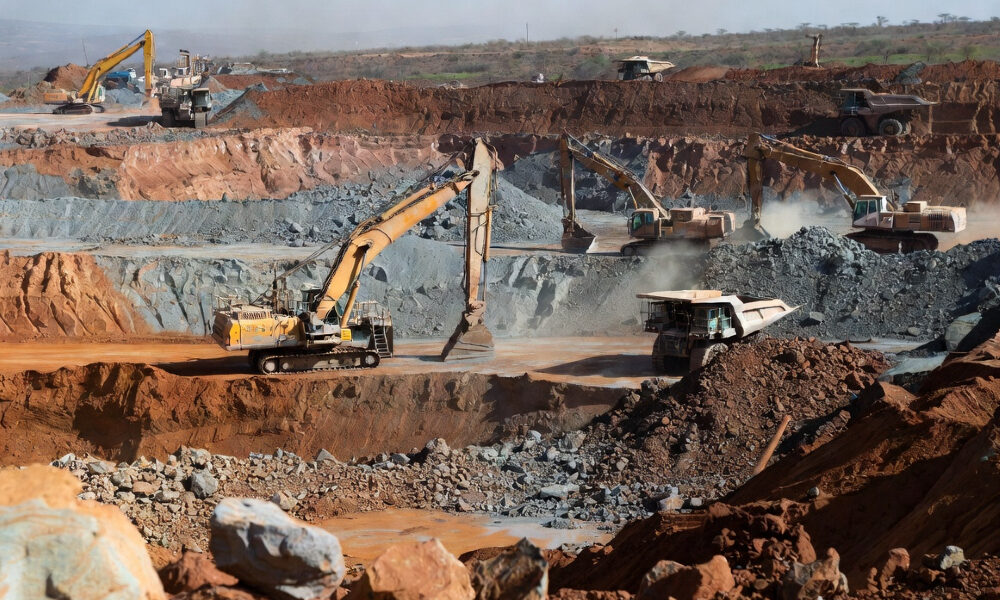
- Resource Extraction: Colonizers exploited Africa’s resources, often with devastating environmental and social impacts, which continues to this day through oil spills and other environmental degradation.
- Economic Imperialism: European powers controlled African economies, shaping them to serve colonial interests, which continued past colonization into the phenomenon known as neocolonialism.
The legacy of this period continues to shape Africa’s relationships with the world today, but the outside interests are different, the target resources are different, and independent African governments are behaving more independently as time passes.
China’s Head Start in the Race for Critical Minerals
In developed countries, especially the United States, the championing of renewable energy was contentious, with debates about climate change versus global warming hampering efforts to make significant advances in the necessary technology.
Furthermore, the US particularly has long ignored Africa except as a destination for all kinds of aid.
Meanwhile, China reaped contracts across the continent that allowed it to monopolize the extraction of critical minerals and then the processing of them. By the time developed countries woke up to the fix that put them in, they found themselves way behind China on guaranteeing the supply of the elements necessary for the 21st century economy with no easy way to catch up.
The US Response: A Critical Minerals Summit and New Strategy
Bilateral negotiations for African critical minerals lately is giving way to a more multinational orientation as evidenced by the recent US-convened critical minerals summit in Washington. About 50 nations from around the world, including Angola, the Democratic Republic of the Congo (DR Congo), Gabon, Guinea and Nigeria were represented at the meeting, hosted by US Secretary of State Marco Rubio.
US Vice President J.D. Vance proposed a trading bloc to counter China’s supply chain dominance and export controls of rare earths.
Foreign Policy magazine reported in a February 4 article that the summit came just after the US government announced a nearly US$12 billion critical minerals stockpile dubbed “Project Vault,” which will be supported by US$1.67 billion in private capital along with a US$10 billion loan from the US Export-Import Bank.
Although US officials have described Africa as “peripheral” to Washington’s interests, African engagement is necessary to its efforts to dismantle Beijing’s chokehold on the list of critical minerals that Washington imports in large quantities. That list includes tantalum, used heavily in the defense and aerospace sectors, and manganese, which is critical for steelmaking.
More than half of the world’s tantalum comes from African nations, including Congo, Nigeria and Rwanda. Meanwhile, South Africa is home to an estimated 80 percent of the world’s known manganese reserves, and Gabon supplies 63 percent of the United States’ manganese imports.
The summit comes at a heated time for US-Africa relations. US President Donald Trump’s approach to Africa focuses on “commercial diplomacy.”
According to his National Security Strategy, released in November 2025, US interests on the continent center primarily on its “abundant natural resources” and seek to avoid “any long-term American presence or commitments.” This last point contradicts requests from countries such as DR Congo, which requested security assistance against Rwandan-backed rebels and the US involvement in peace efforts in resource-rich Sudan’s ongoing conflict.
Last year, under the US-brokered pact with Congo and Rwanda to end fighting in eastern Congo, the Congolese government agreed to give US companies preferential access to strategic mineral reserves in exchange for US security support.
African Nations Assert Control Over Their Resources
Perhaps the main hope for Africa avoiding the kind of entanglements after the Berlin Conference are the current efforts by African governments to maintain control of their resources with foreign financing. For example, Business Insider Africa reported on February 10 that the United States has confirmed its support for the Monte Muambe project in Mozambique, one of southeastern Africa’s largest rare earth developments, as part of efforts to diversify its critical minerals supply chain and reduce reliance on China.
The Monte Muambe project, which carries an estimated development cost of US$276.3 million, is expected to produce around 15,000 tons of mixed rare earth carbonate annually over an 18-year mine life. U.S. interest in Monte Muambe gives Mozambique greater visibility within the emerging dynamics of Africa’s rare earths sector and should encourage further beneficial foreign investment.
US involvement is also expanding in the DR Congo, already a global powerhouse in cobalt and copper production. In December 2025, Washington signed a strategic mining partnership with the DR Congo aimed at diversifying investment flows and curbing China’s influence in the country’s mining sector.
As part of this push, the US-based Orion Critical Mineral Consortium has signed a memorandum of understanding to acquire a minority 40 percent stake in the Mutanda and Kamoto copper-cobalt mines.
Gold Production Surge and Renegotiated Terms Signal New Era
A week earlier, the publication stated that Burkina Faso’s mining sector had delivered a historic performance in 2025, with national gold production hitting a record 94 tons, according to official figures presented by Minister of Energy, Mines, and Quarries Yacouba Zabré Gouba. He attributed the surge to the operationalization of the state-owned Burkina Faso Mining Participation Company, SOPAMIB, as well as tighter oversight of the country’s 15 industrial mines.
Government efforts to clamp down on illegal gold trading also yielded results, with authorities recovering about 10 kilograms of gold from illicit supply chains during the year.
Mali has joined Burkina Faso as the only two countries in West Africa currently fully benefiting from the rise in global gold prices because of renegotiation of mining contracts, new taxes, royalties imposed on foreign companies, a larger share of revenues returned to the state and a gradual end to agreements considered unbalanced. These reforms mark a strategic turning point: gold is no longer just extracted for foreign profit; it now finances sovereignty, development and national stability.
Foreign interests have been put on notice by African governments that the Berlin Conference model of resource exploitation will not be repeated. From now on, deals for African resources will no longer be lopsided in favor of foreigners.
African governments – and one hopes African citizens – must benefit from the resources with which they have been richly blessed. We should expect that profits, jobs and technology will flow to African control as it should have been long ago.
Gregory Simpkins, a longtime specialist in African policy development, is the Principal of 21st Century Solutions. He consults with organizations on African policy issues generally, especially in relating to the U.S. Government. He further acts as a consultant to the African Merchants Association, where he advises the Association in its efforts to stimulate an increase in trade between several hundred African Diaspora small and medium enterprises and their African partners.