Owusu on Africa
How Nkrumah’s approach to the world may help explain Africa’s current approach


By Fidel Amakye Owusu
In recent years, Africa’s stance on global events and its relationships with major powers have been the subject of increasing discussion and analysis.
One such event is the ongoing war in Ukraine. Many observers in the West were surprised and frustrated by the reluctance of several African nations to unequivocally condemn Russia’s actions.
A significant number of African states either abstained from voting or were absent during United Nations resolutions aimed at censuring Russia.
Conversely, some pro-Russian commentators had anticipated African solidarity with Moscow, framing both Russia and Africa as historical victims of Western hegemony. However, this narrative does not align with the perspectives of most African nations, which largely do not see themselves as naturally aligned with Russia.
The debate extends to Africa’s growing engagement with China. Critics, particularly from Western nations, often frame China’s activities on the continent as a form of “neo-colonialism” and urge African states to limit ties with Beijing.
Nevertheless, African countries continue to work closely with China, which has been a significant partner in infrastructure development. For example, the Chinese government funded and built the African Union headquarters in Addis Ababa, Ethiopia, a project laden with symbolic significance.
On the other hand, China has also questioned Africa’s enduring economic and political ties with Western powers, particularly the former colonial states. To Beijing, these relationships represent a persistent dependency on outdated systems of influence.
These competing expectations from different global powers reveal a complex dynamic in Africa’s foreign relations. To understand the rationale behind Africa’s approach, it is useful to consider the historical precedent set by Ghana’s first president, Kwame Nkrumah.
Following Ghana’s independence in 1957, Nkrumah famously declared that his nation would look “neither left nor right” but would instead focus on moving forward. This statement reflected his desire to transcend the ideological rivalry of the Cold War and pragmatically engage with both the West and the East to maximize Ghana’s developmental potential.
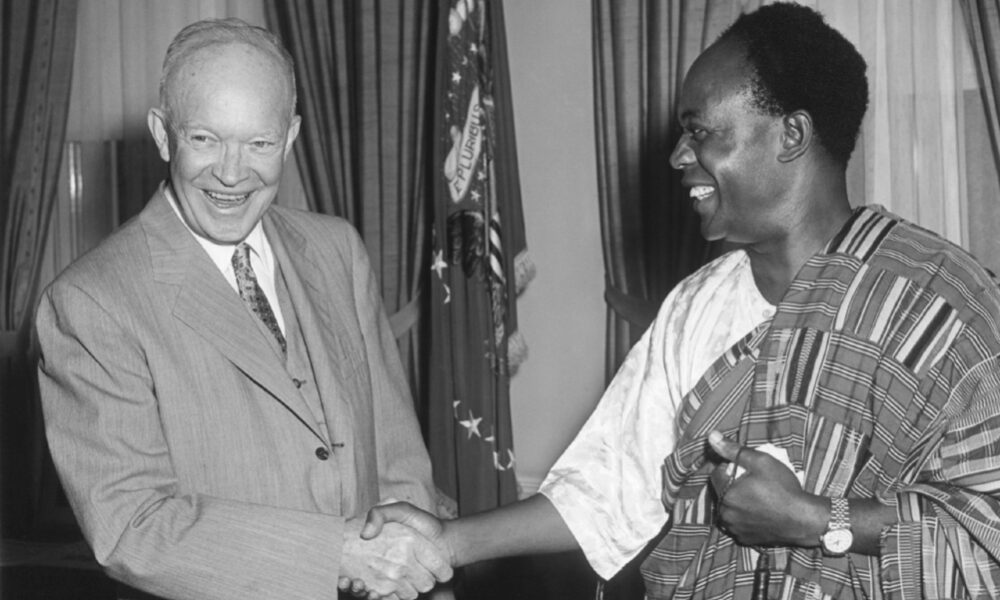
Under Nkrumah’s leadership, Ghana successfully leveraged partnerships with both sides of the ideological divide. For instance, Ghana secured support from the United States to construct the Akosombo Dam, one of Africa’s largest hydroelectric projects, and an aluminum smelter.
Simultaneously, Ghana worked with the Soviet Union to establish a national shipping line.
Nkrumah’s diplomatic strategy extended beyond Cold War powers. In 1960, he established formal relations with the People’s Republic of China, at a time when many Western countries refused to recognize the Communist state.
While his distrust of the West deepened after the assassination of Congolese leader Patrice Lumumba in 1961, Nkrumah maintained a pragmatic approach to global powers, striving to balance Ghana’s interests on the global stage.
Today, many African nations continue to adopt a similar pragmatic approach. Their focus is on forming partnerships that address pressing challenges, such as closing infrastructure gaps, enhancing security, and improving human development indices. In this sense, Africa remains forward-looking, driven by its own developmental goals rather than the expectations of external powers.
Fidel Amakye Owusu is an International Relations and Security Analyst. He is an Associate at the Conflict Research Consortium for Africa and has previously hosted an International Affairs program with the Ghana Broadcasting Corporation (GBC). He is passionate about Diplomacy and realizing Africa’s global potential and how the continent should be viewed as part of the global collective.