Opinion
How Magufuli surprised mining corporates with drastic reforms – to Tanzania’s advantage
The late president required that previous contracts be renegotiated and tightened for increased assurances and more revenues for Tanzania
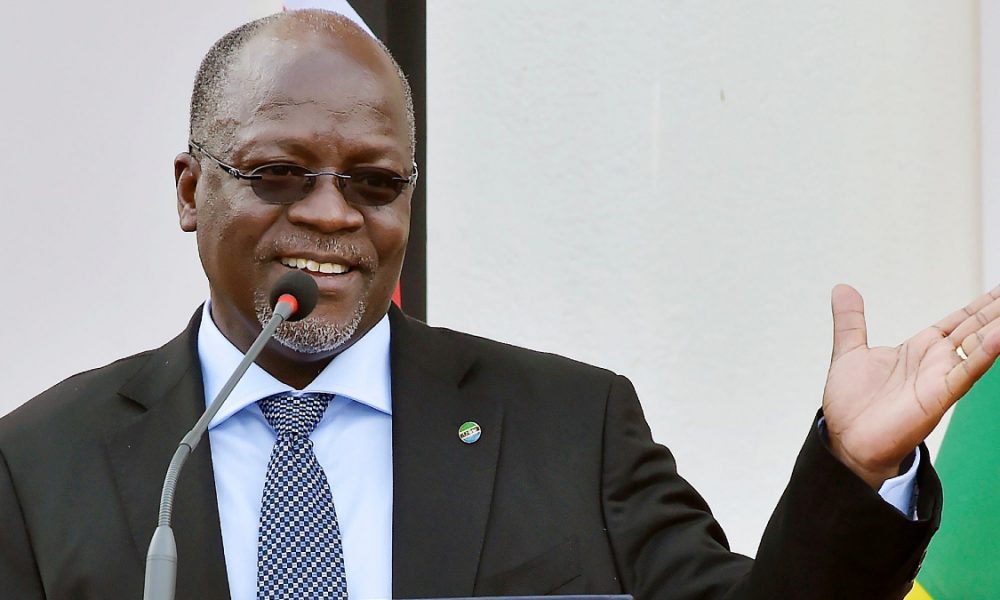
By George Wachira
The late President Magufuli of Tanzania will be remembered as the leader who was ready to “bulldoze” bureaucracy and status quo to promptly create socio-economic changes. With speed and resoluteness, he specifically changed the legal, regulatory, and fiscal frameworks governing the foreign dominated mining sector, all within 2 years of his presidency.
After South Africa, Tanzania is deemed the number two mining giant in Africa in key minerals like gold, diamonds, and nickel which are mostly concentrated in the north-western part of the country, where global mining conglomerates are active. The mining zone also happens to be the late president’s home area, perhaps advising his familiarity with sector issues and urgency to implement corrections.
Despite the large size of the mining sector in Tanzania, accrual of economic benefits to the country was deemed not significant enough. By 2017 Magufuli had delivered revised mining laws and regulations increasing gold royalties from 4 percent to 6 percent. Further, he introduced 16 percent government ownership of mining companies’ stock without compensation, with the opportunity to purchase a further 34 percent ownership. Exportation of concentrates and unprocessed minerals was banned requiring that value addition processing be done in Tanzania.
Were these changes too drastic for foreign investments? This is a question inviting binary answers depending on who is asked. However, the mining investors appear to have finally assimilated the new changes and moved on with business. What is significant is that the Tanzania mining legal and regulatory precedents may influence how developing nations negotiate future mining deals with corporate investors.
Magufuli was simultaneously reforming the natural gas sector where investment terms and conditions with multinational companies had already been concluded, only awaiting final investment decisions for commercialization of natural gas resources into Liquefied Natural Gas (LNG) for exports.
The late president required that previous contracts be renegotiated and tightened for increased assurances and more revenues for Tanzania under a new Host Government Agreement which is yet to be finalized.
There was also a new policy to prioritize natural gas production for local industrialization ahead of LNG exports. This is indeed already happening with piped natural gas feeding power generating plants and large industries like cement, thus replacing imported fuel oil.
Legal backtracking in the Tanzania gas sector, may have caused multinationals to shift LNG investment priorities from Tanzania to the neighboring Mozambique. This is happening at a time when global oil and gas fortunes are changing as the world enters transition to renewable energy. Yes, Tanzania faces the danger of missing immediate LNG investment opportunities.
The East African Crude Oil Pipeline pumping transit export crude oil from Uganda via Tanga, was a default opportunity for President Magufuli, mainly delivered by oil major, Total, the main investor in Uganda upstream, after Kenya failed to show flexibility on an alternative pipeline route through south of Kenya.
The Lamu port route was judged by Total to be insecure and with limited supporting infrastructure.
Perhaps the biggest regional shift delivered by Magufuli was the redefinition of diplomatic relationships between Tanzania and Rwanda which during the times of President Kikwete were sour. This has permitted Rwanda to redefine its transit preference through the Dar es Salaam port, and this has negatively impacted the Mombasa port in Kenya.
A Standard Gauge Railway (SGR) from Dar es Salaam is expected to eventually land in Rwanda. Magufuli had already implemented an electricity powered SGR section from Dar es Salaam to Morogoro funded with commercially backed capital.
For whatever reasons, real or imagined, the late Magufuli was not seen as truly warm towards Kenya. He placed many irritating hurdles and nuisances to bilateral trade and immigration with Kenya. These are aspects which Kenya expects the new administration in Tanzania to address, for indeed they do divert essential diplomatic goodwill and efforts.
The socio-economic reform legacies of the late President risk being overshadowed by the impacts and toll of the COVID-19 pandemic in Tanzania when these are finally assessed. He may have seriously erred against science in his attitude and approach to the COVID-19 episode, thus putting Tanzania and indeed neighboring counties to a high level of health risk.
May the late John Pombe Magufuli rest in eternal peace, as we all heartily welcome Madam President Samia Suluhu Hasan and wish her every success in leading Tanzania to prosperity.
Business Daily © Copyright 2021