A Diaspora View of Africa
How Is US Policy Toward Cuba Evolving?


By Gregory Simpkins
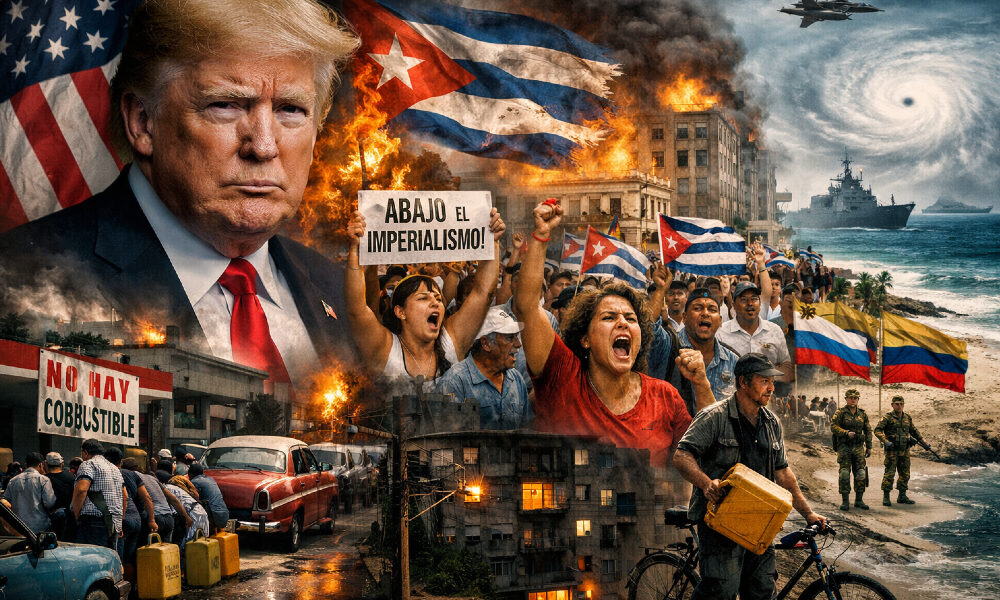
The United States’ relationship with Cuba has been long and troubled to say the least. At various times, the United States has been in control of Cuba or in conflict with that island-nation, especially since the Communist takeover in 1959. The question now is how will the Trump administration approach Cuba in its time of extreme vulnerability?
In the early years following the takeover (1959-1962), the US imposed a partial trade embargo on Cuba in 1960, which was expanded to a full embargo in 1962 by President John F. Kennedy. This was in response to Cuba’s nationalization of American-owned businesses and its alignment with the Soviet Union.
During the Cold War era (1962-1991), the US maintained a strict embargo, and relations worsened during the Cuban Missile Crisis in 1962. Cuba became a one-party authoritarian state, and the US supported anti-Castro groups.
In the post-Cold War period (1991-2009), the US tightened sanctions with the Cuban Democracy Act (1992) and Helms-Burton Act (1996). However, there was some easing of restrictions under President Bill Clinton and George W. Bush.
In the Obama era (2009-2017), President Barack Obama initiated a policy shift, easing restrictions on travel, remittances and trade. The US removed Cuba from its state sponsor of terrorism list, and diplomatic relations were restored in 2015.
In the first Trump administration (2017-2021), President Donald Trump reinstated and tightened sanctions, restricting transactions with Cuban military-affiliated companies. Tensions escalated with threats of military action and oil embargoes.
Beginning in 2021, President Joe Biden maintained some sanctions while easing others. So, the question is how will US policy manifest itself during the second Trump administration?
Trump Policy Increases the Stakes
On January 3, the United States launched a military strike in Venezuela and captured incumbent president Nicolás Maduro and his wife, Cilia Flores. The US operation, codenamed Operation Absolute Resolve was described as aiming to end drug shipments directly and indirectly from Venezuela.
However, it soon became evident that another major aim was to cut off sanctions-defying oil supplies to China and Russia. It was mentioned that such a redirection of oil supplies would create energy starvation in Cuba by cutting off its Venezuelan supplier.
However, it quickly became evident that the Trump administration had much deeper intentions toward Cuba.
Trump Targets Cuba as a National Security Threat
On January 29, President Trump issued an executive order citing Cuba as a threat to US national security:
“The Government of Cuba has taken extraordinary actions that harm and threaten the United States. The regime aligns itself with – and provides support for – numerous hostile countries, transnational terrorist groups, and malign actors adverse to the United States, including the Government of the Russian Federation (Russia), the People’s Republic of China (PRC), the Government of Iran, Hamas, and Hezbollah. For example, Cuba blatantly hosts dangerous adversaries of the United States, inviting them to base sophisticated military and intelligence capabilities in Cuba that directly threaten the national security of the United States,” the order stated.
“Cuba hosts Russia’s largest overseas signals intelligence facility, which tries to steal sensitive national security information of the United States. Cuba continues to build deep intelligence and defense cooperation with the PRC. Cuba welcomes transnational terrorist groups, such as Hezbollah and Hamas, creating a safe environment for these malign groups so that these transnational terrorist groups can build economic, cultural, and security ties throughout the region and attempt to destabilize the Western Hemisphere, including the United States. Cuba has long provided defense, intelligence, and security assistance to adversaries in the Western Hemisphere, attempting to thwart United States and international sanctions designed to enforce the stability of the region, uphold the rule of law, and safeguard the national security and foreign policy of the United States.”
On that very afternoon, a group of senior Latin American diplomats had met at an ambassador’s residence, to discuss the executive order from Trump according to a March 23 article in The New Yorker. The diplomats were said to have been shocked by its contents.
“The perversion of the language is incredible,” one said. “Word by word, it’s harsher than the language that Kennedy used to talk about the Soviet missiles” – the crux of a standoff, in 1962, that brought the world close to a nuclear conflagration.
Trump’s order offered insufficient evidence to support its assertions, the magazine stated. Trump vowed to cut the island off from oil imports and warned that any other nation that sought to supply fuel would be punished.
Cuba’s Deepening Humanitarian Crisis
For months, Cuba had faced daily electricity blackouts owing to a lack of fuel, along with severe shortages of food, water and medicine. Economic activity had all but stopped, and the government, which was essentially broke and unable to secure new loans, had been incapable of providing solutions, according to The New Yorker article.
Even garbage collection was virtually nonexistent, with huge mounds of refuse piling up on street corners. In the past eighteen months, three powerful hurricanes have destroyed countless homes and vast expanses of cropland, displacing more than a million people.
When the executive order came, Cuba was on life support; Trump’s action effectively shut the oxygen off.
In recent days, Jamaica and Guyana have moved to unwind long-standing medical cooperation agreements with Havana as pressure from Washington intensifies. Jamaica announced it would terminate its decades-old medical mission arrangement after the two governments failed to reach new terms, while Guyana confirmed that Cuba is preparing to withdraw more than 200 doctors after a dispute over how those physicians are paid.
The developments may be the first signs of a broader regional ripple effect tied to Cuba’s deepening economic and energy crisis – one that has been exacerbated by Washington’s efforts to isolate the Cuban government and expand US influence across the Caribbean and Latin America.
The timing is especially notable. Cuba is already struggling through one of the most severe economic crises in decades, worsened by fuel shortages after the reduction of Venezuelan oil shipments that long helped power the island.
With Havana operating under severe economic constraints, its ability to sustain international programs – including its signature medical diplomacy – has increasingly come into question.
“I Think I Could Do Anything I Want With It”
During an unrelated Oval Office event on March 16, Fox News’ Peter Doocy asked the president if potential military action in Cuba would look more like the smaller scale military operations in Venezuela or the larger campaign against Iran that has killed thousands throughout the Middle East and 13 US service members so far.
“All my life I’ve been hearing about the United States and Cuba. ‘When will the United States do it?’ ” Trump said, adding he believes he will have “the honor of taking Cuba. That’d be good. That’s a big honor.”
“Whether I free it, take it. I think I could do anything I want with it, you want to know the truth?” the president added.
Trump’s braggadocio may be sparked by welcoming comments inside Cuba. The Hill newspaper reported on March 3 that when riots broke out recently at a prison in Cuba’s Ciego de Avila province, the videos that circulated showed something remarkable: Inmates were shouting, “Long live Trump!”
“Think about that for a moment. Cuban prisoners – men with little left to lose and every reason to resent American power – were cheering the U.S. president.
That image tells you more about the state of US-Cuba relations than a decade of think-tank white papers,” the newspaper opined.
Camila Acosta, the Havana correspondent for the Spanish newspaper ABC and one of Cuba’s most prominent independent journalists, told The Hill that pro-American intervention sentiment wasn’t confined to the prisons, where numerous political prisoners reside. “I’ve spoken to people who say, ‘Let the Americans just come in already. We can’t take this anymore,’” Acosta told the newspaper. “That shows you the level of desperation in Cuba.”
In recent days, protests have erupted in parts of the island as citizens frustrated by prolonged blackouts and food shortages have taken to the streets. In the city of Morón, demonstrators attacked and vandalized a local Communist Party office during a nighttime protest fueled by the worsening energy crisis, leading to multiple arrests.
The unrest reflects growing frustration among Cubans facing rolling power outages that, in some areas, have lasted more than a dozen hours a day. At the same time, Cuban President Miguel Díaz-Canel has confirmed that Havana is engaged in preliminary talks with the United States as the country grapples with a deepening economic and fuel crisis – an acknowledgment that even the Cuban government is seeking ways to stabilize the situation.
Six Decades of Dependency: How Cuba’s Economy Collapsed
To understand Cuba’s collapse, Eric Erdman, editor of Dispatches from the Rebellion – a weekly newsletter covering freedom movements around the world, recommends you follow the patrons.
“For six decades, the regime survived not through productivity but through subsidy – first from the Soviet Union, then Venezuela, two of the most economically ruinous dictatorships of their eras, each impoverishing its own citizens while bankrolling the Castros. When the Soviets collapsed, Cuba lost 70-80 percent of its imports overnight. When Maduro fell in January, the second lifeline snapped. That is not a sanctions story. That is a dependency story the regime chose – and now owns,” Erdman wrote in his essay Viva La Libertad.
The result, Erdman says, is an economy of staggering, self-inflicted failure. The government controls nearly all enterprise, sets prices and stubbornly misallocates resources into failing industries while printing money to cover the losses – destroying the peso and rendering state salaries nearly worthless.
A typical monthly salary now buys barely a dozen eggs. Sugar exports – once the economy’s backbone – have collapsed 90 percent since 1990.
Total exports fell 75 percent between 2000 and 2025. According to The Economist, Cuba’s entire foreign income in 2025 roughly a quarter of what Honduras earns with a similar population.
Cuba produces only 40 percent of the oil it needs daily, and its Soviet-era refineries are so inefficient that even arriving crude wastes significant fuel in processing. The military conglomerate Gaesa pumped more than 70 percent of its investments into tourism over the past decade while the grid crumbled.
A 2025 survey found 89 percent of Cuban families in extreme poverty by World Bank standards. The US$3 billion annual remittances keeping those families alive comes overwhelmingly from the exiles the regime drove out.
The Diaspora is subsidizing the cage that expelled them.
It remains to be seen how US policy toward Cuba will be manifested moving forward. Another military intervention may be threatened but not acted upon.
President Trump appears to feel he has support from Cubans to take some action, and the Cuban government in its weakened state is in no position to forcefully reject US involvement. The administration said the Venezuelan intervention and diversion of oil would benefit the Venezuelan people. Let’s see if the suffering people of Cuba will see their situation improved by a US president eager for regime change.
Gregory Simpkins, a longtime specialist in African policy development, is the Principal of 21st Century Solutions. He consults with organizations on African policy issues generally, especially in relating to the U.S. Government. He further acts as a consultant to the African Merchants Association, where he advises the Association in its efforts to stimulate an increase in trade between several hundred African Diaspora small and medium enterprises and their African partners.