Owusu on Africa
How a Colonial-Era Power Play Is Fueling Crisis in Madagascar


By Fidel Amakye Owusu
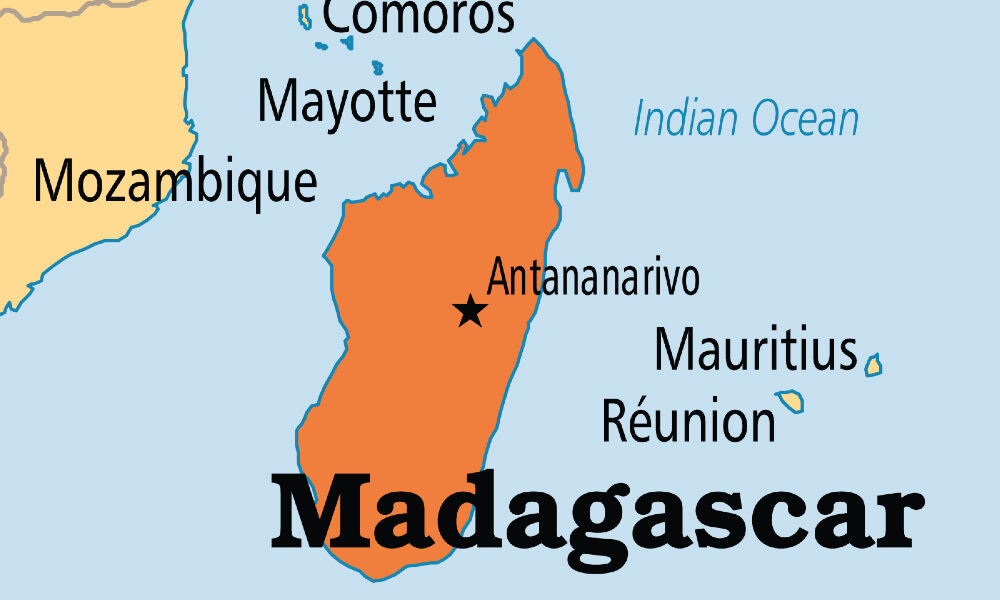
In the heart of the Indian Ocean, Madagascar is teetering on the edge of political collapse. Acute shortages of water and electricity, rampant corruption, soaring youth unemployment, and widespread poverty have ignited public fury.
Yet rather than confront these systemic failures head-on, President Andry Rajoelina has reached for a familiar playbook – one written not in Antananarivo, but in Paris over half a century ago.
The recent dissolution of Madagascar’s entire government is more than a domestic political maneuver. It is a stark reminder of how colonial-era constitutional frameworks continue to shape governance – and dysfunction – across Francophone Africa.
Unlike many former British colonies, where independence often emerged from protracted liberation struggles, most French colonies in Africa transitioned to sovereignty through negotiated arrangements that preserved deep ties to the metropole. Crucially, they also inherited France’s post–World War II political architecture – most notably, the 1958 Constitution of the Fifth Republic.
That document, crafted under Charles de Gaulle, centralized extraordinary power in the presidency. It granted the French head of state the unilateral authority to dissolve the National Assembly and dismiss the prime minister-led government – a feature designed to stabilize a fractious Fourth Republic but one that created a hyper-presidential system with few checks and balances.
Newly independent African nations, eager for institutional blueprints yet wary of revolutionary upheaval, adopted this model wholesale. The result?
A generation of leaders who entered office not as stewards of democracy, but as near-monarchs cloaked in republican legitimacy.
The Dissolution Playbook: Deflecting Blame, Not Solving Crises
Over the decades, the power to dissolve governments has been repeatedly weaponized – not to restore democratic order, but to deflect blame. When crises mount, presidents across Francophone Africa – from Senegal to the Democratic Republic of Congo – have sacked cabinets, reset political clocks, and offered ritual apologies, all while shielding themselves from accountability.
The message is clear: “The government failed, not me.”
Madagascar’s current turmoil exemplifies this pattern. Faced with mass protests led by a disillusioned youth – inspired by recent uprisings in Kenya and Nepal – and a security crackdown that has left at least two dozen dead, President Rajoelina’s response was swift and symbolic.
First, he dismissed the energy minister over the crippling power outages. Then, in a calculated move, he dissolved the entire government.
Technically, under Madagascar’s semi-presidential system, the president is not part of the Council of Ministers. This legal fiction allows Rajoelina to position himself as an arbiter above the fray, lamenting his ministers’ shortcomings while evading responsibility for the very policies enacted under his watch.
“We acknowledge and apologize if members of the government have not fulfilled the tasks assigned to them,” he declared – a statement that rings hollow to citizens whose taps run dry and whose lights stay off.
A Colonial Inheritance That Won’t Fade
This recurring cycle – crisis, cabinet purge, temporary calm – does little to address the root causes of instability: weak institutions, elite capture, and a democratic deficit rooted in colonial design.
Until Francophone African nations confront and reform these inherited power structures, presidential dissolutions will remain not solutions, but symptoms of a deeper malaise.
The people of Madagascar aren’t just demanding electricity or clean water. They are demanding accountability – and a break from a colonial legacy that still dictates who holds power, and who pays the price.
Fidel Amakye Owusu is an International Relations and Security Analyst. He is an Associate at the Conflict Research Consortium for Africa and has previously hosted an International Affairs program with the Ghana Broadcasting Corporation (GBC). He is passionate about Diplomacy and realizing Africa’s global potential and how the continent should be viewed as part of the global collective.