Business
High bills killing Jamaican businesses
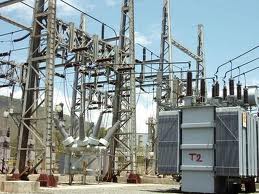
The Jamaica Public Service Company (JPS) continues to come under fire for saddling the country with high electricity costs which are begining to cripple many businesses.
Only last week, Anna Chin, proprietor of Jo Jo’s Farm Market on Waterloo Road in Kingston, announced that she has had to close down that operation due to crippling electricity costs. However, the Jerk Pit, which also resides on the property, will remain open. Chin faces a bill from JPS of US$7 800 for the month of July.
Chin’s plight set off a firestorm of protest which saw people wearing black last Friday dubbed Black Friday, in protest against the exorbitant electricity bills bedevilling the country. Some are calling for people to refuse to pay their bills. JPS has now ordered an independent auditor to look at and evaluate its billing operations.
A week on, what does Anna Chin, who has run Jo Jo’s Farm Market for 10 years, make of it all?
Crippling charges
“Everything I have seen in the press mentions that JPS will be looking at metering practices and their billing methods. Now that should help the residential customers who are now at Rate 20 which means they are only being charged for the kilowatt consumption. However, when you switch from Rate 20 and are using a lot of electricity such as for a business, you then move into Rate 40. On this level what JPS does is take the kilowatt consumption, charge you less but then add on a Demand Charge. The Demand Charge is now determined by the kVa (kilovolt amperes) so now there are two charges on your bill. I cannot tell how JPS assesses this kVa charge on the bill. For all I know it is done arbitrarily.
“So I start my business by using the basic equipment at a level say at 30 (kVa is calculated at different levels). However, December comes around and I bring in four 40-foot containers for the festive season. Now this elevates and spikes my Demand Charge from a 30 to about a 70. Now Christmas comes and goes and I no longer have these goods coming in and business is slow and back to normal. I should really go back to a 30 level but I have to continue to pay JPS for the next six months at a 70 level until I can show I am no longer consuming at a 70 level. Each time you add a piece of equipment the price escalates and that is a problem for me. Now I don’t see this being addressed.
“We need a proper investigation as to how long this Demand Charge stays on the bill, when will it come off, how is it calculated and how can we get it down from a sixth month period. Apparently it was to remain for a year and then JPS reduced it to six months, but that is still too long because it hurts both your cash flow and operating expenses, particularly in this economy we now have to contend with.”
Ms. Chin is not the only one to bemoan the devastating effect of high electricity charges on an operating business. This renders small and medium enterprises unable to service their businesses and sends them into bankruptcy which in turn has a deleterious effect on the country’s economy. Earlier this week St. Ann businessman Raymond Schnoor, who runs Chippenham Park Limited, related he is facing an electricity bill of US$3,380 for July despite not turning on a single switch. JPS eventually cut him off for an accumulated outstanding bill of US$56,000. Schnoor was told that the US$3,366 bill for July was for “demand charges”.
Chin says that if this is to continue it will destroy the manufacturing sector. She paints a scenario where a company gets an order and has to produce a number of goods accordingly. However, that size order doesn’t come in every day but nevertheless one has to continue to pay the high electricity costs for six months, thus skewing the balance sheet.
The proprietor of Jo Jo’s Farm Market is now astutely monitoring the electricity usage from each piece of equipment she uses in order to get a more accurate assessment of her electricity usage and its consequent cost, and to this end has engaged the services of an independent electrical engineer. She points to the recently opened Usain Bolt’s Tracks& Records Restaurant which has a whopping electricity bill of US$17,500 a month. She has plugged out all her electrical appliances in her home except for her fridge for a month yet comes back home to a bill which is exactly the same as when she was living in the house during the previous month.
The small business owner observed that many people do not know how to read or calculate their electricity bill and the bills should therefore be designed to be more self-explanatory. She is calling for the creation of a medium to express these concerns and is hoping that the entire country becomes galvanised by this pressing issue. The attorney Hugh Wildman is advocating a class action against JPS and is urging people to contribute US$35 each to become part of the action. Chin supports this move and is calling for many Jamaicans and businesses to get behind it.
OUR supports JPS, says somebody has to pay
The regulatory body, the Office of Utilities Regulation (OUR), has defended the JPS kVa charge applied to commercial entities and there will be little joy coming from that quarter. The OUR’s Director General Zia Mian, insisted that it is unreasonable to expect the electricity provider to bear the cost of investing in capacity to support businesses.
“The investment has to be made today in order to supply your demand tomorrow, and if you say that I’m going to demand so much capacity, the provider has an obligation to put that capacity there.
“At the end of the day, however, whoever makes an investment must have some return.” He further added that Jamaican businesses had the option to put up their own plant. “ But if the provider puts the capacity, that demand charge has to be met,” declared the OUR boss.
“As far as I am concerned, both the OUR and JPS have yet to address the demand charge and if they continue to fail to do so, businesses will not choose to invest in Jamaica because the proposition will become unviable. In this regard the Jamaica Manufacturers’ Association (JMA) has voiced its concerns for years and it is about time we had some sensible answers. It is the first time we have seen a movement like this and people are really fed up with these unexplained high electricity bills.
Source: The Jamaica Observer