News
Haiti: U.N. faces criticizm for failing on promise to redress Cholera mess
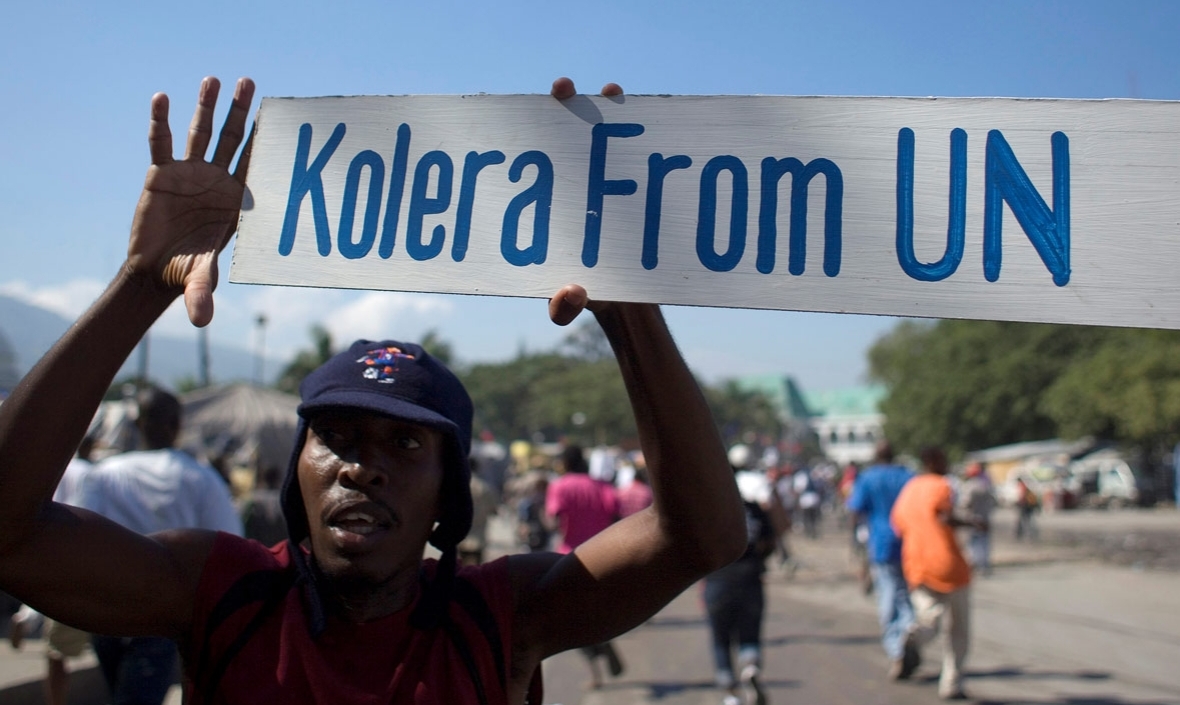
Reuters | Haitians battling cholera blamed on United Nations peacekeepers are getting little support with only 2 percent of promised funds materializing, according to campaigners accusing the global community of again failing the Caribbean nation.
Haiti was free of cholera until 2010 when peacekeepers helping after a devastating earthquake that killed more than 250,000 people, dumped infected sewage into a river.
Since then about 9,750 Haitians have died of the waterborne disease that has infected more than 800,000 people.
The United Nations has not accepted legal responsibility for the outbreak but in late 2016 outgoing U.N. Secretary-General Ban Ki-moon apologized to Haiti for the organization’s role and announced a US$400 million fund to help affected Haitians.
But to date – almost halfway through the fund’s expected 3-year term – the U.N. Haiti Cholera Response Multi-Partner Trust Fund has only raised US$8.7 million or 2.2 percent of the total – and less than half has been spent, U.N. figures show.
Sienna Merope-Synge, a human rights lawyer at the Institute for Justice and Democracy in Haiti (IJDH), said this showed “a failure by the U.N. system to honor that promise”.
“The U.N. promises, in particular to create a package of assistance that would provide redress to victims, have not been moved forward,” she said.
The IJDH previously filed a lawsuit against the U.N. on behalf of cholera victims, including a demand for financial compensation, but in 2016 a U.S. federal appeals court upheld the organization’s immunity from damages.
The spotlight on the failure to eradicate cholera comes after the United Nations and aid organizations have faced criticism for slow reconstruction efforts in Haiti due to a lack of coordination and bypassing the government and businesses.
The behavior of aid workers in Haiti after the earthquake has also come under scrutiny with Oxfam rocked by allegations that staff, including a former Haiti country director, sexually exploiting vulnerable Haitians during the relief mission.
Cholera is currently infecting about 74 more people each week although this is down from 18,500 at the outbreak’s peak.