News
Haiti: Lawmakers approve Enex Jean-Charles interim Prime Minister
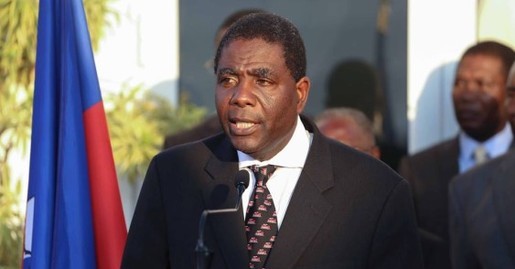
Enex Jean-Charles – a longtime presidential adviser and administrative law professor has won approval from Haitian lawmakers to take full control of the country as prime minister, and lead Haiti to the election of its next president.
Legislators approved Jean-Charles’ general policy statement and new government during back-to-back confirmation hearings that began Thursday in the Senate and ended before sunrise on Good Friday in the Lower Chamber of Deputies. The favorable votes in both chambers end a chapter of political uncertainty.
After passing the Senate 20-0, an emotional Jean-Charles thanked senators and acknowledged the challenges ahead. “I want you to know that I do not consider this vote to be a blank check,” he said.
A longtime behind-the-scenes player in Haitian politics, Jean-Charles has served as a presidential adviser to several presidents including René Préval and Michel Martelly. He emerged as prime minister after deputies on Sunday rejected the policy statement of economist and former head of the central bank Fritz Jean.
Jean’s rejection forced interim President Jocelerme Privert to quickly find a replacement to help him head his 120-day administration, as the Caribbean community grew increasingly frustrated with Haiti’s political uncertainty and the delays in implementing a February 5 political accord guiding the process. While paving the way for former President Michel Martelly’s February 7 departure from power, the accord also set deadlines for getting Haiti back to constitutional order.
Jean-Charles told reporters that despite the delays, he believes the accord remains valid in helping restart the interrupted electoral process. He acknowledged that a new elections timetable, however, will most likely need to be set.
As his first order of business, Jean-Charles said he will work with Privert to quickly publish a presidential decree establishing a revamped Provisional Electoral Council, that until now could not be named because of the lack of a functioning government. He also promised to push the new council to hold to a May 14 deadline for the swearing in of a new president.
Jean-Charles said he will also ask the council to apply the “technical recommendations” of an electoral commission charged with evaluating the October 25 presidential vote.
The commission recommended that sweeping changes be made to the electoral machine in order for the process to continue. It also said more in-depth verification by elections experts was needed to address local observers’ and opposition claims of fraud.
Whether that verification takes place, and how it is handled, will ultimately determine how soon Haiti can get back to having a democratically-elected government.
Under the February 5 political accord, the interim government should last no more than 120 days from its signing.
Whether the government can achieve any of this and create a climate of confidence as Jean-Charles promised will depend on its ability to quickly get moving and work together. Prior to the Senate vote, 3 new cabinet appointments were made. Among them: former presidential candidate Aviol Fleurant was made planning minister, and Camille Edouard Jr. was given the job of justice minister, replacing Florence Elie, the head of the Office of Citizen Protection who had been nominated by human rights groups.
Source: Associate Press