News
Haiti in crisis: who’s who and what’s at stake
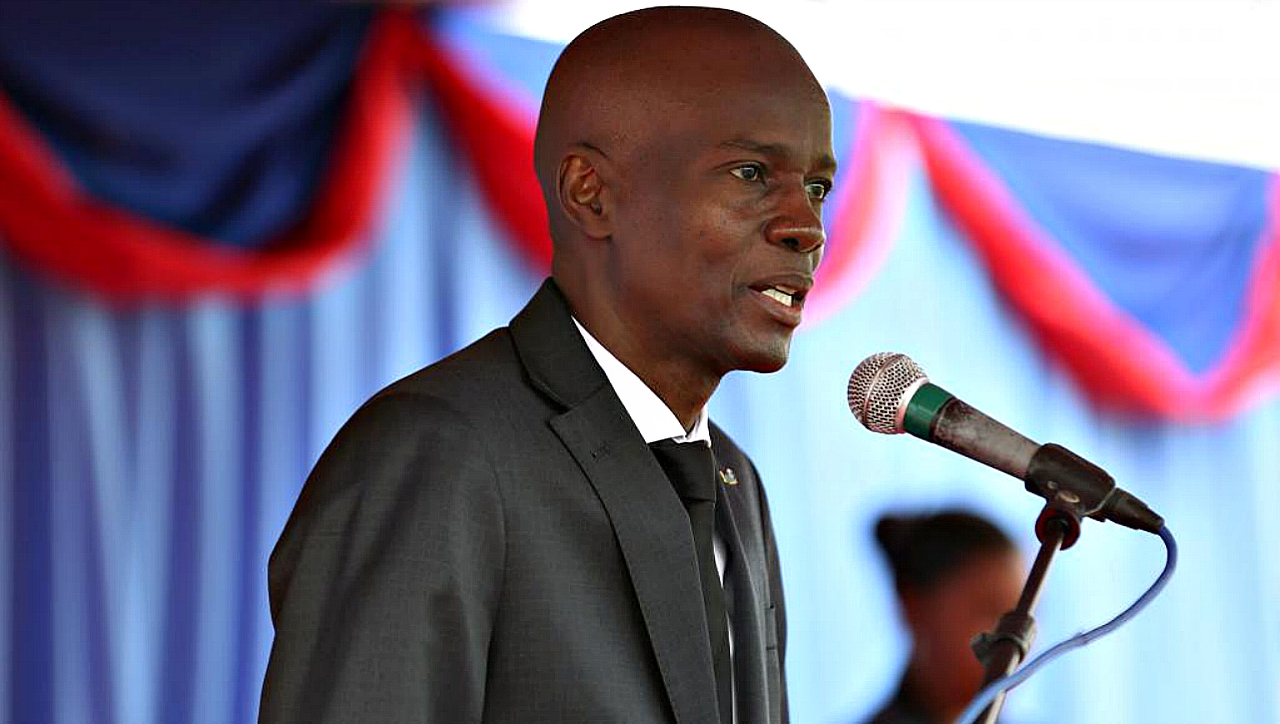
AFP | Haiti’s capital Port-au-Prince and other major cities in the Caribbean country have been convulsed by widespread protests demanding the resignation of President Jovenel Moïse.
In many cases, the president’s opponents have set up barricades that have brought all activity to a standstill.
The crisis shows no signs of abating, with Moïse’s detractors refusing to come to the negotiating table, and the president far from public view. Here is what you need to know about the crisis, the players and what’s at stake for Haiti:
Why is Moïse so unpopular?
Since he took power in February 2017, Moïse has had to face the anger of an opposition movement that refuses to recognize his victory in an election widely seen as dubious.
The first round, initially held in October 2015, was annulled when the candidate who came in second to Moïse, Jude Célestin, alleged widespread vote fraud. The run-off was never held.
The election was reorganized in November 2016, and Moïse won outright in the first round with more than 55 percent of the ballots cast, with turnout quite low.
That led some in Haitian politics questioned his legitimacy.
Moïse, a businessman with no national profile before 2015, chose a friend, Jack Guy Lafontant, to be his prime minister.
Lafontant, a doctor by training, also had no political experience.
In July 2018, their decision to hike fuel prices sparked three days of riots. Lafontant left office shortly thereafter.
In May this year, Haiti’s high court of auditors announced that companies run by Moïse before he took office were implicated in an embezzlement scandal to siphon off Venezuelan aid money intended for road repairs – and the trust gap with the public widened.
In late August, anger mounted due to a fuel shortage, and protests turned violent.
Since then, Moïse has been seen infrequently.
Last week, he appeared in public for the first time in more than a month – he and his wife stopped on the way from their home to the presidential palace to speak with merchants, under the watchful eye of heavily armed police.
He has only spoken to the Haitian people once – on September 25, in a pre-recorded message broadcast at 2:00 am.
Moïse proposed a “historic truce,” but his call for dialogue fell flat with his opponents.
What do protesters want?
Demonstrators, often in the thousands in major cities for big protests, want Moïse’s immediate resignation.
But the opposition hasn’t really offered concrete proposals beyond that for a political transition, especially if there is a power vacuum, and the various parties behind the protests don’t agree.
Many protesters have repeatedly called for more transparency in how Haiti has managed aid from Caracas from 2008-2018 within the framework of the Petrocaribe program.
The program – an initiative of late Venezuelan president Hugo Chavez – allowed several Latin American and Caribbean countries to access petroleum products at cut-rate prices.
Demonstrators also want anyone suspected in connection with the embezzlement of more than US$2 billion from the program, including Moïse, to stand trial.
What else is the crisis about?
“In Haiti, the richest 20 percent control more than 60 percent of the wealth, and the poorest 20 percent have less than two percent of the country’s wealth,” said economist Kesner Pharel.
“This coexistence of villas and slums is an explosive situation, an extremely volatile mix,” he told reporters.“We cannot resolve this crisis with such deep economic inequality.”
Haiti has one of the widest rich-poor divides in the world, and its history has been marked by frequent political instability. Moïse’s tenure is no exception in that respect.
The president has had 4 prime minister in 2 and a half years and, for the last 7 months, the government has been run by an administration that tendered its resignation.
Development aid from the International Monetary Fund has not been disbursed, nor has budgetary support from the European Union, Pharel notes.
“The international community has demanded that a government be installed and a budget be voted on by lawmakers, but that hasn’t happened,” he said.
Without that money, Haiti cannot meet the basic needs of its nearly 11 million people.
With livelihoods not improving and corruption scandals swirling, a large part of the population has abandoned its faith in politics: only 21 percent of registered voters cast ballots in 2016.