Owusu on Africa
Guinea-Bissau’s Coup: Another Blow to West Africa’s Fragile Democracies


By Fidel Amakye Owusu
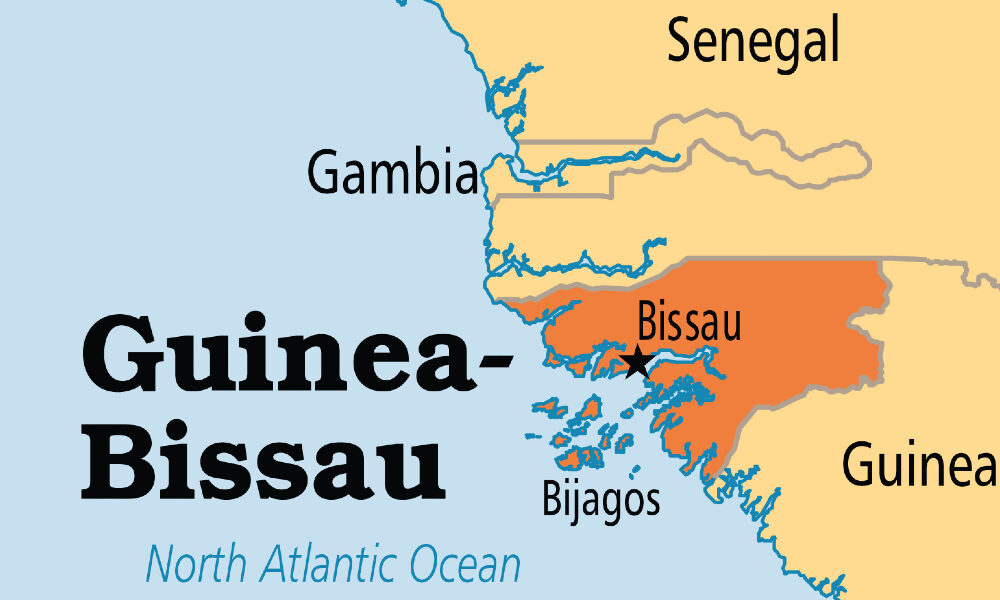
Guinea-Bissau’s military has once again seized power, plunging the small West African nation into yet another cycle of political instability. While this country of just two million people rarely dominates global headlines, its latest coup is far from a regional sideshow.
Instead, it’s a flashpoint revealing deeper currents: rising great-power competition, transnational crime, and the crumbling legitimacy of democratic norms across West Africa.
Just months ago, Guinea-Bissau drew unexpected attention from Washington when the Trump administration invited its leader to the White House – one of the president’s first direct engagements with an African head of state following his return to office. Observers were puzzled: Why would the United States prioritize a fragile, low-income nation tucked into West Africa’s southwestern corner?
A Narco-State in the Atlantic Crosshairs
The answer lies beneath the surface – and below the waves. Guinea-Bissau has emerged as a pivotal transit hub in the global drug trade, funneling narcotics from Latin America to lucrative markets in Europe and North America.
Its weak institutions, porous borders, and a deeply entrenched network of corrupt military and political elites have turned the country into a de facto safe haven for traffickers. For an administration fixated on dismantling transnational cartels, engaging Guinea-Bissau wasn’t a gesture of goodwill – it was strategic necessity.
But drugs are only part of the story. Guinea-Bissau’s location along the Gulf of Guinea has also made it a coveted prize in the intensifying contest between global powers.
New Great Game Along Africa’s Atlantic Coast
Russia, eager to expand its naval footprint beyond the Mediterranean, has aggressively courted the country – alongside neighbors like São Tomé and Príncipe and Equatorial Guinea – as part of its broader push into the Atlantic. For Washington, Moscow’s advances in Africa’s coastal belt are cause for alarm.
The White House invitation was likely a calculated move to counter Russian influence and reaffirm U.S. commitment to a region increasingly at the center of geopolitical maneuvering.
Then there are the minerals. Guinea-Bissau sits atop significant bauxite reserves – critical for aluminum production and, by extension, for U.S. industrial and defense supply chains.
In an era defined by competition over critical raw materials, even modest mineral wealth can elevate a country’s strategic profile.
Yet none of this external interest can mask the fundamental fragility of Guinea-Bissau’s statehood. This latest coup isn’t an anomaly; it’s part of a recurring pattern of military intervention that has derailed governance for decades.
The return of junta rule threatens to erase what little democratic progress the country has made – and send shockwaves across the region.
The Crumbling Firewall of West African Democracy
What does Guinea-Bissau’s turmoil mean for West Africa?
- First, it reinforces a troubling new geography of power: a corridor of military regimes now stretches from the Atlantic coast in Guinea-Bissau all the way to Niger in the Sahel. This growing “coup belt” is eroding regional stability and normalizing the seizure of power by force – a stark reversal of the post–Cold War consensus that once stigmatized such takeovers.
- Second, it further isolates Senegal and The Gambia – the last democratically governed states in West Africa’s western flank. As military rule spreads around them, these two nations face mounting pressure not only from their neighbors but from within, as public trust in democratic institutions wanes amid economic hardship and security challenges.
- Third, and perhaps most dangerously, the regional response to coups is weakening. When juntas govern next door, coup leaders no longer face swift condemnation or isolation. Instead, they find tacit acceptance – even camaraderie. This erosion of democratic solidarity lowers the cost of power grabs and emboldens other militaries to follow suit.
A Crisis with Global Implications
Guinea-Bissau’s crisis is more than a national tragedy – it’s a bellwether. It signals how criminal networks, great-power rivalry, and institutional decay are converging to reshape West Africa’s political landscape.
For the United States and its allies, the stakes go beyond one small nation. Ignoring Guinea-Bissau risks ceding ground not only to Moscow and traffickers but to a broader unraveling of governance norms that have underpinned regional stability for a generation.
The world can no longer afford to treat Guinea-Bissau as peripheral. In the new scramble for influence along Africa’s Atlantic coast, even the smallest nations can tip the balance.
Fidel Amakye Owusu is an International Relations and Security Analyst. He is an Associate at the Conflict Research Consortium for Africa and has previously hosted an International Affairs program with the Ghana Broadcasting Corporation (GBC). He is passionate about Diplomacy and realizing Africa’s global potential and how the continent should be viewed as part of the global collective.