News
Guinea-Bissau: Vote counting begins after crucial elections
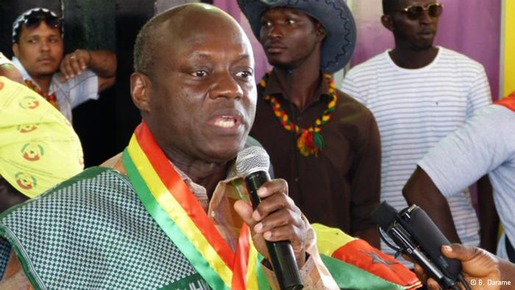
Guinea-Bissau Presidential Front runner, Jose Mario Vaz at a campaign rally
Vote counting began in Guinea-Bissau after a heavy turnout in Sunday’s legislative and presidential elections meant to bring stability to the West African state after years of coups and political infighting.
No major incidents were reported by the close of polls and monitors said they expected a record turnout. The electoral commission said turnout had reached 60 percent by 1430 local time (10.30 a.m. EDT) but did not give more detailed numbers.
Electoral officials began tallying the ballots under the watchful eyes of residents and election observers.
Results are due by Friday. If no candidate wins an outright majority, a second round will be held between the top 2.
“I’ve voted for Guinea-Bissau. This is the last chance, things must change,” said Augusto Francisco da Fonseca Regala, a 55-year-old architect, raising an index finger stained with purple ink to confirm he had cast his ballot.
“For 2 years, everything has been at a standstill. I hope this election will bring peace and stability so that we can get back to work and develop the country.”
The last attempt at an election, in 2012, was aborted when troops under army chief Antonio Indjai stormed the presidential palace days before a run-off was due to take place.
No elected president has completed a 5-year term in the Guinea-Bissau.
The final turnout at polling stations, which were set up in schools, on sidewalks, was likely to be between 70 and 80 percent, according to one source close to the organization of the election, who asked not to be named.
The frontrunner of 13 presidential candidates is Jose Mario Vaz, a former finance minister running for the dominant African Party for the Independence of Guinea and Cape Verde (PAIGC).
“We need to stabilize Guinea-Bissau. I cannot do this alone but with the help of everyone in Guinea-Bissau,” Vaz said.
The PAIGC party machinery makes it likely to secure a majority the 100-seat parliament but Vaz’s victory is far from certain because of public anger at traditional parties.
Many of the 800,000 registered voters are voting for the first time and are eager to usher in a new leadership.
Vaz’s candidacy is also tainted by accusations from Bissau’s attorney general of involvement in the embezzlement of a US$12.5 million grant from Angola, something Vaz denies. His main challenger is former World Bank executive Paulo Gomes.
Guinea-Bissau is home to 1.6 million people and covers about 28,000 sq km (10,800 square miles).
About 80 percent of the population depends on cashew farming, but post-election stability could help attract investors to untapped mineral resources including bauxite, phosphate and offshore oil.
Source: Reuters