News
Ghana: Supreme Court could nullify election vote and overturn Mahama presidency – setting a precendent for Africa
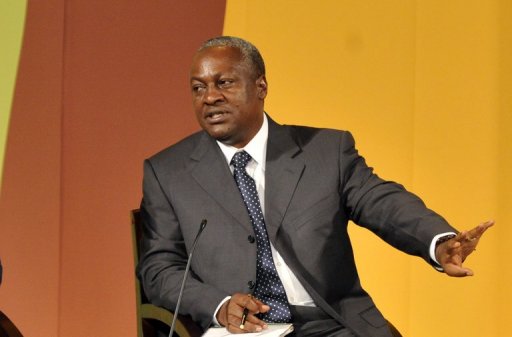
Ghana President John Mahama
(Reuters) – Ghana’s Supreme Court must decide in the coming months whether or not to overturn December elections that handed the presidency to John Mahama – a case that has transfixed the country.
Proceedings in a packed courtroom, where opposition leader Nana Akufo-Addo is challenging the outcome of the 2012 poll, are broadcast live on the radio and blare from cars and buses as the population of 25 million tunes in for the latest developments.
Legal experts say the verdict, expected some time between late June and August, is too close to call, and several believe there is a genuine chance the court could invalidate the victory of Mahama’s ruling National Democratic Congress.
“If it is proven beyond doubt this election was rigged and that the president is not supposed to be the president, the court will overturn it,” said Kofi Bentil, vice-president at the Imani Center for Policy and Education in Ghana’s capital Accra.
A senior banker who declined to be named said a verdict in favor of the ruling party looked likely, however, as the opposition had failed to make its argument effectively.
If the vote was nullified, it would set a precedent on a continent where losing political parties frequently go to court to contest elections but rarely get the kind of exhaustive legal review the Supreme Court in Ghana is delivering.
The opposition National Patriotic Party (NPP) claims the ruling National Democratic Congress tampered with results to boost Mahama’s share of the vote to 50.7 percent, handing him a first-round victory. Akufo-Addo won 47.7 percent.
The case comes as Ghana’s US$39 billion economy is powering ahead, growing 8 percent last year, after oil production began at Tullow’s Jubilee field in 2010. It is Africa’s number two gold miner and the world’s second-largest cocoa producer.
Many investors, lured to Ghana by a reputation for stable democracy, appear sanguine about uncertainties ahead, and see the court’s ruling as less important than how the losing side reacts.
The case has done little to dampen confidence in the Ghana stock exchange, which has jumped 55.6 percent this year.
“If those parties accept the ruling of the Supreme Court, we think it will rather strengthen the confidence of investors in our market, both local and foreign, with some kind of democratic dividend,” said Daniel Tetteh, executive director at Databank.
If the court rules for the opposition, it could declare the election invalid and order a runoff vote. Some legal experts say it could even anoint Akufo-Addo winner, while others argue it does not have the power to do so.
“When the court in Ghana rules … it will invariably have a ripple effect on other African elections,” said Christopher Fomunyoh, senior associate for Africa at the National Democratic Institute for International Affairs in Washington.
Both sides say they will accept the court’s judgment.
International electoral observers gave the December election a clean bill of health despite technical glitches with voting machines that forced voting to be extended into a second day.
At the heart of the legal case, however, lies a battle over pink sheets containing data from polling stations.
Opposition lawyers say 11,138 sheets from the total of more than 26,000 should be invalidated because of irregularities.
Those sheets represent 4 million votes which could swing the election in favor of Akufo-Addo, opposition lawyers say.
They point to evidence including duplicate sheets, over-voting at some polling stations and a failure by officials to sign some sheets correctly which could suggest fraud.
“We are praying that John Mahama is removed and Akufo-Addo is installed based on the numbers. But we would not be surprised if the court decides that there has to be a run-off,” NPP spokesman Nana Akomea said in an interview.
NDC lawyers say that minor errors by local officials do not amount to an attempt to subvert the vote and that the electoral law should be applied to protect the rights of the voter.
Ghana has held four peaceful elections since 2000, with both main parties calmly relinquishing power. December’s poll was the first in Africa using biometric data for voter registration.